24 August 2026
Weak Shower Pressure In Derby Homes: What Causes It And What Fixes It
There is a specific type of disappointment that comes from stepping into a new shower and finding it dribbles. It happens more often than it should, and almost always for a reason that could have been sorted before the tiles went on. Water arriving at a Derby property comes in at somewhere around 2 to 3.5 bar in most streets, which is more than enough for a genuinely good shower - yet plenty of homes end up with something closer to 0.2 bar at the head. The losses happen inside the house, between the stop tap and the shower valve, and once you know where they occur the fix is usually obvious. Here is how to work out which problem you actually have before spending money on the wrong solution.
Pressure And Flow Are Not The Same Thing
Almost every conversation about weak showers goes wrong at this point, so it is worth getting straight. Pressure, measured in bar, is the force pushing the water. Flow, measured in litres per minute, is how much of it arrives. You can have decent pressure and poor flow if the pipework is narrow or furred up, and you can have generous flow and no pressure at all on an old gravity system.
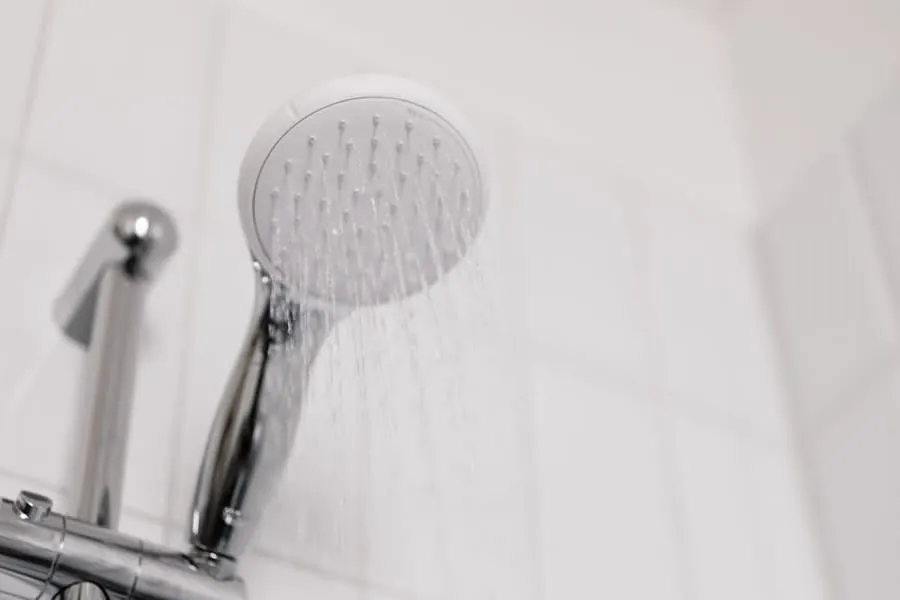
A shower needs both. As a rough benchmark, a satisfying shower delivers somewhere around 10 to 15 litres a minute; below about 8 it starts to feel mean, and a lot of the complaints we get called out to measure at 5 or 6. Most electric showers sit near the bottom of that range by design, which is why an electric unit in a house with a perfectly good mains supply so often disappoints.
You can test this yourself in five minutes. Time how long it takes the shower to fill a bucket to a known volume, then do the same at the cold tap on the bath. If the bath tap is fast and the shower is slow, the problem is in the shower - the head, the hose, the valve. If both are slow, the problem is upstream, and that is a different conversation.
What Actually Reaches A Derby Home From The Main
Water companies work to a statutory minimum: 7 metres of static head, about 0.7 bar, at the boundary stop tap. That is the floor, not the target, and it is set at the boundary rather than at your shower. The rules and what to do if you fall below them are set out by the Consumer Council for Water’s guidance on low pressure, and they are worth knowing if a whole street has gone weak rather than just your house.
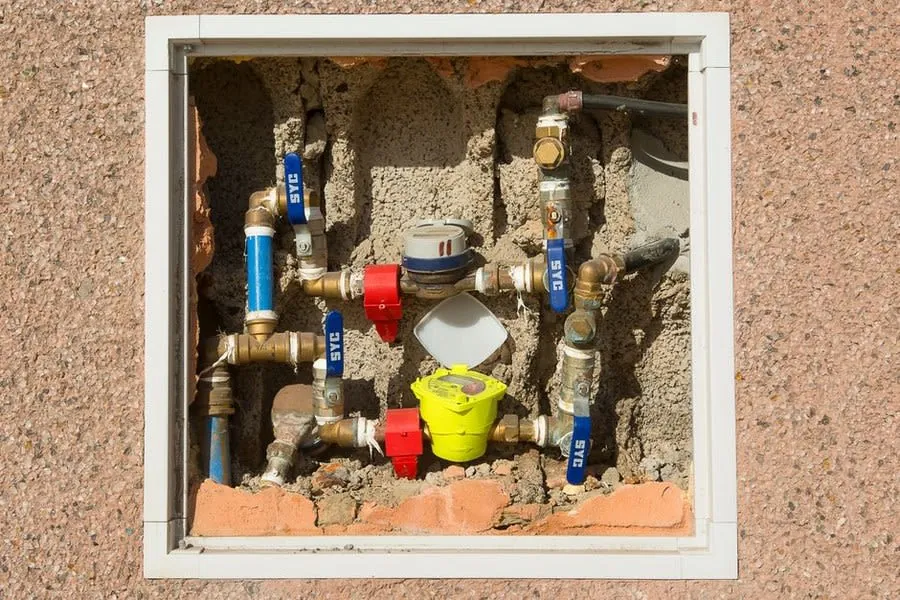
In practice, most of Derby sits comfortably above the minimum. The city’s ground rises noticeably from the Derwent valley up through Allestree and Quarndon, and properties at the top of a run can see less than those at the bottom, but genuine mains-side pressure problems are the exception here rather than the rule.
Far more common is a restriction on your own side of the boundary. A 15mm supply pipe where a 25mm one should be, a stop tap that was never opened fully after a repair, or an old galvanised section that has silted up will all strangle the supply before it reaches a single tap. Checking the incoming main properly takes ten minutes and is the first thing a decent fitter will do.
Gravity, Combi Or Unvented: Your System Decides Your Shower
Three systems dominate Derby’s housing and each fails in its own way. A vented gravity system has a cold tank in the loft and a hot cylinder in the airing cupboard, and its pressure comes purely from the height difference between the tank and the outlet - roughly 0.1 bar per metre. A bungalow in Mickleover or a loft-converted terrace with the tank tight under the ceiling might only manage 0.2 bar at the shower.
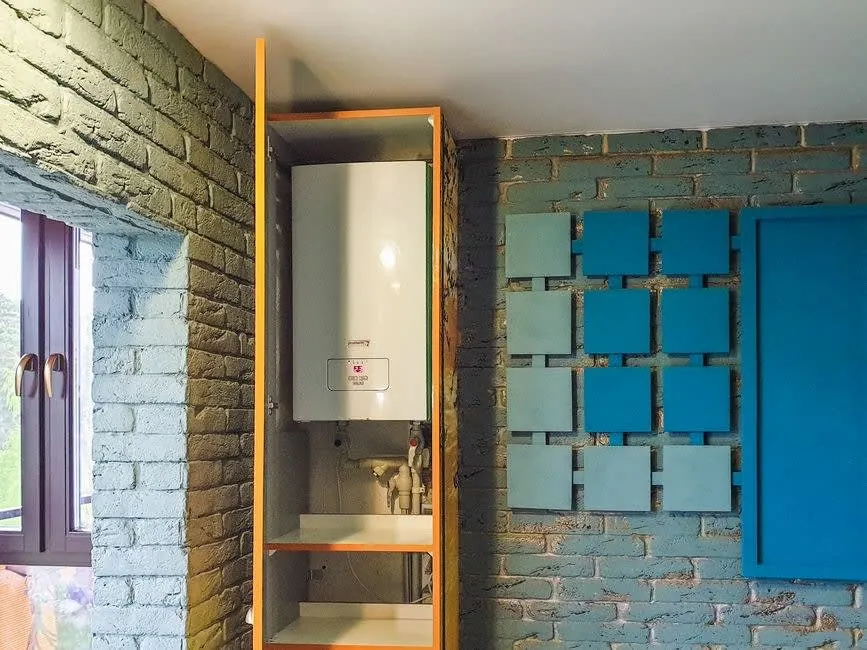
A combi boiler takes mains pressure straight through, which sounds ideal, but it is limited by how much water it can heat as it passes. A 24kW combi will manage roughly 10 litres a minute at a usable temperature; a 35kW one nearer 14 or 15. Run a bath at the same time and both drop. If your shower is fine at 7am and pitiful when the washing machine is on, this is the culprit, not the shower.
An unvented cylinder gives you stored hot water at mains pressure, typically 3 bar, and is the best of both - which is why so many Derby refits now include one. It needs space, an annual service and a G3-qualified installer, and it needs a mains supply capable of feeding it. The safety and water efficiency requirements for these systems sit in Approved Document G of the building regulations.
Why Older Derby Houses Struggle More
Pipework has a life, and a good deal of Derby’s is older than the people using it. The Victorian and Edwardian terraces around Peartree, New Normanton and Rose Hill were plumbed and re-plumbed across a century, and it is entirely normal to find three generations of pipe in one house - a bit of lead near the front, some galvanised steel in the middle, copper where someone got as far as before they gave up.
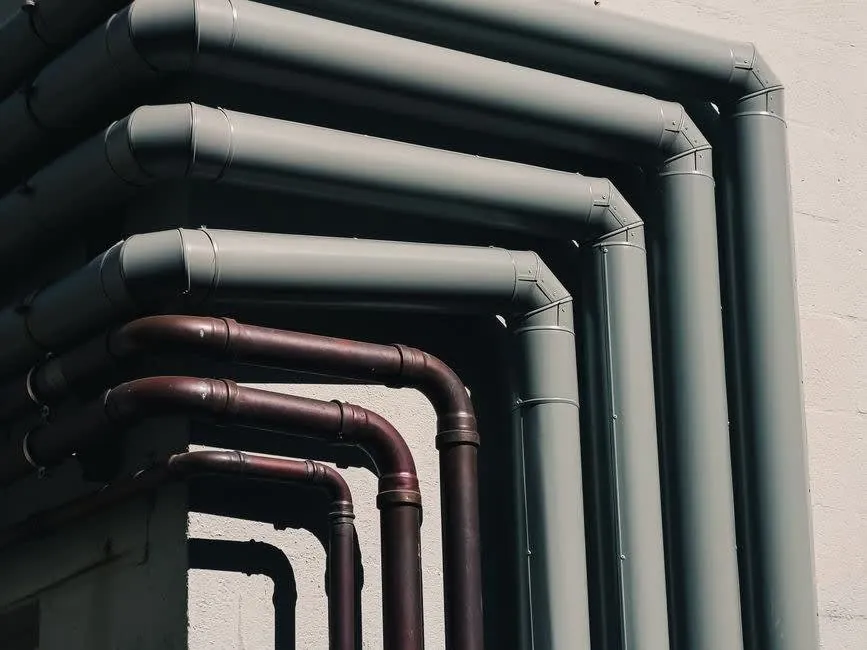
Steel corrodes inwards. A 15mm galvanised pipe that has been in service since the 1950s can have an internal bore closer to 8mm by the time anyone cuts it open, and no amount of shower upgrading will get water through it. The same applies to long runs of undersized pipe added when a bathroom was moved upstairs, or feeds that take four right-angled bends to travel three metres.
Interwar semis in Chaddesden and Alvaston have a different signature problem: the bathroom sits directly under the tank in the loft with barely a metre of drop, so the hot side is weak while the cold, coming off the main, is strong. That mismatch is why the temperature swings when someone flushes the loo.
Limescale: The Slow Throttle
Derby’s water is hard, and hard water leaves a bit of itself behind everywhere it goes. Scale does not stop a shower overnight. It narrows things gradually, over two or three years, and because the decline is so slow nobody notices. Then you use someone else’s shower and wonder what you have been putting up with.
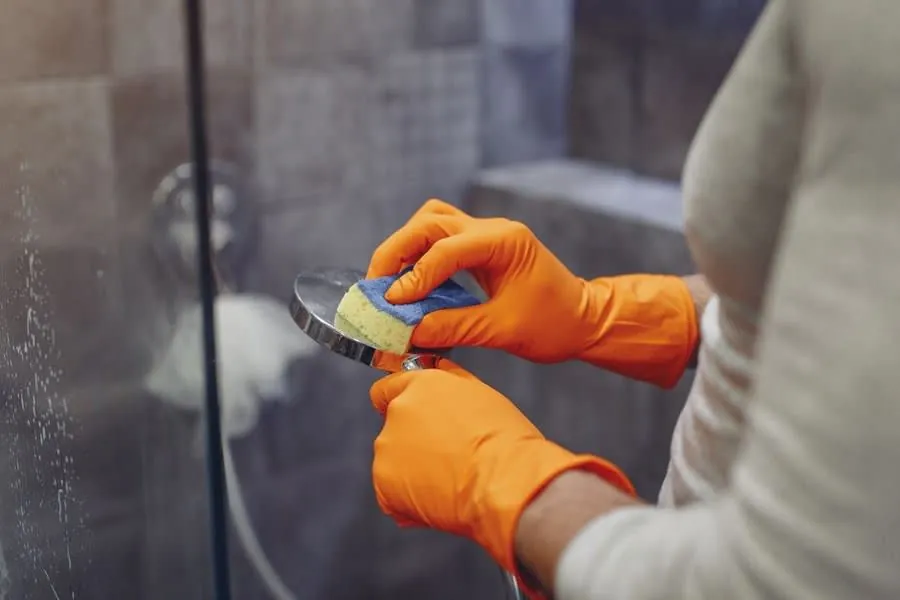
The spray plate goes first. Then the hose, then the cartridge inside the mixer valve, where scale binds moving parts and makes the temperature control vague as well as the flow poor. On an electric shower it eventually reaches the heating element, which is when the unit dies.
Before assuming anything structural, take the head off and leave it in descaler overnight, and do the same with the hose. If the flow improves noticeably you have both diagnosed the problem and found a maintenance routine. Our guide to dealing with hard water in Derby bathrooms goes further into softeners, inhibitors and which fittings survive best here.
The Fixes, From Cheapest To Most Involved
Start at the bottom. Descaling the head and hose, and swapping a restrictive head for a better one, costs perhaps £30 to £60 and settles a surprising share of complaints. Opening a stop tap that was never fully reopened after a repair costs nothing at all.
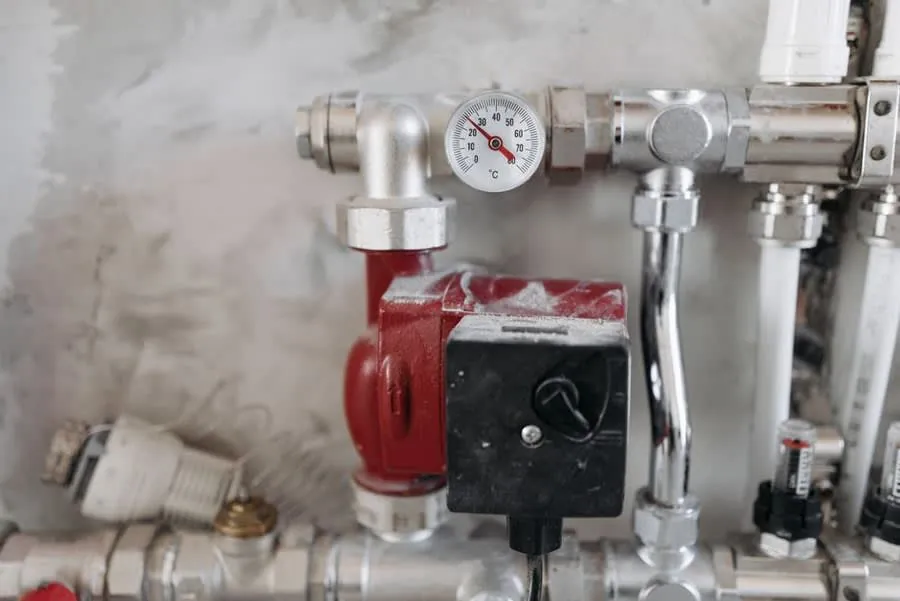
Next up is a shower pump, which is the right answer for a weak gravity system and only for a gravity system. A twin-impeller pump feeding both hot and cold typically runs £350 to £700 fitted, needs somewhere dry and reasonably accessible to sit, and does make an audible hum. You cannot pump the incoming mains to solve a mains problem - a booster taking more than 12 litres a minute straight off the main normally needs the water company’s consent, and the rules governing this sit with Water Regs UK.
Above that come the real solutions. Replacing a corroded or undersized supply pipe from the stop tap inwards with a 25mm run changes the flow in a way nothing else does. An accumulator stores mains-pressure water to cover peak demand where the main is fine but the volume is limited. And swapping a tank-and-cylinder setup for an unvented cylinder, usually £2,000 to £3,500 with the pipework, gives every outlet in the house mains pressure at once. That last one is a bigger job, but it is often cheaper than doing three smaller fixes in sequence and still being unhappy.
Get This Right During The Refit, Not After
The moment to solve a pressure problem is when the walls are open. Once the tiling is done and the enclosure is siliconed in, re-running a feed in a larger bore means undoing work you have just paid for.
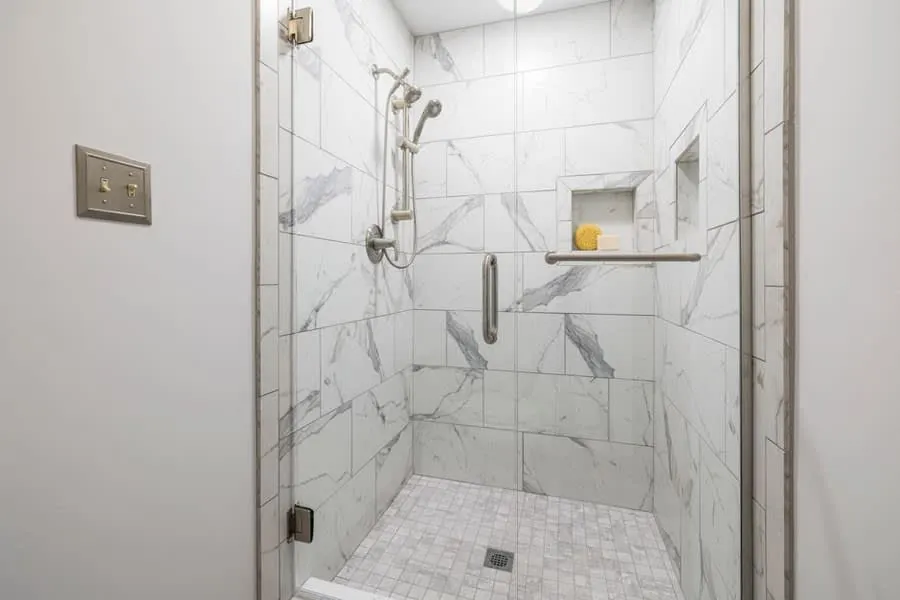
It also decides what you can sensibly buy. Big rainfall heads and dual-outlet valves need real pressure and volume behind them; fit one to a gravity system without a pump and it will underwhelm no matter how much it cost. That is worth settling before you choose, and our page on shower installation in Derby covers what suits which system, as does our guide to choosing a shower for your Derby home.
Any fitter worth having will measure the flow and pressure at the start rather than at the end. It takes a gauge, a bucket and about fifteen minutes, and it is the difference between specifying a shower for the house you have and one for the house in the brochure.
Frequently Asked Questions
Why is my shower weak when the taps run fine?
Because taps and showers ask different things of the system. A basin tap only needs volume and gravity will happily deliver that. A shower needs pressure to push water through a restrictive head, and on a low-pressure gravity system there may only be two or three metres of height between the cold tank and the shower, which gives about 0.2 to 0.3 bar. Plenty for filling a basin, nowhere near enough for a decent spray.
What water pressure should I be getting in Derby?
Your water company has to deliver a minimum of 7 metres of head, roughly 0.7 bar, at the boundary of the property. Most Derby homes get considerably more than that from the main, often between 2 and 3.5 bar. What arrives at the shower can be far lower, because everything between the stop tap and the shower head - old pipe, part-closed valves, scale - takes its cut.
Can I fit a pump to boost my shower?
It depends entirely on your system. A pump works on a vented system with a cold water tank in the loft and a hot cylinder, and that is the classic fix for a weak gravity shower. You cannot simply pump the incoming mains, and a booster drawing more than 12 litres a minute directly off the main normally needs the water company’s consent. On a combi there is no stored water to pump at all.
Does limescale really reduce shower pressure?
Yes, and it is usually the first thing to check in Derby because the water here is hard. Scale narrows the spray holes in the head first, then builds inside the hose and the valve. A head that has never been descaled can lose a noticeable share of its output within a couple of years. Soaking the head and hose overnight costs nothing and rules out the cheapest possible cause before anyone starts talking about pumps.
Tired of a shower that dribbles? Get a free quote from Bathroom Fitters Derby and we will test what your system is actually delivering before recommending anything.