20 July 2026
Hard Water in Derby Bathrooms: Beating Limescale on Taps, Showers and Tiles
If you live in Derby, you already know your bathroom. The white crust on the taps, the showerhead that sprays sideways after a few months, the glass screen that never quite looks clean no matter how much you wipe it. That is hard water, and Derby has plenty of it. The water is perfectly safe and actually tastes fine, but it is loaded with the dissolved minerals that turn into limescale the moment it dries. Nearly every bathroom we fit in the city has to be planned with that in mind, because the wrong fittings and the wrong finishes make a hard-water bathroom look tired far sooner than it should. Here is what is going on and how to stay ahead of it.
Is Derby Hard Water?
Yes, and firmly so. Derby’s supply comes from Severn Trent, and the water across the city and the surrounding towns is classed as hard. Hardness comes from dissolved calcium and magnesium the water picks up passing through rock, and the higher those levels, the faster limescale forms when the water evaporates on a surface.
Hard water is not a health problem, and the Drinking Water Inspectorate is clear that it is safe to drink. The issue is purely practical: it is tough on bathrooms. Once you accept that Derby water will always try to leave limescale behind, the job becomes choosing fittings and habits that make that easy to manage rather than a constant fight.
What Limescale Does to Taps and Showerheads
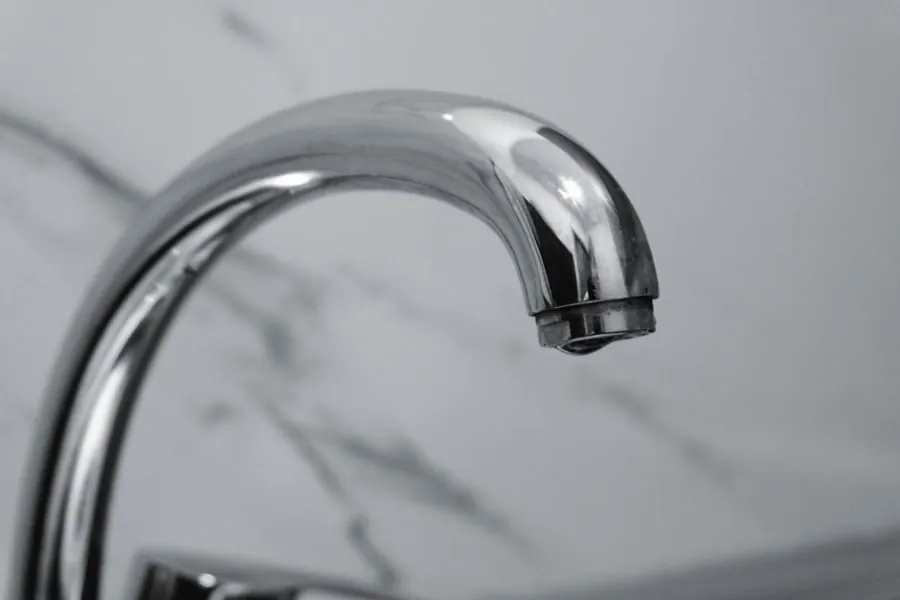
Taps are where you notice it first. Limescale dries into a chalky white film around the spout and base, dulls the shine of chrome, and over time can seize up moving parts inside cheaper taps. A quality tap with a good chrome or brushed finish shrugs this off far better than a bargain one, which is money well spent in a hard-water city.
Showerheads suffer most of all. The spray comes through dozens of tiny holes, and hard water crusts them over one by one until the flow drops and the spray goes everywhere but down. A head with flexible rubber nozzles you can rub clean makes a real difference, and a monthly soak in a descaler keeps things flowing. If you want to get the shower itself right from the start, our shower installation service can pair the right head and valve to Derby’s water.
Glass Screens, Tiles and Grout
A glass shower screen is the surface hard water loves to ruin. Every shower leaves a fine mist of water on the glass, and when it dries the minerals stay behind as cloudy spotting that gradually etches in if it is left. Tiles and grout catch it too, with a dull film on the tile face and a slow whitening of the grout lines.
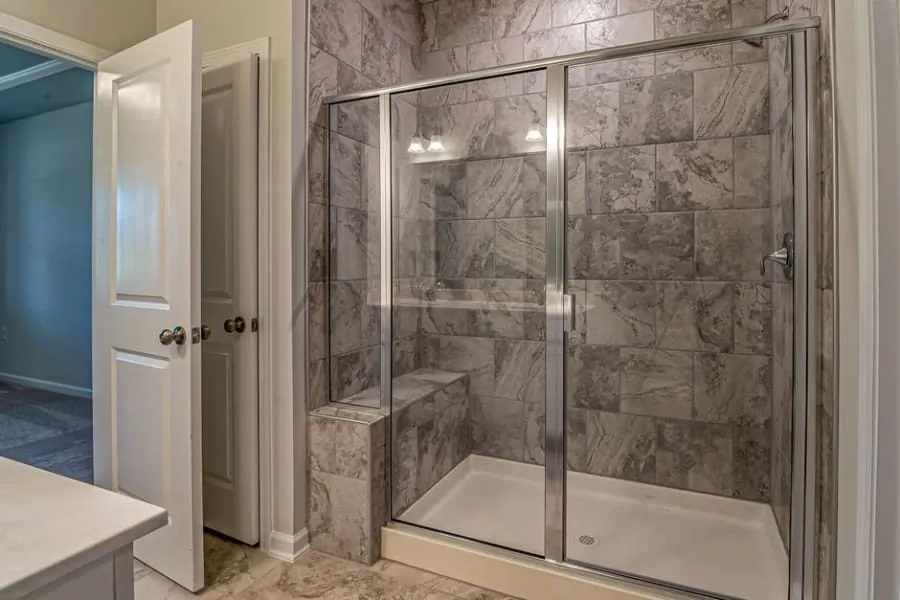
The materials you choose change how much this shows. Porcelain tiles wipe clean easily and resist the film better than porous stone, which is one reason we often steer Derby clients towards porcelain in the wet areas. A darker or mid-grey grout hides limescale far better than bright white, which starts crisp and goes patchy fast. And an easy-clean coating on the screen glass helps the water sheet off instead of clinging, so it dries with far less spotting.
Choosing Fittings That Cope With Hard Water
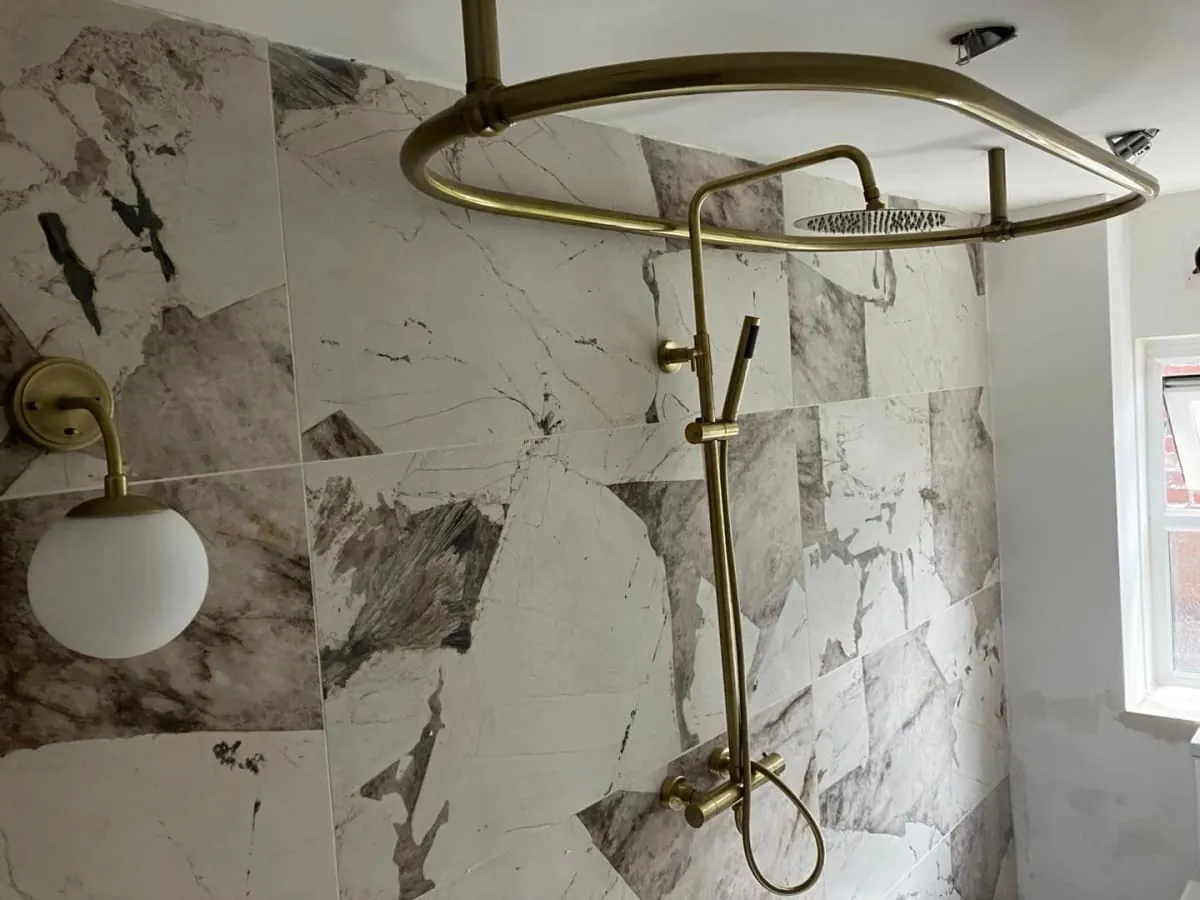
The fittings you pick at the design stage decide how much cleaning you are signed up for. In a hard-water bathroom it pays to favour solid, well-finished brassware over the cheapest options, because a good surface resists scale and cleans up without pitting. Brushed and matt finishes tend to disguise water marks better than high-polish chrome, which shows every droplet.
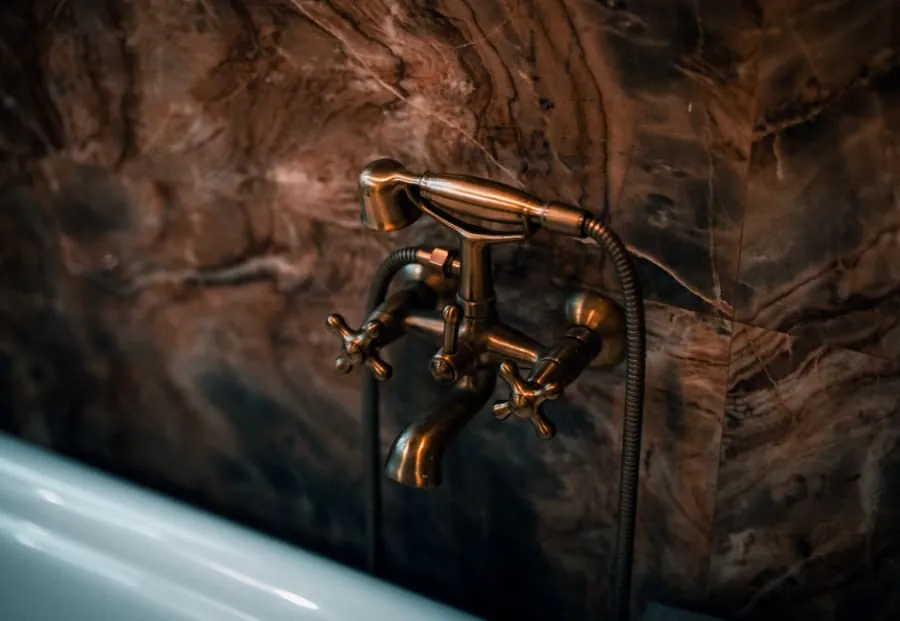
Thermostatic shower valves are worth protecting, because scale inside a valve is what leads to erratic temperatures down the line, so a decent valve and a serviceable head are a sensible pairing. Wall-hung and easy-reach fittings also make wiping down quicker, which sounds minor until you are doing it every week. If you are also updating your taps, our post on bathroom taps and mixers in Derby goes into what is worth the money.
Keeping a Bathroom Limescale-Free
The best defence costs nothing: stop the water drying on the surface in the first place. A quick squeegee of the screen and a wipe of the taps after a shower removes the water before it can leave scale, and that one habit does more than any spray. Where scale has already formed, a limescale remover shifts it, but keep acidic cleaners off natural stone and only use them where they are safe.
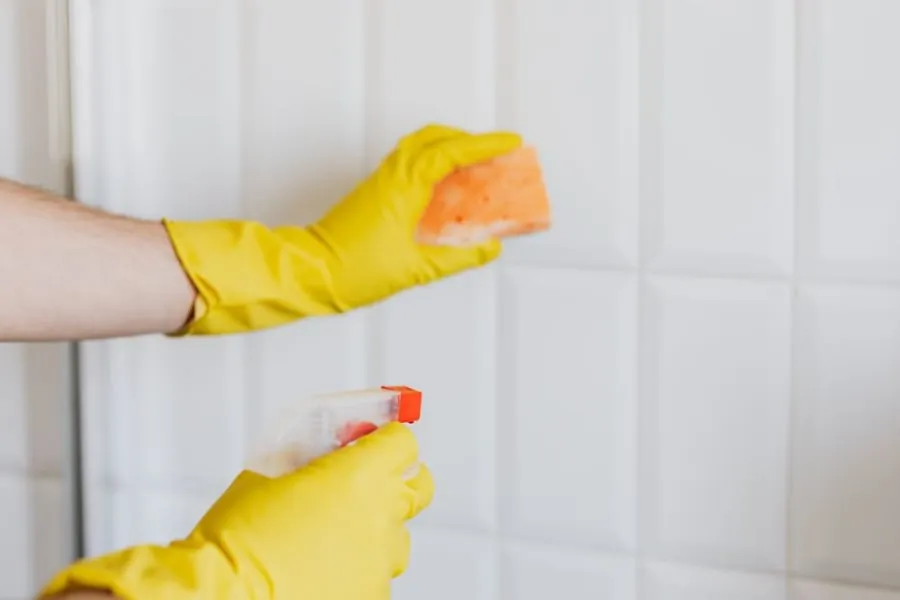
A weekly routine beats an occasional deep scrub. Descale the showerhead monthly, wipe screens and taps down after use, and reseal stone tiles and grout when the water stops beading on them. Avoid abrasive pads on chrome and glass, because the fine scratches they leave give limescale more to cling to. None of this is hard work, but in a hard-water city it is the difference between a bathroom that stays sharp and one that looks worn within a year or two.
Are Water Softeners Worth It in Derby?
For many Derby households, a water softener is the proper fix rather than a workaround. A softener uses an ion-exchange process to strip the calcium and magnesium out before the water reaches your taps, so limescale simply stops forming, soap lathers better, and your boiler and pipes benefit as much as the bathroom does.
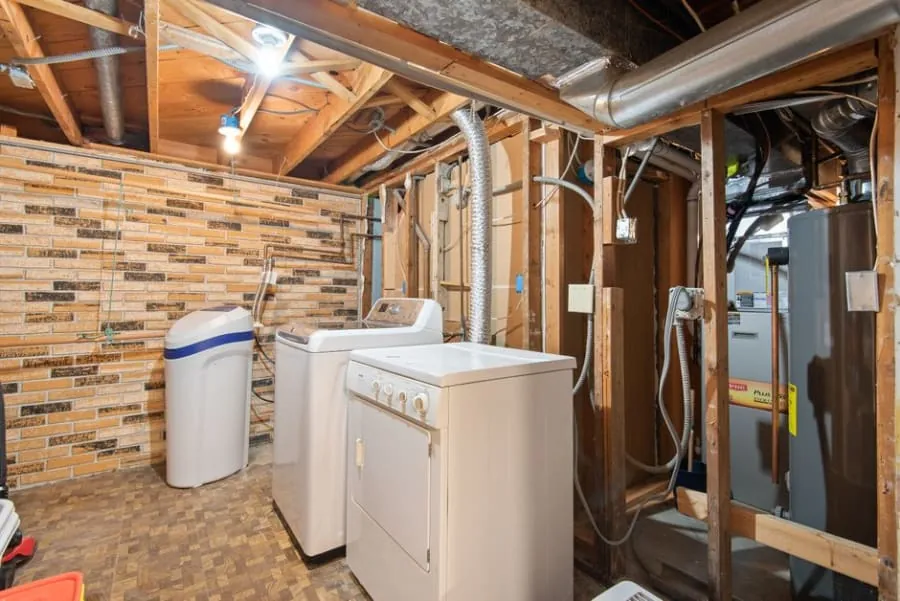
The trade-offs are real: a softener costs money upfront, needs a bit of space usually under the kitchen sink or in a utility, requires a drain connection, and you top it up with salt every so often. Consumer guides such as Which?’s home and kitchen advice weigh up the different types. If limescale is a running battle across your bathroom and kitchen, a softener usually earns its place in a hard-water area like Derby by making fittings last longer and cutting the cleaning right down.
Frequently Asked Questions
Is Derby a hard water area?
Yes. Derby is supplied by Severn Trent, and the water across the city and surrounding areas is classed as hard. That means it carries a lot of dissolved calcium and magnesium, which is what leaves the chalky white limescale you see building on taps, showerheads and glass screens. It is not harmful to drink, but it is hard on bathroom fittings.
Why does my showerhead keep blocking in Derby?
Limescale is almost always the cause. The dissolved minerals in Derby’s hard water dry out and crust over the small nozzles on a showerhead, narrowing them until the flow weakens and sprays sideways. Showerheads with flexible rub-clean nozzles let you clear the scale with a thumb, and a regular soak in a descaler keeps the spray even.
How do I stop limescale on a glass shower screen?
The simplest habit is a quick squeegee after each shower so the hard water never dries on the glass. For screens that already have cloudy spotting, a limescale remover made for glass will shift most of it. Many new screens come with an easy-clean coating that helps the water sheet off, which is worth specifying in a hard-water area like Derby.
Is a water softener worth it in Derby?
For a lot of Derby homes, yes. A softener removes the hardness before the water reaches your fittings, so limescale stops forming on taps, screens and inside the boiler, and soap lathers better. The trade-offs are the upfront cost, the space it needs, and topping up the salt. If limescale is a constant battle in your bathroom and kitchen, a softener usually pays back in longer-lasting fittings and less cleaning.
Planning a new bathroom that can handle Derby’s hard water? Get a free quote from Bathroom Fitters Derby and we will help you pick fittings and finishes that stay looking good.