2 September 2026
Acrylic, Steel Or Stone Resin: Choosing A Bath For A Derby Home
If you ever want to see a bathroom showroom assistant twitch, tap the side of a display bath with your knuckle. A cheap one drums like a plastic bin lid. A good one gives a dull, solid thud. That single second of noise tells you more about how a bath will feel to sit in than anything on the price label, and it is a test almost nobody does before spending several hundred pounds on something they will keep for twenty years. Most people choose a bath by shape, length and price, in that order. Material comes fourth if it comes up at all. Then we get called out to baths that flex underfoot in Chaddesden semis, and to chipped enamel in Normanton terraces. So here is what the four common bath materials actually are, and how each one behaves in a real Derby house.
What A Bath Is Actually Made Of
Nearly every bath sold in Britain falls into one of four families. Acrylic is a sheet of plastic, typically 5 to 8mm thick, heated and vacuum-formed over a mould then backed with resin and fibreglass for stiffness. Steel is a pressed sheet, usually 1.5 to 3.5mm, coated with vitreous enamel that is fired on at furnace temperature until it fuses to glass. Cast iron is the same enamel idea on a much heavier casting. Stone resin, sometimes sold as solid surface, is crushed mineral bound in resin and cast in one thick piece.
The differences that matter to you come out of those descriptions. Acrylic is warm and light because plastic is a poor conductor and there is not much of it. Steel is cold and loud because metal conducts and a thin sheet resonates. Cast iron and stone resin are quiet and stable because there is a great deal of mass involved. Nothing else about the marketing is as important as those three properties: warmth, weight and how hard the surface is.
Price ranges follow the same order. In 2026 a decent acrylic bath sits around £200 to £450, steel enamel around £300 to £700, stone resin from roughly £700 to £2,500, and cast iron anywhere from £900 upwards once you account for the fact that two people have to carry it. Our bath installation service covers all four, and the honest answer we give most customers is that the money is better spent on the bath’s support and the tap than on jumping up a material grade.
Acrylic: Light, Warm, And The Default For Good Reason
Acrylic has a reputation problem left over from the 1980s, when thin sheet and no reinforcement produced baths that bowed when you stood in them. Modern reinforced acrylic is a different product. The surface is non-porous, it feels warm the instant you touch it, and it holds bathwater temperature better than any other material we fit.
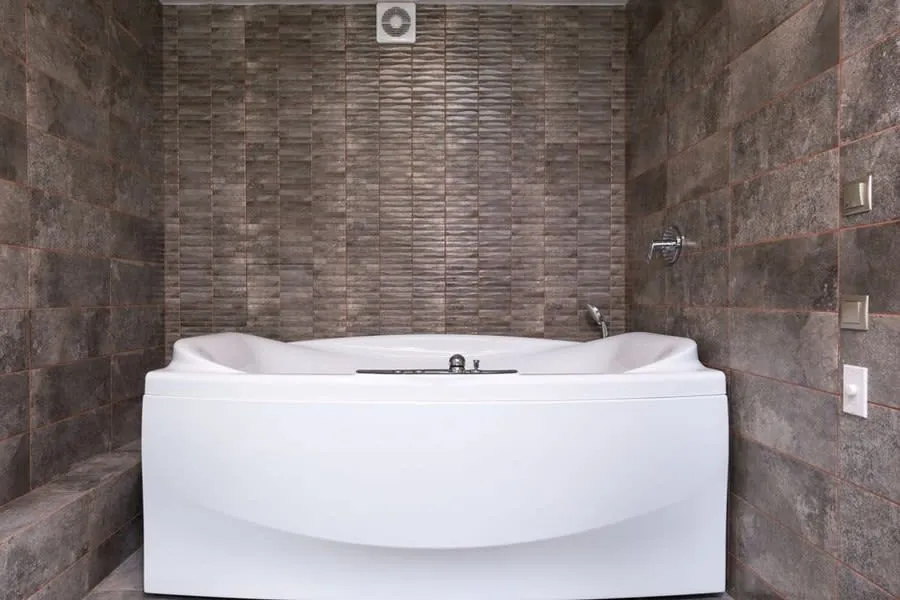
Its real advantage in this city is weight. A 1700mm acrylic bath weighs around 20 to 25kg, which one fitter can walk up the dog-leg staircase of a Victorian terrace off Pear Tree Road without taking a chunk out of the plaster. Steel and cast iron of the same size cannot go up those stairs without two people and a lot of swearing, and in some houses they cannot go up at all.
The weaknesses are real but manageable. Acrylic scratches more easily than enamel, though light scratches genuinely do polish out with a fine abrasive and a bit of patience, which is not true of any other material here. It softens under heat, so a lit candle on the rim or a cigarette is a permanent mark. And it lives or dies by its installation: an acrylic bath needs its full cradle, its feet adjusted so all of them bear weight, and a board or timber support under the base. Fitted lazily on two cradle rails and nothing else, even a good acrylic bath will flex, and that flex breaks the seal against the tiles within a year.
Steel Enamel: A Harder Surface With A Colder Welcome
Enamelled steel gives you the hardest common bath surface. It shrugs off the scratches that mark acrylic, it stays glossy for decades, and it has crisper edges and thinner rims, so it looks tidier in a small room where a chunky acrylic rim eats visual space.
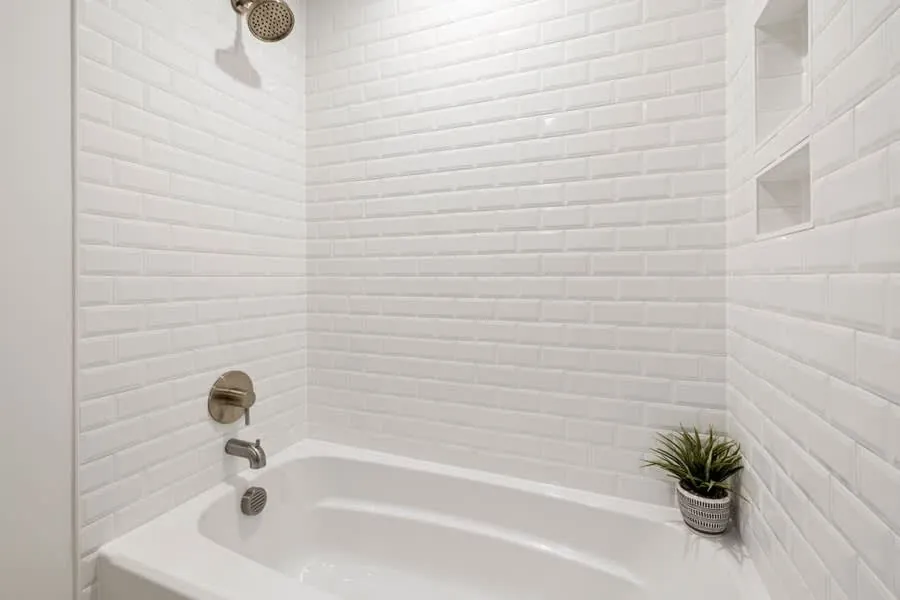
The trade-offs come as a set. Steel is cold, so the first thirty seconds in it are unpleasant unless you run the water hotter to compensate. It is noisy: a thin steel bath filling under a fast tap is genuinely loud, and cheaper models drum when the shower runs over them. And enamel chips. Drop a heavy shampoo bottle or a shower head on the rim and you take a flake out, and beneath it is bare steel that will rust and stain in Derby’s hard water. Repair kits exist and none of them are invisible.
Steel makes most sense in two situations we see regularly: a family bathroom that takes heavy daily use and where scratch resistance matters more than warmth, and a rental or HMO where the surface has to survive tenants who will not be gentle with it. Thicker gauge steel, at 3mm or more, addresses much of the noise and flex problem and is worth the extra over the thin budget versions.
Stone Resin And Cast Iron: The Heavy End
Stone resin is the material behind most of the freestanding baths in showrooms at the moment. It is thick, dense and cast in one piece, usually with a matt finish that feels closer to stone than plastic. It holds heat almost as well as acrylic, it is quiet, and because the colour goes through the material rather than sitting on top, a scuff can be sanded out rather than patched.
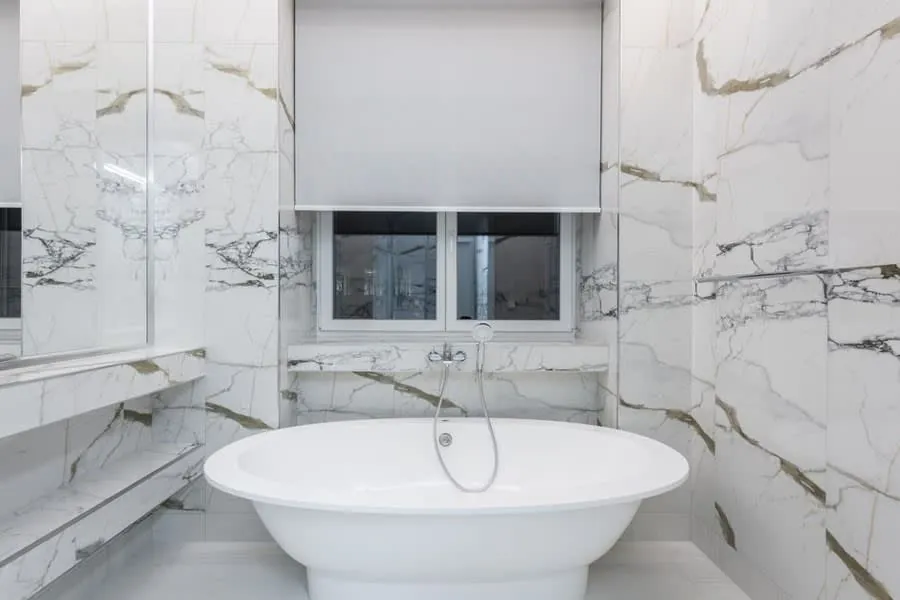
Cast iron is the traditional option, and the reason so many original roll-tops survive in Derbyshire farmhouses is that the material is essentially indestructible. It is also brutally heavy at 100 to 150kg empty, difficult to move, and it drinks heat from the first fill before it starts giving any back.
Both of these are worth it when the room deserves them: a large bathroom in a Littleover or Duffield house where a freestanding bath is the point of the space, or a period property where a roll-top is the right piece of furniture for the room. Neither is a sensible choice for a 2.1m by 1.7m bathroom in a terrace, where a freestanding bath eats the floor you need for everything else. If you are weighing that decision up, we set out the layout side of it in our comparison of freestanding and built-in baths in Derby homes.
Heat: Which Baths Actually Stay Hot
This is where the intuitive answer is wrong. People assume the heavy, expensive materials keep water hottest, and it is the light plastic one that wins. Acrylic conducts heat poorly, so almost none of your hot water goes into warming the bath itself. Steel does the opposite: the first fill loses noticeable heat into the metal, which is exactly why the bath feels cold as you lower yourself in.
Cast iron is the interesting case. It absorbs a huge amount of heat on filling, then radiates it back slowly, so a cast iron bath left to warm up will hold temperature well over a long soak. The catch is the hot water it takes to get there. If your house runs on a combi boiler, as most Derby semis and new builds do, you are heating that iron with the same finite flow rate that is trying to fill the bath, and long soaks become an exercise in topping up.
Two practical points either way. A bath with a decent volume of water in it always outperforms a shallow one, whatever it is made of, and insulated bath kits that pack the underside are inexpensive and genuinely effective on steel. If you are also weighing up water use, the government’s Approved Document G on sanitation, hot water safety and water efficiency is the standard that sets the framework for new work.
What Derby’s Hard Water Does To Each Surface
Derby sits in a hard water area, and every bath in the city gets the same treatment: minerals left behind wherever water dries. The Drinking Water Inspectorate is clear that hardness is a nuisance rather than a health issue, but it changes how a bath ages and, more importantly, how you should clean it.
The damage is almost never the limescale itself. It is the response to it. Cream cleaners and scouring pads take the gloss off acrylic and micro-scratch enamel, and once a surface is rough it holds scale far more stubbornly than it did when it was smooth, which starts a cycle of harder scrubbing. Strong acidic descalers left sitting on enamel will dull it too, and on stone resin they can leave a patch that never quite matches.
What works instead is dull but effective: a squeegee or a towel over the bath after use so the water never dries on the surface, and a mild descaler perhaps once a month rather than an aggressive one when it has got bad. We wrote a longer piece on beating limescale in Derby bathrooms covering taps, screens and showerheads, and the same principle runs through all of it. Guidance from the Bathroom Manufacturers Association is worth a look before you buy any strong cleaner, because using the wrong product is one of the few things that will void a bath guarantee outright.
Weight, Floors And Getting It Through The Door
Material choice runs into the building itself more often than people expect, and it is worth checking before you order rather than on delivery day.
Start with the load. A full 1700mm bath holds somewhere around 130 to 150 litres to a comfortable level, and water weighs a kilogram a litre, so before anyone gets in you have well over 100kg sitting on the floor. Add a person and a cast iron shell and you are approaching a third of a tonne. Spread along a built-in frame on sound joists that is fine. Concentrated on the four feet of a freestanding bath it needs a look, and on the older, shallower joists of a Victorian terrace we will often add noggins or a spreader board underneath.
Then look at access. Terraced houses in Normanton and Pear Tree, and a lot of the older stock around Chester Green, have narrow staircases with a turn at the top and a bathroom door that opens the wrong way. A 1700mm cast iron bath physically will not make that journey in one piece. New builds around Chellaston and Boulton Moor have the opposite issue: engineered metal-web or I-beam joists that must not be cut or notched without the manufacturer’s guidance, which changes how waste pipes get routed under a relocated bath.
None of this rules anything out. It just decides the order of the conversation: measure the route, check the floor, then choose the bath. Doing it the other way round is how a beautiful roll-top ends up living in a garage in Mickleover for two years.
Frequently Asked Questions
Is an acrylic bath good enough, or should I pay more for steel?
A good acrylic bath, properly supported, is the right answer for most Derby homes. It is warm to sit in, it holds heat well, it is light enough to carry up a terrace staircase, and small scratches can be polished out. Steel gives you a harder, more scratch-resistant surface and a slightly crisper look, but it feels cold on first contact, it is noisier under a running tap, and a chip in the enamel exposes steel that will rust. The bigger difference in how a bath lasts is the quality of the acrylic and how it was installed, not the choice of material.
Which bath material keeps the water hottest?
Acrylic, by a clear margin, because it is a poor conductor and barely draws heat out of the water. Steel and cast iron both pull warmth into the material on the first fill, which is why they feel cold when you get in. Cast iron eventually gives some of that heat back, but it takes a lot of hot water to warm the metal first. If you want long soaks without topping up, acrylic or stone resin will serve you better than a thin steel bath.
Do I need to check my floor before fitting a heavy freestanding bath?
Yes, and it takes ten minutes. A cast iron freestanding bath can weigh 120kg empty, with roughly another 130kg of water and the person in it, all landing on four small feet rather than spread along a frame. On the timber first floors of most Derby homes that concentrated load needs checking, and sometimes an extra joist or noggins beneath the feet. Stone resin sits somewhere in the middle and is usually fine on a sound floor, while an acrylic bath is light enough that the question rarely arises.
How does Derby’s hard water affect different bath surfaces?
Every surface in the city collects limescale, but the damage comes from what people use to remove it. Acrylic and enamel are both harmed by abrasive creams and strong acidic descalers, which dull the gloss permanently and leave a rough surface that then holds scale worse than before. Wiping the bath dry after use and using a mild descaler occasionally is far more effective than scrubbing. Matt stone resin hides scale better than gloss but marks in the same way if it is scoured.
Not sure which bath your room, your floor and your staircase will actually take? Get a free quote in Derby.