
21 September 2026
Will Your Hot Water System Cope With A New Derby Bathroom? Combi, System And Unvented Cylinders Explained
Most bathroom projects in Derby start with a showroom visit and a mood board. The hot water system barely gets a mention until the tiler has gone home and the shower turns out to be a disappointment. That is the wrong order. A 24kW combi puts out around 10 litres a minute; a 200mm rain head wants 12 to 16 on its own, and body jets add 4 to 6 each on top. Severn Trent is only obliged to deliver 7 metres of head, about 0.7 bar, at your boundary, though most of the city gets comfortably more. Those numbers decide what you can actually buy long before anyone argues about tile colours. This is the decision to make first, and it splits three ways: keep the combi, keep the tank and cylinder, or go unvented.
Decide The Hot Water System Before You Design The Bathroom
The order of decisions on a bathroom project matters more than people expect. Layout, then fittings, then plumbing is the usual sequence, and it is backwards. The system you have sets a ceiling on what the fittings can do, so working from the taps inwards leads to a room full of equipment the house cannot feed.
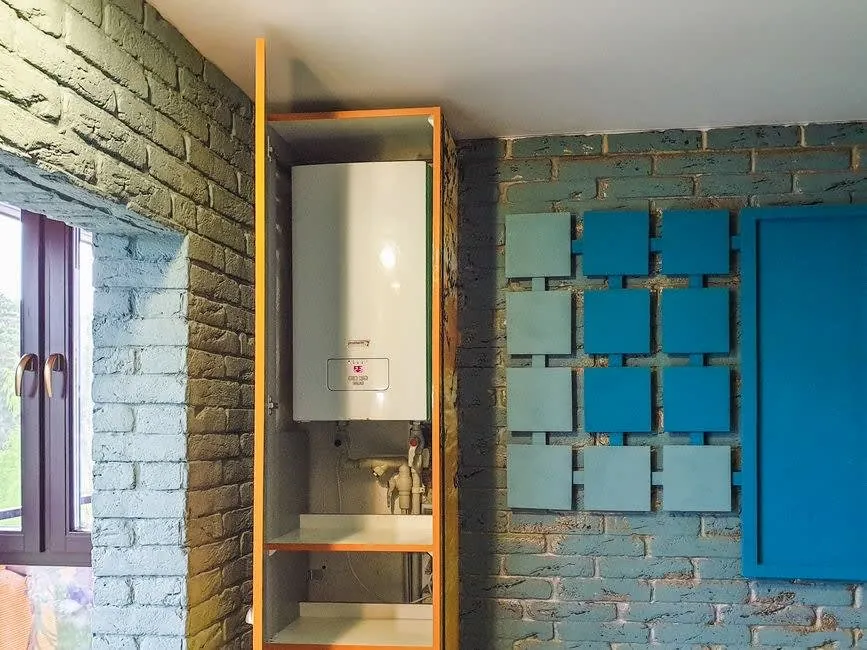
The hot water route also changes the room itself. An unvented cylinder needs somewhere to live and somewhere for its discharge pipe to go. A gravity system needs the tank left where it is, which constrains loft conversions. A combi frees up the airing cupboard entirely, and on a small Derby landing that can be the difference between a bath and no bath. When we survey for a full bathroom remodel, the system question gets settled on the first visit. Changing it later, once the floor is down and the walls are closed, costs several times what it costs while everything is open. Get the order wrong and you pay twice for the same pipe run.
What A New Derby Bathroom Actually Asks For, In Litres Per Minute
Hot water gets discussed in vague terms - good pressure, strong shower - when the useful unit is litres a minute. Every fitting has a number, they add up, and the total is what your system has to meet.
A basin mixer draws 4 to 6 litres a minute. A standard handset shower runs 9 to 12. A 200mm rain head is typically 12 to 16, and the big 250mm and 300mm ceiling heads climb to 18 or 22. Body jets are the quiet budget-killer at 4 to 6 litres a minute each, so four of them alongside a rain head asks for something in the region of 35 to 45 litres a minute. No ordinary domestic supply in Derby delivers that, which is why the people who fit body jets almost always end up storing water rather than heating it on demand.
Filling a bath is its own demand. A 1700mm bath holds roughly 140 to 180 litres to a sensible level, of which perhaps 100 to 120 is hot. At 20 litres a minute that is an eight or nine minute fill, which most people accept. At 9 litres a minute it is twenty minutes, and by the end the first water in is going cold.
Add up your worst-case morning
The honest test is not the single shower. It is the school run: shower running, basin tap going, and somebody filling a bath or running the kitchen tap. Write down the fittings you want, add their figures, and you have a target. Everything that follows is about whether your system can reach it.
Testing The Incoming Main Before Anyone Draws A Layout
Before a system can be recommended, the mains supply has to be measured. It takes about a quarter of an hour and there is no substitute for it, because the supply in one Derby street can differ from the next by a factor of two.
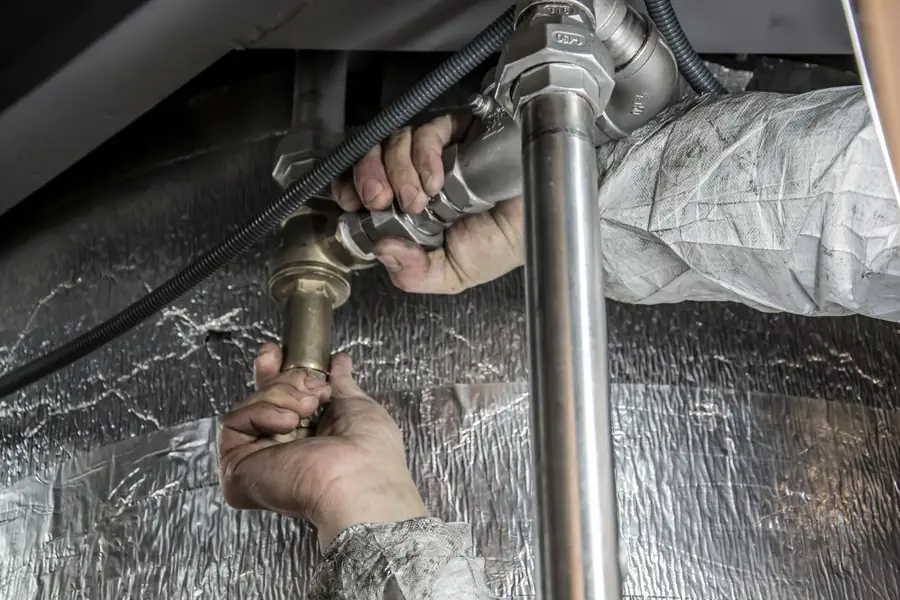
Three readings matter. Static pressure comes from a gauge on the washing machine valve or outside tap with nothing else running. Working pressure is the same gauge with the supply flowing, and it is always lower, sometimes dramatically so. Flow is measured with a graduated jug timed for 30 seconds and doubled. Severn Trent’s obligation is a minimum of 7 metres of static head at the communication pipe, and their target is 10 metres, which they set out in their published water pressure policy. That is measured at the network, not at your shower valve.
The supply pipe is usually what caps the flow. A 15mm feed from the boundary, standard in the Victorian terraces around Normanton and Peartree, tends to top out somewhere near 15 to 20 litres a minute however good the street main is. A 25mm MDPE replacement lifts that substantially and is the single most useful thing you can do to a house that measures poorly. If your supply is weak rather than your system, our guide to weak shower pressure in Derby homes works through the diagnosis in more detail.
Combi Boilers: Where They Cope And Where They Give Up
Combis dominate Derby’s housing, and for a single bathroom they are hard to argue with. No tank, no cylinder, no stored water going cold overnight, and mains pressure at every outlet. The catch is that a combi heats water in real time, so its hot water output is a fixed figure it cannot exceed no matter how long you wait.
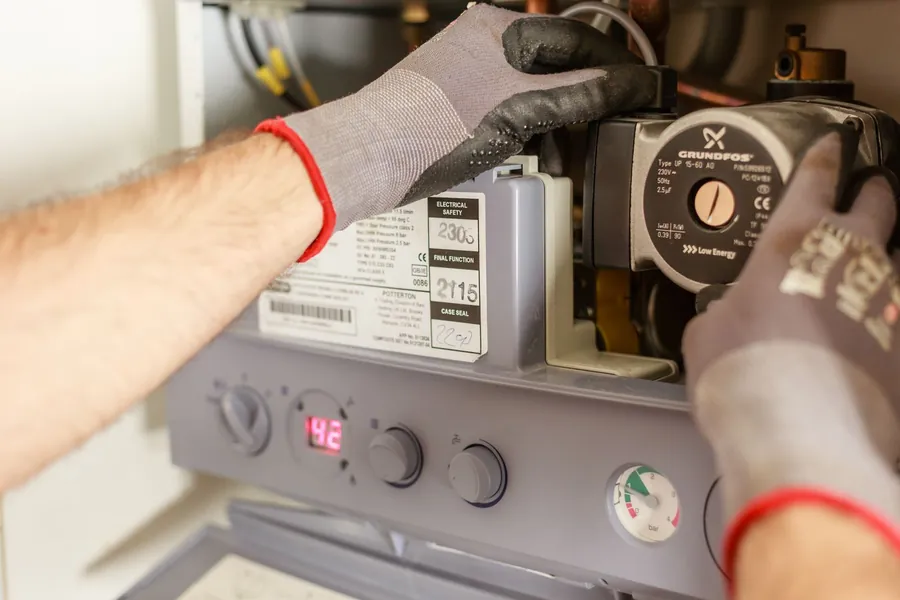
The maths is straightforward. Divide the boiler’s hot water kW rating by about 2.4 and you get litres a minute at a 35 degree temperature rise, which is the figure the industry quotes against. A 24kW combi gives about 10 litres a minute, a 30kW about 12, and a 35kW about 14. The very large 42kW units reach 17, but they need a gas supply and a mains flow capable of feeding them, and in a 1930s semi in Chaddesden with a 15mm supply pipe they will never see their rated output.
Then there is the two-outlet problem. Whatever the boiler produces is shared between everything running at once, so a 30kW combi supplying a shower and a bath tap simultaneously gives each about 6 litres a minute. Worse, the temperature wobbles as the boiler tries to modulate. For a one-bathroom terrace this rarely matters. For a house adding an en-suite, where two showers may genuinely run at eight in the morning, it matters a great deal, and no combi on the market solves it.
The winter caveat
Manufacturers quote flow rates at a 30 degree rise, which flatters the figure. Mains water in Derby sits around 12 to 15 degrees in summer and drops to 5 or 6 in January, so the rise you actually need is nearer 40 degrees. That knocks maybe 15 per cent off the advertised number at exactly the time of year you notice.
The Tank And Cylinder System, And The Pump Rules People Get Wrong
The classic arrangement in Derby’s interwar semis is a cold storage cistern in the loft feeding a copper cylinder in the airing cupboard. It is quiet, cheap to fix, and it delivers hot water to as many outlets as you like at the same time. Its weakness is pressure, which comes only from the height difference between the tank and the tap at roughly 0.1 bar per metre of drop.
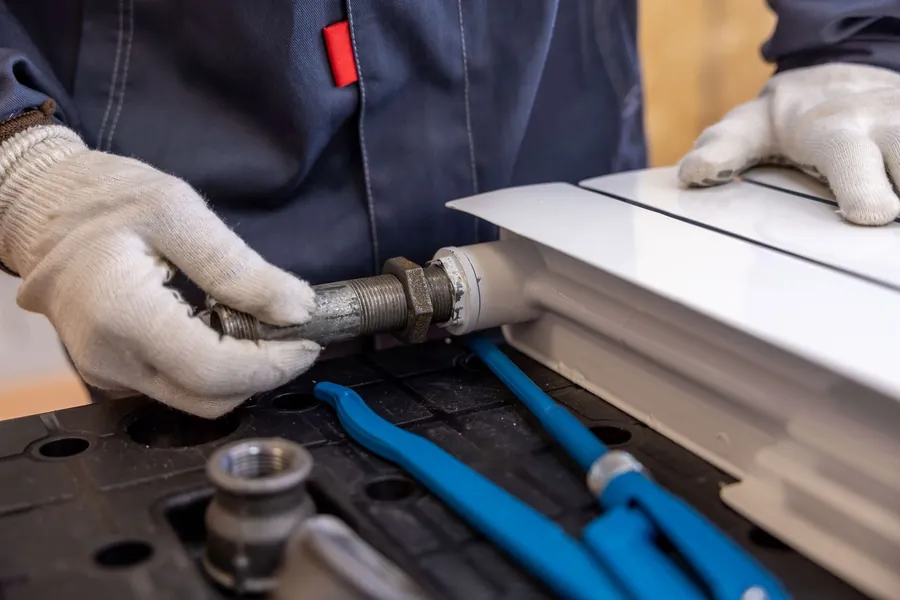
In practice a first-floor bathroom in a Littleover or Allestree semi gets two or three metres of drop, so 0.2 to 0.3 bar at the outlet. That fills a bath happily, because a bath only needs volume. It will not drive a rain head, and it makes thermostatic valves sulk because most need at least 0.5 bar to hold a temperature.
This is where pumps belong. A twin-impeller pump takes hot from the cylinder and cold from the tank, boosts both together, and typically gets a gravity shower to 2 bar or more. Expect £400 to £800 fitted, plus a fused spur and somewhere dry and accessible to mount it, usually the airing cupboard floor. Negative-head versions exist for bathrooms sitting barely below the tank.
What you cannot pump
You cannot fit a pump directly on the mains and expect it to be compliant. The Water Supply (Water Fittings) Regulations cap a booster at 12 litres a minute drawn straight from the supply pipe before the water undertaker’s consent is needed, and the detail behind that is maintained by Water Regs UK. You also cannot pump the outlet of a combi boiler, because there is no stored water to draw from and the boiler will lock out. Pumps need a cistern behind them. Any quote that ignores this has not looked at your system.
Unvented Cylinders And The G3 Rules That Come With Them
An unvented cylinder stores hot water at mains pressure, usually regulated down to around 3 bar. You get the volume of a cylinder with the pressure of a combi, every outlet at once, and no loft tank, which is why it has become the default for bigger Derby refits and for loft conversions where the cistern was in the way.
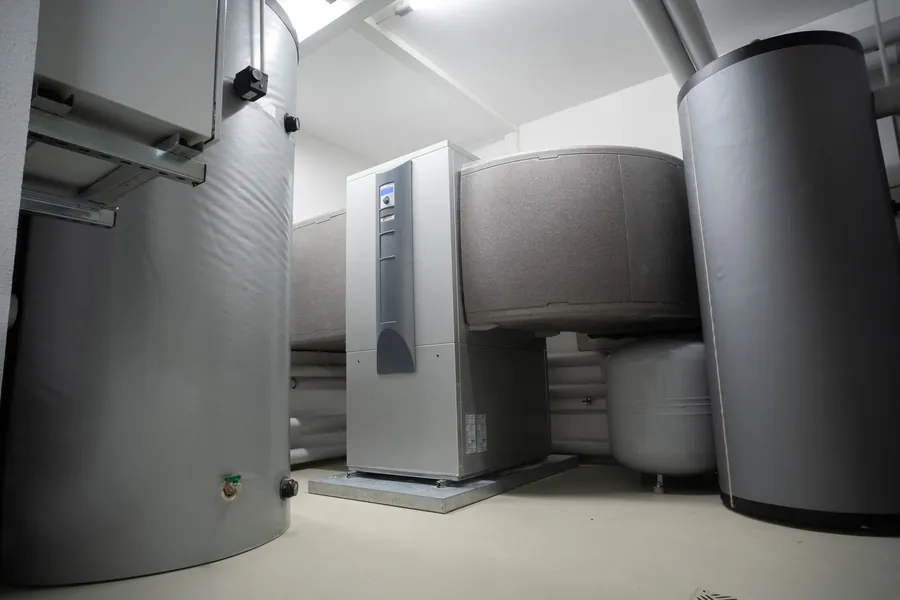
The trade-off is that it is a pressure vessel, and the rules reflect that. Installation is notifiable building work under Part G of the building regulations, covered in Approved Document G, and the installer must hold the unvented hot water storage qualification that everyone calls the G3 ticket. Ask to see it. It is a separate certificate from the gas one and not every heating engineer carries it.
The safety chain is layered. A pressure reducing valve on the inlet, an expansion vessel or internal air gap to take up the swell as water heats, an expansion relief valve, and a temperature and pressure relief valve set to open around 90 to 95 degrees. All of it dumps through a tundish, sited within 500mm of the safety device and left visible, into a discharge pipe terminating somewhere safe where nobody can be scalded.
That discharge route is what rules unvented out of some properties. In a Cathedral Quarter flat or a Friar Gate conversion with no external wall near the cupboard, getting a compliant discharge to daylight can be impossible without running pipe through somebody else’s demise. Part G also limits the temperature at a bath outlet to 48 degrees in new dwellings, so a thermostatic mixing valve goes in as part of the job even though the cylinder itself stores at 60 to 65 degrees to keep Legionella at bay.
Sizing A Cylinder For Your Household
If you go for storage, the size is the decision that determines whether the system feels generous or mean. Too small and the last person out of the door gets a tepid shower. Too large and you heat water nobody uses, then pay the standing losses on it every day of the year.
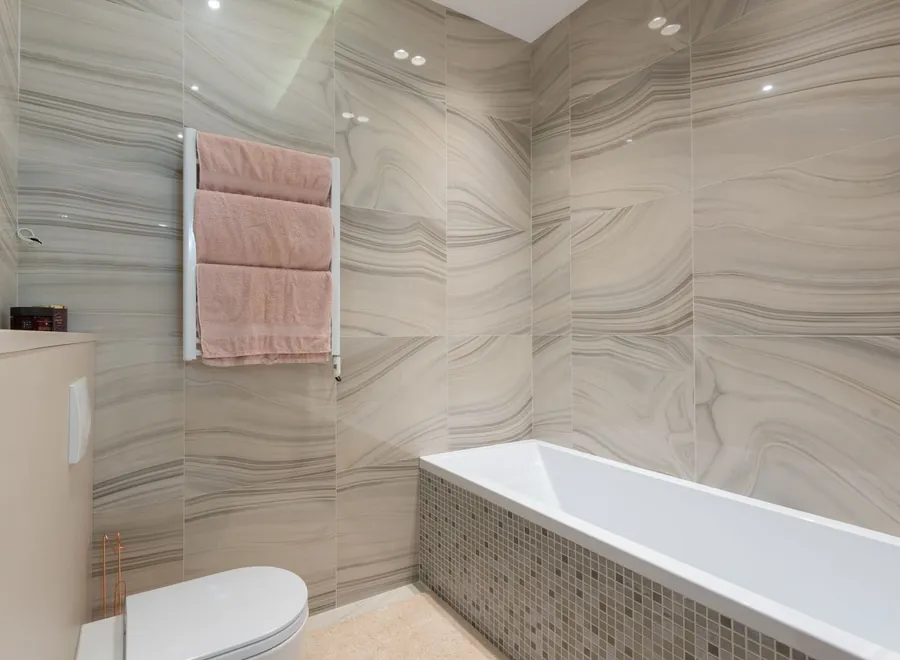
Start at 35 to 45 litres per person and adjust for behaviour. One bathroom and two or three people is comfortable on 150 litres. Two bathrooms and four people sits at 180 to 210. Three bathrooms, or a household where a bath and a rain head shower really do run together, wants 250 to 300. A modern 180 litre unvented cylinder is roughly 550mm across and 1350 to 1450mm tall, and needs another 300mm of clear space above it for the valve set, which is more than many airing cupboards on a Derby landing can offer without losing a shelf.
Reheat speed matters as much as volume. Bringing 180 litres from cold to 60 degrees takes about 9.4 kWh. Through a boiler coil at roughly 20kW that is half an hour, so a cylinder that empties at 7am is usable again well before lunchtime. Through a 3kW immersion on its own it is nearer three hours, which is worth knowing before you rely on the immersion as a backup. Standing losses on a well insulated modern cylinder run 1.5 to 2.5 kWh a day, so a needlessly large one costs perhaps £40 to £60 a year for nothing.
What Each Route Costs In Derby, And When To Decide
The cheapest option is always to design within what you already have. If the survey says a 30kW combi and a 22mm distribution pipe will comfortably run a good 12 litre shower, then specify a 12 litre shower and spend the money on tiling instead. Plenty of Derby bathrooms do not need a system change at all, and a fitter who reaches for an upgrade before measuring is guessing.

Where a change is justified, the ladder runs roughly like this. Replacing the incoming supply with 25mm MDPE is £700 to £2,000 depending on the run length and whether a drive has to be dug and made good, and it is often the highest-value thing on the list. A twin-impeller pump on a gravity system is £400 to £800. Swapping to a higher-output combi is £2,200 to £3,200 fitted. Converting a vented setup to a system boiler with a 210 litre unvented cylinder is generally £2,800 to £4,500, and if the boiler is being replaced at the same time the whole package lands somewhere between £4,500 and £7,000. Add £90 to £150 a year for the unvented service.
The timing is the part worth being firm about. Every one of these jobs is easier and cheaper while the bathroom is stripped. Pipework can be rerouted in an open floor, a cylinder position can be agreed before the airing cupboard is reclaimed, and a discharge pipe can be run before the plasterboard goes on. Decide at survey stage, not when the shower disappoints you in week one.
Frequently Asked Questions
Can a combi boiler run a rain head shower and a bath at the same time?
Almost never. A combi heats water as it flows, so its output is fixed and everything drawing at once shares it. A 30kW combi produces roughly 12 litres a minute at a 35 degree rise. A 200mm rain head on its own wants 12 to 16, and filling a bath quickly wants 18 to 25. Open both and each one gets half of a figure that was already tight. If two outlets running together matters to your household, that points at stored hot water rather than a bigger combi.
How does a fitter know if my Derby home can take an unvented cylinder?
By measuring the incoming main rather than guessing from the street. A gauge on the washing machine valve or outside tap gives static pressure, then the same gauge with the main running gives the working pressure, and a jug timed for 30 seconds gives flow in litres a minute. Most unvented manufacturers want somewhere around 1.5 to 2 bar working pressure and 20 litres a minute or better. Anything less and the cylinder will store plenty of hot water it cannot deliver quickly.
Is it legal to fit a pump to boost a shower in Derby?
On a tank-fed system, yes, and that is what pumps are built for. On the mains there are limits. The Water Supply (Water Fittings) Regulations only allow a booster to draw up to 12 litres a minute straight off the supply pipe before you need Severn Trent’s consent, and nothing at all can be pumped off a combi’s hot outlet. If a quote includes a pump without anybody establishing which system you have, treat that as a warning sign.
What size hot water cylinder do I need for a Derby family home?
Rough rule of thumb is 35 to 45 litres of storage per person, adjusted for how the house actually behaves in the morning. One bathroom and two or three people is usually fine on 150 litres. Two bathrooms and a family of four sits at 180 to 210. Three bathrooms, or a household where a bath and a big shower genuinely run together, needs 250 to 300. Oversizing costs you standing heat losses of a couple of kWh a day; undersizing costs you the last shower of the morning.
Does an unvented cylinder need servicing every year?
Yes, and it is not a manufacturer upsell. The expansion vessel loses its air charge over time, the temperature and pressure relief valve and expansion valve need exercising, and Derby’s hard water leaves scale on the immersion and inside the fittings. A service runs about £90 to £150 and keeps the guarantee alive. Skip it for five or six years and the first sign is usually water dripping from the tundish, which is the safety system telling you something has stopped working properly.
Not sure what your house can actually deliver? Book a free quote with Bathroom Fitters Derby and we will measure the pressure and flow before we talk about fittings.