16 July 2026
Choosing Bathroom Tiles for Your Derby Home: Porcelain, Ceramic and Natural Stone
Tiles do more work than almost anything else in a bathroom. They are the biggest surface you see, they take the brunt of the water, and they decide whether the room feels warm and characterful or cold and clinical. Getting them right is part looks and part practicality, and the practical side matters more in Derby than people expect, because the local water is on the harder side and a lot of the housing is older stock where walls are rarely dead flat. Around eight in ten of the bathrooms we tile involve some conversation about which tile suits the room, the budget and the upkeep. This guide walks through porcelain versus ceramic, natural stone, floor safety and grout, so you can choose with your eyes open.
Choosing the Right Tiles for a Derby Bathroom
Before the colour and pattern, it helps to think about where each tile is going and what it has to cope with. A shower floor, a splashback and a hallway-facing wall all live very different lives, and the tile that suits one may be wrong for another. The three big families are ceramic, porcelain and natural stone, and most Derby bathrooms use a mix rather than one tile everywhere.
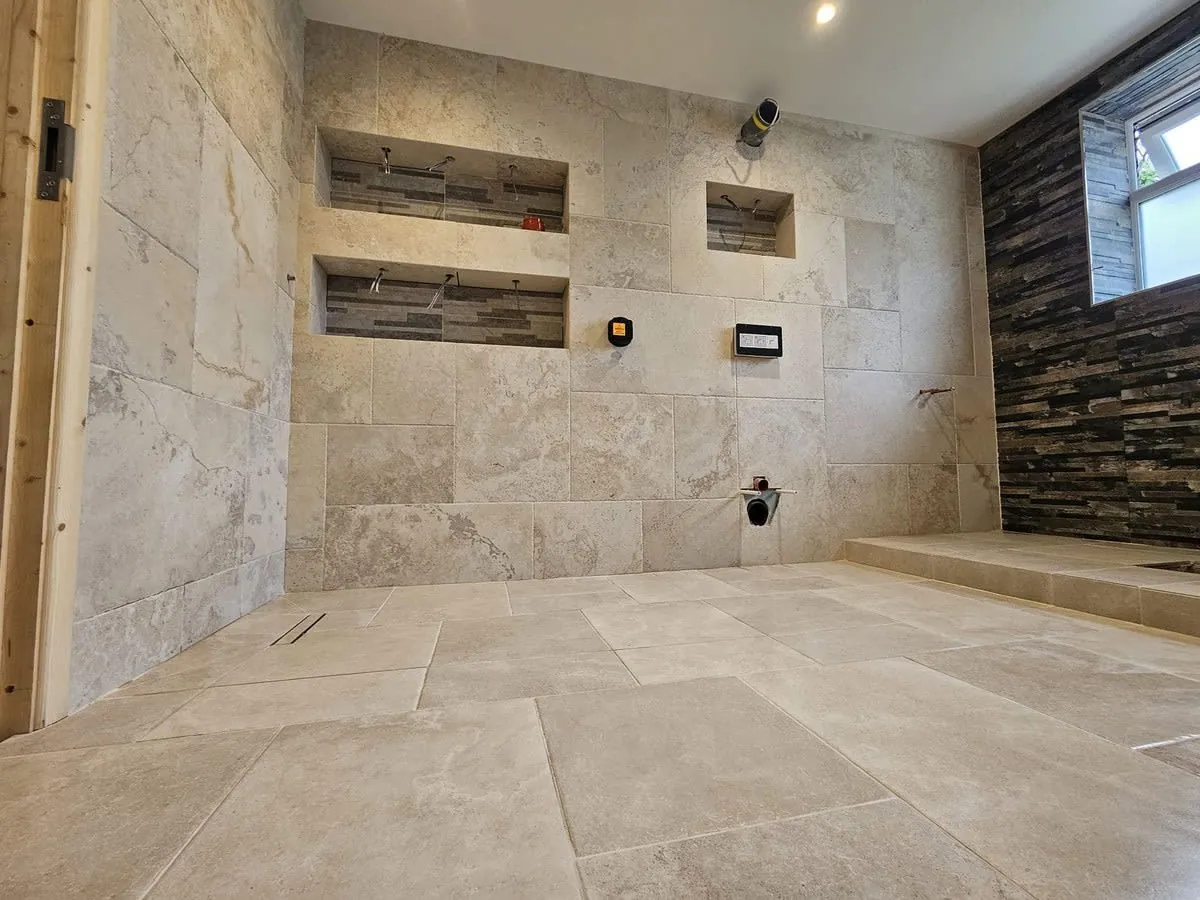
Water hardness is the quiet local factor. Derby’s supply is moderately hard, so limescale builds on tiles and grout around taps and shower screens, which nudges the sensible choice towards low-maintenance surfaces and grout colours that hide it. The trade body for the industry, The Tile Association, is a good neutral reference if you want to dig into standards. When it comes to fitting, our tiling services start with the wall or floor behind the tile, because even the best tile fails on a surface that is not prepared.
Porcelain vs Ceramic: Which to Choose
This is the choice most people wrestle with, and the honest answer is that both are good, for different jobs. Ceramic tiles are made from a softer clay, fired at lower temperatures, and are cheaper and easier to cut. They are fine for walls that do not take heavy wear, and they come in the widest range of colours and finishes.
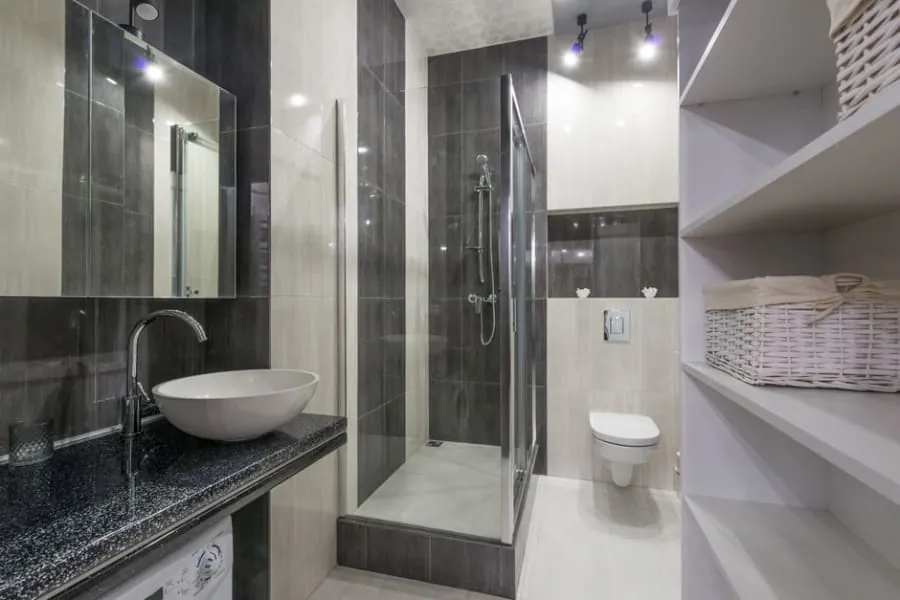
Porcelain is the tougher cousin. It is fired hotter and denser, absorbs almost no water, usually under 0.5 percent, and stands up to knocks and foot traffic far better. That makes it the go-to for floors, shower areas and anywhere that stays wet. It costs more and is harder to cut, which is where a good tiler earns their keep. For most Derby bathrooms the practical answer is porcelain on the floor and in the shower, ceramic on the drier walls, which keeps the cost sensible without cutting corners where it counts.
Natural Stone Tiles: Marble, Slate and Travertine
Natural stone brings a depth and variation that manufactured tiles struggle to copy. Marble reads as pure luxury, slate gives a dark riven texture that suits both modern and period rooms, and travertine has a warm, timeless feel. In the right bathroom, stone lifts the whole room.
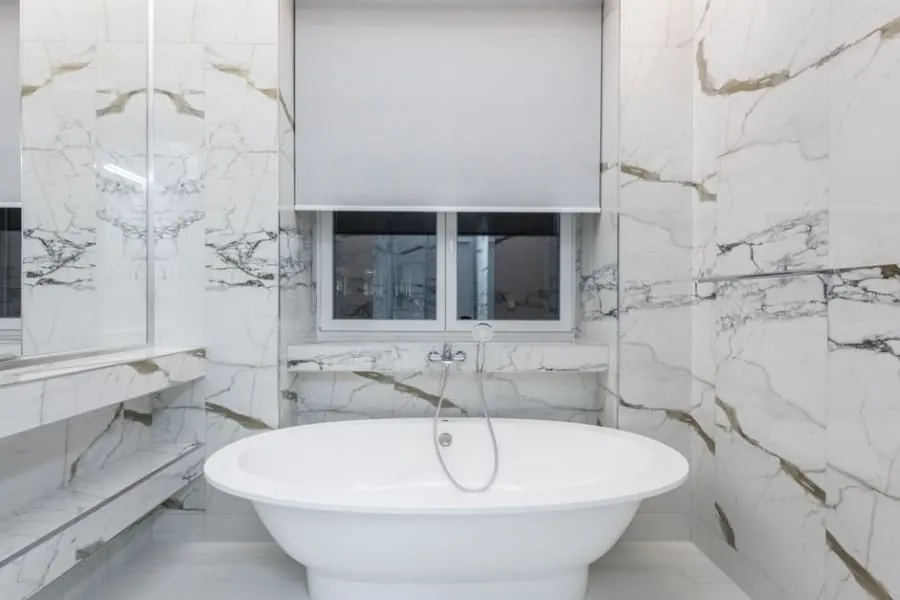
The trade-off is care. Every natural stone is porous to some degree, so it needs sealing before use and topping up over the years, or it stains and dulls. Marble is the diva of the group: anything acidic, from a splash of toothpaste to a cleaning spray, can etch its surface. In Derby’s harder water, unsealed stone also picks up limescale around taps. None of this rules stone out, and plenty of our clients happily accept the upkeep for the look, but it is worth going in knowing stone asks more of you than porcelain does.
Floor Tiles and Slip Resistance
A bathroom floor gets wet, so grip matters more than anything else down there. Tiles carry a slip rating, either an R-rating from R9 to R13 or a pendulum test value, and for a wet floor you want at least R10, or a pendulum value of 36 or above. The Health and Safety Executive’s guidance on slips explains how these ratings are measured if you want the detail.
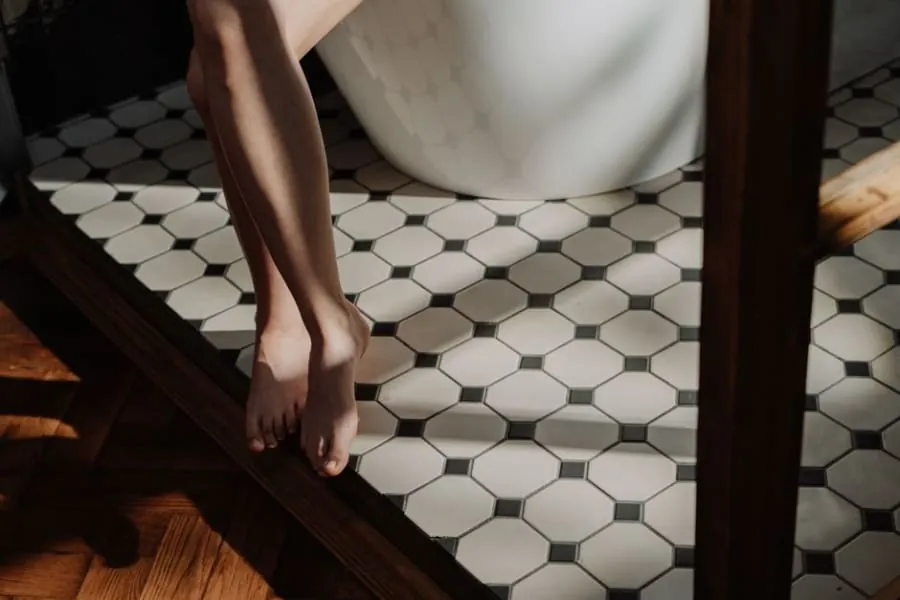
In practice this means a matt or textured porcelain rather than a high-gloss floor tile, which can be treacherous when wet. It matters most in a walk-in shower or a wet room where the floor is wet often, and less on a bathroom floor that only catches the occasional splash. A common and comfortable approach is a warm, textured porcelain over underfloor heating, which grips underfoot and takes the chill off a Derby winter morning. If accessibility is a concern, a level, well-drained tiled floor is central to getting it right.
Wall Tiles, Large Format and Grout
On walls, tile size changes the whole feel of a room. Large-format tiles, anything from 600mm upwards, have become popular because they mean fewer grout lines, a calmer look and less to clean. The catch is that they show up any unevenness in the wall, so on Derby’s older, wavier walls the surface often needs bringing flat first, or the tiles rock and the joints go wrong.
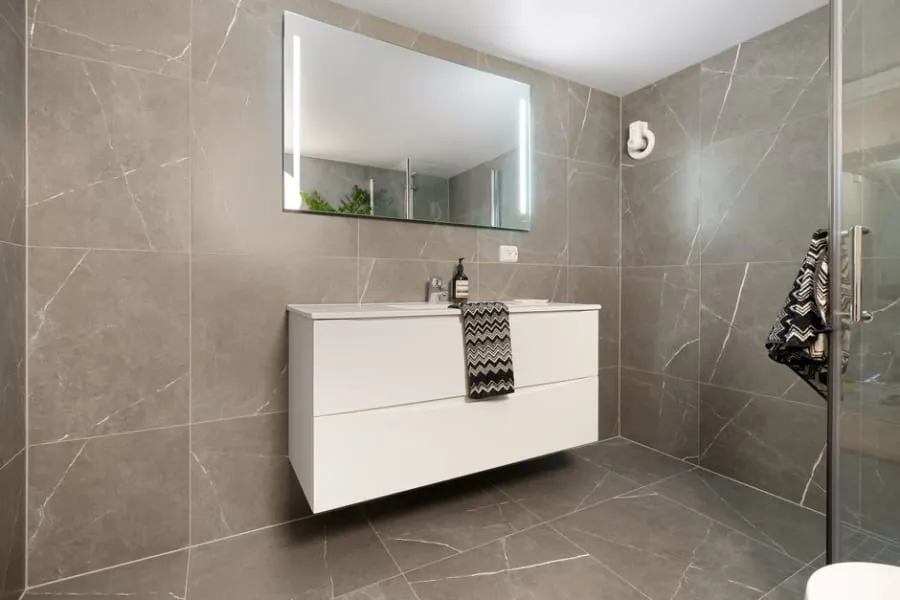
Grout is the detail that quietly makes or breaks the finish. White grout looks fresh but shows every mark and discolours over time, which is a real issue with harder water. A mid-grey grout hides limescale and everyday grime far better and gives each tile a clean frame. Matching grout to the tile makes large format read as one smooth surface; contrasting grout makes metro tiles stand out. For consumer-level pointers on fittings and finishes, Which? bathroom reviews are a useful sense-check.
Tiles for Derby’s Period and Modern Homes
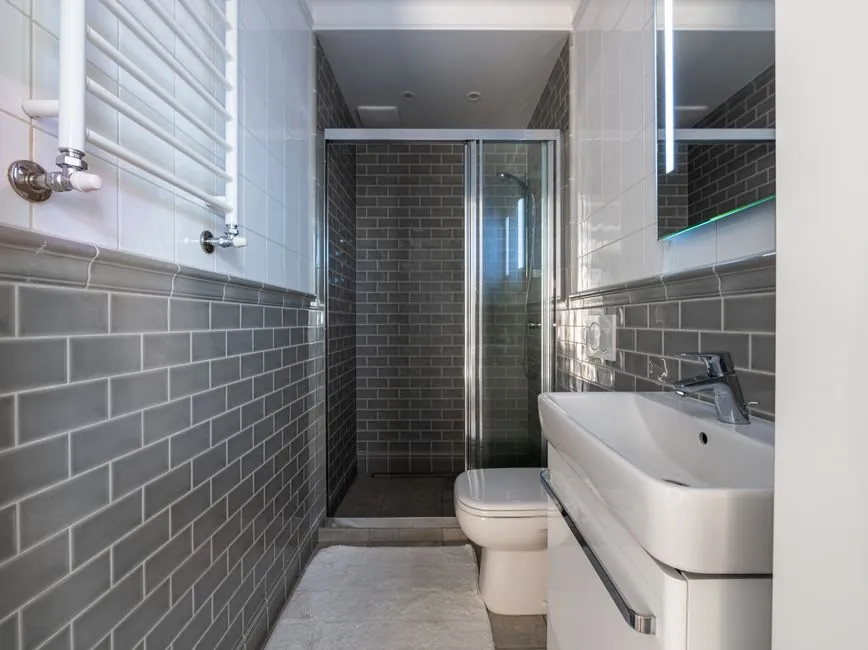
The right tile often follows the age of the house. In a Victorian or Edwardian terrace around Normanton or Peartree, metro tiles, geometric floor patterns and softer, traditional colours sit naturally with the building and tend to date slowly. They nod to the era without being a costume.
In a newer home on one of Derby’s modern estates, large-format porcelain, stone effects and clean minimal grout lines suit the straighter walls and open feel. There are no rules here, and plenty of period homes carry a bold modern scheme beautifully, but starting from the character of the house is a safe way to a room that feels like it belongs. If you are working on an older property, our guide to renovating a bathroom in a period terrace in Derby covers how the walls and floors behind those tiles need handling.
Frequently Asked Questions
Are porcelain or ceramic tiles better for a Derby bathroom?
For floors and wet areas, porcelain is usually the better choice because it is denser and absorbs almost no water, which makes it harder-wearing and easier to keep clean. Ceramic is softer and cheaper and is perfectly good for walls that do not take heavy use. Many Derby bathrooms end up with porcelain on the floor and shower and ceramic on the other walls to balance cost and durability.
Do natural stone bathroom tiles need sealing?
Yes. Marble, travertine, slate and limestone are all porous to some degree and need sealing before use and periodically afterwards, otherwise they stain and, in the case of marble, can etch from anything acidic. Derby’s water is on the harder side, so limescale can build on unsealed stone around taps and showers. Stone is beautiful but it asks for a bit more care than porcelain.
What tiles are safest for a bathroom floor?
Look for a tile with a slip rating suitable for wet areas, either an R-rating of R10 or above or a pendulum test value of 36 or more. Textured or matt-finish porcelain gives grip underfoot when wet, while high-gloss floor tiles can be slippery. It matters most in a walk-in shower or wet room where the floor stays wet.
What grout colour is best for a bathroom?
It depends on the look and the upkeep. White grout looks crisp and clean but shows dirt and can discolour over time, especially on floors. A mid-grey grout hides everyday marks and limescale far better, which suits Derby’s harder water, and it frames each tile neatly. Matching the grout closely to the tile makes a large-format wall look like one continuous surface, while a contrasting grout makes metro tiles pop.
Ready to choose tiles and get them fitted properly? Get a free quote from Bathroom Fitters Derby and we will help you match the right tile to your room, your water and your budget.