16 October 2026
Bathroom Fitters In Spondon, Chaddesden And Oakwood: What We Find Under East Derby's Floors
East Derby gets lumped together on the map, but Spondon, Chaddesden and Oakwood were built in completely different decades, and the bathrooms show it the minute the old floor covering comes up. Chaddesden was a parish of 560 people in 1921. It joined the borough in 1928, Derby Corporation bought Roe Farm in 1930 for what became its largest pre-war council estate, and by 1961 the population was over 15,600. Oakwood went up next door, mostly in the 1980s and 1990s, on what used to be Chaddesden Common. Spondon stayed a separate village until 1968 and still has an old core around Park Road and Sitwell Street. For anyone looking for bathroom fitters in Spondon, Chaddesden and Oakwood, that history matters more than tile samples. It decides what is holding the floor up, where the waste can go and how much the job costs. This guide runs through the room part by part rather than suburb by suburb.
Bathroom Fitters In Spondon, Chaddesden And Oakwood: Start With The House’s Age
A quick way to guess what we’ll find is to ask when the house was built. In Chaddesden it is usually the 1930s, either council-built on the Roe Farm side or private semis from the same period, including the Wood Road estate around Rupert Road and Max Road, started in 1936. In Oakwood it is late twentieth century almost without exception. Spondon is the mixed one: a few streets of eighteenth and nineteenth century brick houses in the old village, then plenty of twentieth century housing spreading out from it, much of it built after the Celanese works on the Derwent began taking on thousands of workers.
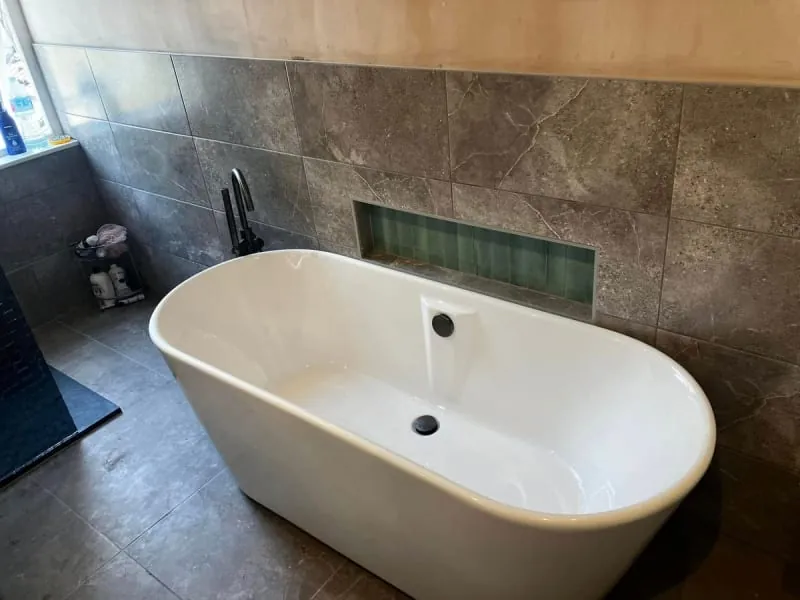
Most of our east Derby enquiries are for a straight swap or a full bathroom remodel where the layout changes. Either way, the survey covers the same four things in the same order: the floor, the walls, the hot water and the waste. The sections below take them one at a time and say what usually turns up in each suburb.
Under The Floor: Chipboard, Old Boards And The Odd Solid Floor
Oakwood floors cause more surprises than any other part of an east Derby bathroom. Houses of that era were commonly decked in chipboard sheets instead of separate floorboards. Chipboard is fine while it stays dry. Once a bath seal or a toilet base has been leaking slowly for a few years, it swells, crumbles at the edges and goes soft. Customers tell us the floor “gives a bit” by the toilet. That’s usually what it is.
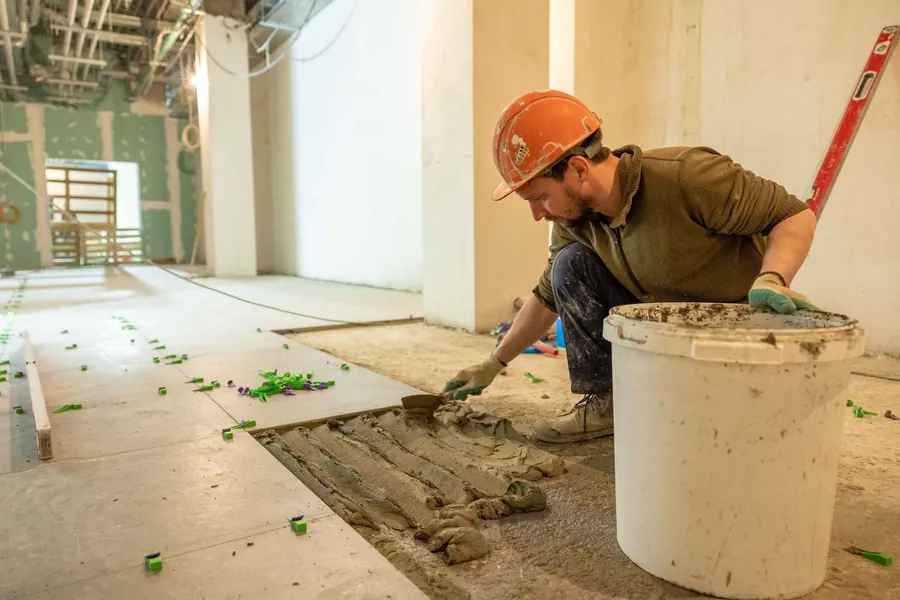
The fix is not complicated, but it has to be done before anything new goes down. We cut out the damaged area back to sound board, check the joists underneath for rot, and screw in moisture-resistant boarding. Laying vinyl or tiles over swollen chipboard just hides the problem for a year or two.
Chaddesden’s 1930s houses usually have proper timber floorboards over joists, and the boards themselves are often fine. The joists are the worry. Ninety years of plumbers notching them to run pipes leaves some looking like a comb, and a cast iron or steel bath full of water and a person is heavy. We check every joist we can see and sister in new timber where they’ve been cut too deep. Downstairs cloakrooms in older Spondon cottages sometimes sit on solid floors with no damp-proof membrane, which changes the approach again.
Behind The Walls: What Takes A Fixing And What Doesn’t
Walls decide how a bathroom is waterproofed and what can hang on them. In Oakwood the partition walls are typically plasterboard on a timber or metal stud. That’s handy for hiding pipework and building in a concealed cistern, less handy if you want a heavy wall-hung basin or a big mirror cabinet. We put timber noggins in behind the board before it’s closed up so there is something solid to fix into.
Chaddesden’s interwar houses have brick walls under the plaster, and they hold fixings well. The trouble is the plaster itself, which tends to be blown in patches by the time it reaches us, especially around old windows where condensation has run down for decades. Around a bath or shower we take it off and use cement backer board or a tanking system rather than tiling onto old plaster and hoping.
Spondon’s older village houses need more care. Some have lath and plaster ceilings, uneven solid walls and no cavity at all, and they were built to breathe. Sealing every surface with modern impervious materials can push moisture somewhere you don’t want it. Good extraction matters more in these houses than in most, and we pick the wall finish to suit the building.
Hot Water: Why The New Shower Might Disappoint
Ask us what spoils most new bathrooms and we’d say the shower. Plenty of people pick a lovely rainfall head before anyone has looked at the boiler. In Chaddesden and Spondon, older systems are often a vented hot water cylinder in an airing cupboard with a cold tank in the loft. That gives gentle pressure upstairs. A mixer shower on that system needs a pump, or the heating needs changing.
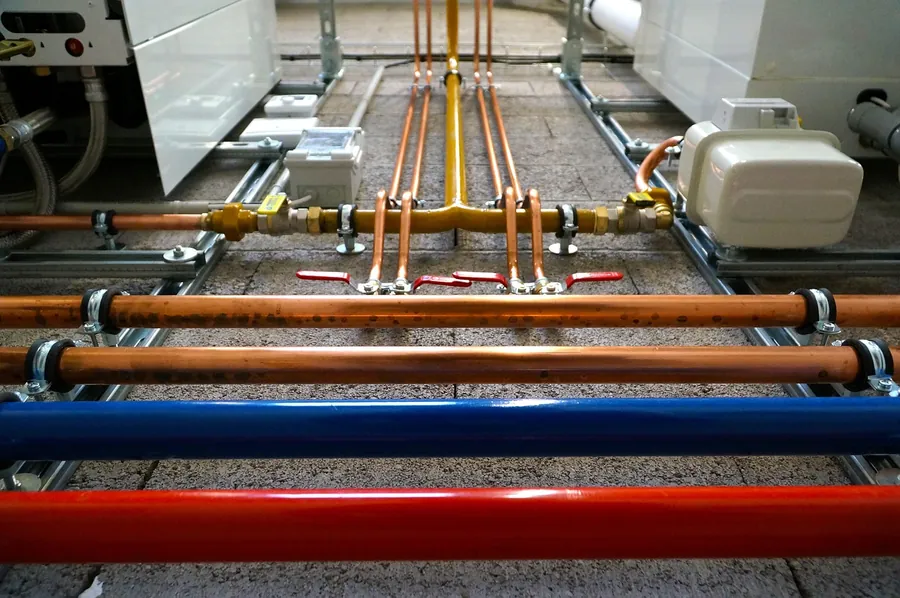
Oakwood houses are more of a mix. Some still have their original cylinder, many have since had a combi boiler, and the combi brings its own limit: it heats water as it flows, so a big shower head and a kitchen tap running at once can leave both lukewarm. We look at the boiler’s output and the incoming mains pressure before recommending a shower. Then we choose one that suits what’s there, or we tell you what has to change first. A pump costs a few hundred pounds. A new boiler is a separate job for a heating engineer and is far easier to arrange before the walls are tiled.
Electric showers are the other option and they are common across east Derby for good reason. They don’t rely on the hot water system at all, which makes them a sensible second shower in an en-suite, though they do need their own circuit from the consumer unit.
Waste Pipes And En-Suites: Oakwood’s Most Common Request
If someone in Oakwood rings about a bathroom, there’s a fair chance they actually want a second one. The bedroom sizes on these estates suit an en-suite and the houses often have the soil stack inside, boxed in near the main bathroom. A bedroom that backs onto that box is the cheap option. A bedroom at the other end of the landing is not.
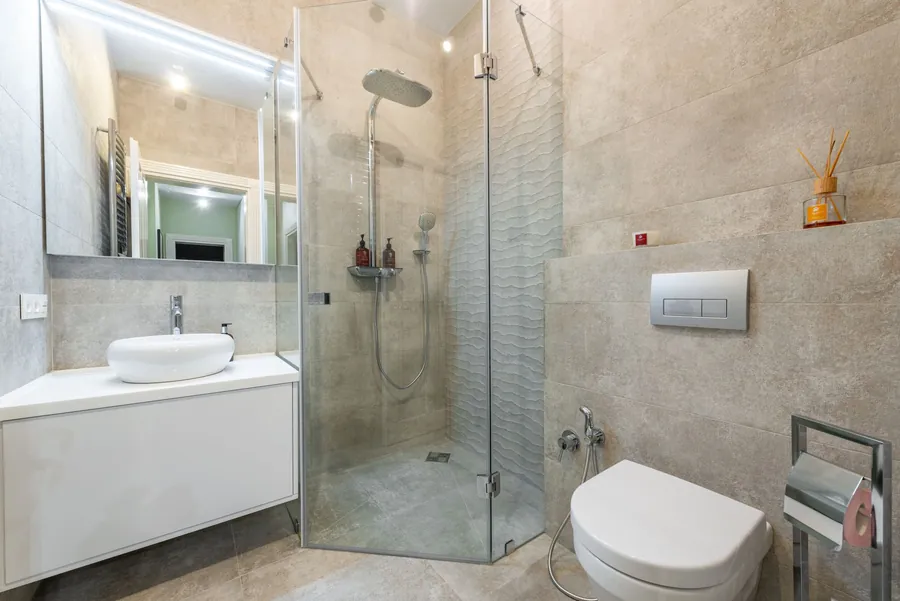
A toilet needs a 110mm waste with a steady fall back to the stack, and those pipes have to run between or through joists within strict limits. When the run is too long or crosses the joists the wrong way, the choices are a pumped macerator unit, a new stack, or giving up and putting the shower room somewhere else. The rules for drainage gradients and connections sit in Approved Document H on drainage and waste disposal, and we design to them rather than discovering the problem when the floor’s up.
In Chaddesden the soil stack is usually outside on the back wall and often still cast iron. Where it’s cracked or the joints are weeping, we replace it in plastic while the bathroom is out. Our post on bathroom fitting in Mickleover, Littleover and Allestree covers merging a separate toilet into the bathroom, which applies to plenty of Chaddesden semis too.
What Bathroom Fitters In Spondon, Chaddesden And Oakwood Usually Charge
These are the bands we quote within for labour plus mid-range products in east Derby. They’re a planning guide only. The figure we give you after the survey is fixed, and it includes anything we spotted that’s likely to add cost.
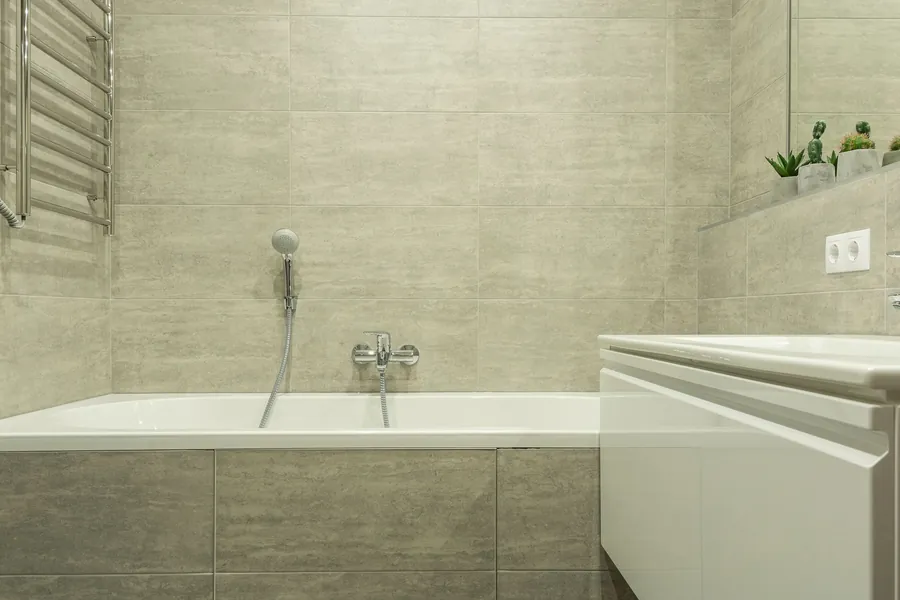
| Job | Usual band | What moves it |
|---|---|---|
| New suite, same layout | £3,200 to £4,800 | Chipboard patching in Oakwood, joist repairs in Chaddesden |
| Full refit, tiling and a better shower | £5,000 to £8,500 | A shower pump, a moved toilet, swapping a cast iron stack |
| En-suite in an Oakwood bedroom | £5,500 to £8,000 | How far the waste has to run |
| Older Spondon village house | Priced per job | Uneven walls, old ceilings, rules on the outside |
Based on the jobs we’ve handled across east Derby, the Oakwood ones are the likeliest to need floor repairs we couldn’t see at the survey, simply because a leak under chipboard stays hidden until the bath comes out. We price a small contingency for it and tell you up front.
Derby City Council Sign-Off, And Spondon’s Conservation Area
All three suburbs fall within Derby City, so the council is the same whichever one you live in. Anything that needs a formal building regulations application goes through Derby City Council’s building control service. For most bathroom jobs that only applies to new drainage, such as an en-suite, and to some ventilation work. Electrical work in the bathroom is normally self-certified by a registered electrician, and you receive the certificate afterwards.
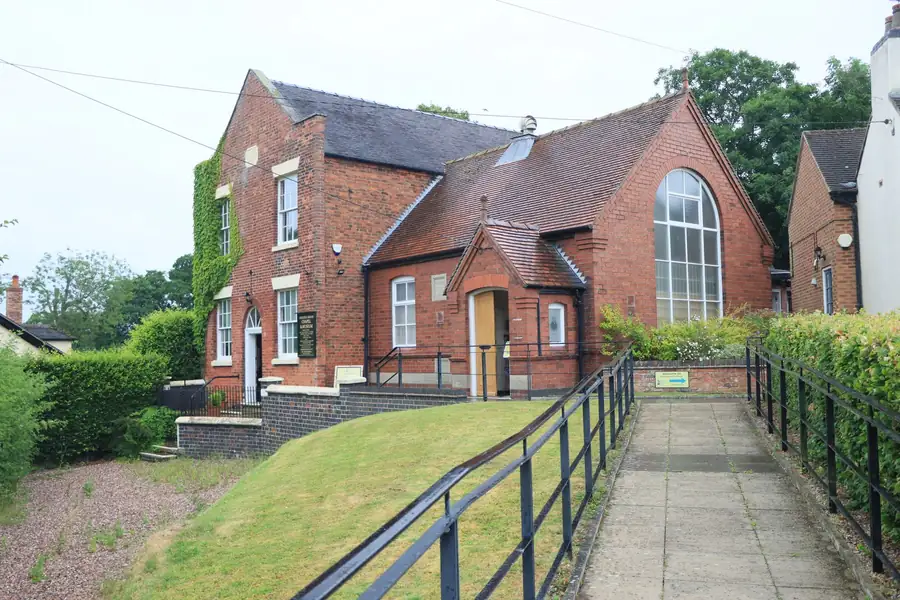
Planning permission is a different matter, and it only touches the outside of the house. Spondon has a designated conservation area around its old village core, and Derby City Council publishes a Spondon conservation area document describing its character. Inside the bathroom you can do what you like. A new window, an extractor vent through a street-facing wall or a soil pipe on the front of a house there is worth checking with the council first. Chaddesden and Oakwood have far fewer restrictions of this kind, though a new extractor outlet still needs to be placed sensibly on the wall.
Frequently Asked Questions
Why does the floor flex under the toilet in my Oakwood house?
Houses built in the 1980s and 1990s were often decked with chipboard sheets rather than floorboards. If the seal around the toilet, bath or shower tray has let water through for a few years, the chipboard swells and goes soft, and you feel it as a spongy patch. We cut the damaged section out back to sound board, screw a moisture-resistant replacement down to the joists, and only then fit the new suite.
Who signs off bathroom work in Spondon, Chaddesden and Oakwood?
Derby City Council, because all three are inside the city boundary. The council’s building control service handles anything that needs an application, such as new drainage for an en-suite. Electrical work in the bathroom is usually certified by a registered electrician under a competent person scheme, and you get the certificate afterwards without having to apply yourself.
Do I need permission for a bathroom in Spondon’s conservation area?
The work inside the room does not need planning permission. What needs a check is anything that changes the outside of the building, such as a replacement window, a new extractor vent through a front wall or a soil pipe on a visible elevation. The Spondon conservation area covers the old village core, so if you live on one of the older streets there, talk to Derby City Council’s conservation team before touching the outside.
How much does a bathroom cost in east Derby?
Swapping an old suite for a new one in the same positions usually costs £3,200 to £4,800 fitted with mid-range products. A full refit with new tiling, a better shower and some fittings moved tends to land between £5,000 and £8,500. An en-suite added to a bedroom in an Oakwood house is typically £5,500 to £8,000, depending mostly on how far the waste has to travel to the soil stack.
Live in Spondon, Chaddesden or Oakwood and thinking about a new bathroom? Arrange a free survey with our Derby bathroom fitters and we’ll check the floor, the pipework and the waste route before we put a price on it.