8 October 2026
Bathroom Fitters In Ripley And Alfreton: Butterley Houses, Coalfield Floors, Prices And Who Signs It Off
Ripley and Alfreton sit a few miles apart on the A38, both in Amber Valley, both built on coal and iron. Ripley is the bigger of the two, with 20,633 people at the 2021 census. Alfreton parish counted 8,799, though the old urban district with Somercotes, Swanwick and Riddings folded in was far larger, and between 1801 and 1931 its population went from 2,301 to more than 21,000. Most of that growth was housing put up quickly for pit and foundry workers. A century on, bathroom fitters in Ripley and Alfreton still meet those houses almost every week, alongside the postwar estates and newer builds round the edges. This guide is about what that history does to a bathroom job: what sits under the floor, where the waste goes, which council department cares, and what you can expect to pay.
Bathroom Fitters In Ripley And Alfreton: Same Road, Same Rates
From our base in Derby, Ripley is about twenty minutes up the A38 and Alfreton a few minutes further. We don’t add a travel charge for either. Our bathroom fitting in Alfreton page lists the work we take on there, and the prices are the same ones we give a customer in Mickleover.
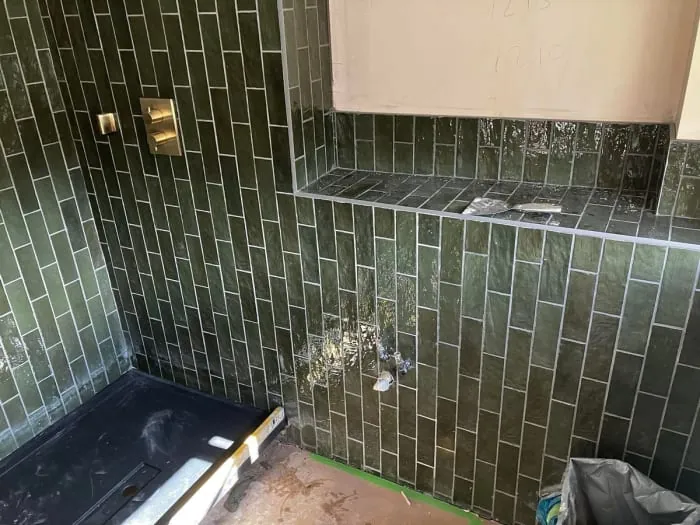
The jobs aren’t identical, though. A semi in Allestree and a Butterley Company cottage in Ironville can have the same size bathroom and need quite different work behind the tiles.
Houses The Butterley Company Left Behind
You can’t talk about housing round here without the Butterley Company. Benjamin Outram and Francis Beresford started it in 1790 at Butterley, on Ripley’s western edge. It went on to run pits across the area, dig the 2,966-yard Butterley Tunnel for the Cromford Canal, and much later make the arched roof at St Pancras. It also built homes for its workers. Ironville, between Riddings and Codnor Park, was laid out by the company mostly between 1834 and 1860 as a model village, with big gardens and its own gas and water works.
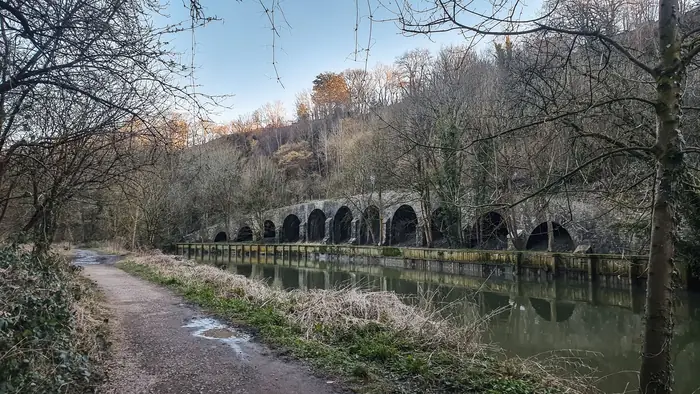
Those cottages and the red brick terraces in Ripley, Somercotes, Riddings and Alfreton went up long before anyone expected a bathroom indoors. When one was added, it usually took the box room or went into a lean-to off the kitchen. Both have quirks. A box-room bathroom over the stairs often has a joist that’s been notched to death by fifty years of plumbers, and a lean-to bathroom tends to be freezing because nobody insulated the roof.
Then there are the council and ex-council houses from the interwar and postwar decades. They are solid, square and predictable, with the bathroom usually at the top of the stairs and a soil stack on the back wall. These are generally the cheapest houses in the area to refit, and the most common in our diary.
Coal Under The Floor, Clay Under The Garden
Ripley’s mines belonged to the Butterley Company until coal was nationalised after the Second World War. Alfreton’s pits closed in the late 1960s, and their sites have been built on since. The ground under both towns has been dug and settled for a long time, and some of it still sits in what the Mining Remediation Authority, the old Coal Authority, calls a Development High Risk Area, meaning recorded workings at or near the surface.
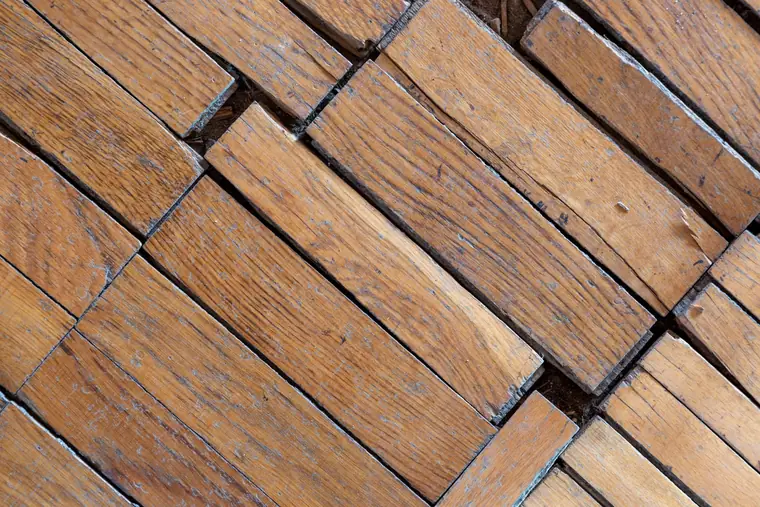
For an ordinary bathroom refit, that is background, not a reason to panic. What it means in practice is that a lot of the houses we lift floors in have moved a little at some point. Boards slope towards one wall. Door heads aren’t level. A bath that was fitted against a wall forty years ago now has a wedge-shaped silicone joint. We check everything with a laser before we price, and we allow for ply or levelling compound where the floor needs it, because large-format tiles show every dip.
The rocks under the area are the Coal Measures, which break down into heavy clay. Clay holds water and moves with the seasons, so a ground-floor bathroom in an extension sits on more demanding ground than the same room upstairs. If your project means building that extension, use the gov.uk coal mining property search first. It’s free and tells you straight away whether a mining report is worth ordering.
Severn Trent At Both Ends Of The Pipe
Severn Trent supplies the water in Ripley and Alfreton and takes the waste away again. The company also owns the big reservoirs in the county, Ogston a few miles north-west of Alfreton among them, though which source feeds your tap depends on the network on the day. The supply is hard, so we fit thermostatic showers and brassware that can stand being descaled.
The waste side is where Amber Valley terraces get interesting. Many of them drain through one shared run behind the row, so your toilet’s waste joins next door’s before it reaches the main sewer. Moving a toilet a metre is rarely a problem. Moving it to the other side of the house can mean a new connection into that shared run, and that’s when we look at the pipe with a camera before anybody starts lifting slabs.
Building an extension for a downstairs bathroom adds one more check. Severn Trent wants a build-over agreement before you build over, or within 3 metres of, one of its public sewers, and the shared pipe behind a terrace is often exactly that. Leave it until the footings are dug and the job stops while the paperwork catches up.
Alfreton Has A Conservation Area. Ripley Doesn’t.
This surprises Ripley people. For a town with a market charter granted in 1251, Ripley has no conservation area. Alfreton does, covering the old hilltop centre where the market began, designated in 1971 and enlarged in 1974. Riddings got one in 1980, in a village the coal owner James Oakes did a lot to shape after building Riddings House in 1820, and Codnor Park followed in 1993. The full list is on Amber Valley Borough Council’s conservation areas page, with a lookup for individual addresses.
For a bathroom, none of this matters until something goes through an outside wall. Inside, you can usually do what you like, unless the building is listed. Outside, a fan grille, a new soil pipe or a boiler flue on a street-facing wall in Alfreton’s old centre deserves a call to the council before it goes in. We route ducts and pipes to the back of the house wherever we can, which nearly always solves it. Belper is under the same planners, and its rules are a good deal stricter. Our guide to bathroom fitters in Belper and Duffield covers the Article 4 direction there.
Sign-Off Goes To The Same Place As Derby’s
Building control is simpler than in some of the towns we cover. Amber Valley doesn’t run its own department. The work goes to the Derbyshire Building Control Partnership, which Amber Valley shares with Derby City, Chesterfield, Bolsover, North East Derbyshire, Derbyshire Dales, High Peak and Staffordshire Moorlands. So a bathroom in Ripley is signed off by the same people as one in Darley Abbey.

Most of the time you won’t deal with them at all. Swapping a suite like for like needs no application. A new shower circuit or extra lighting is notifiable under Part P. An electrician registered with a competent person scheme self-certifies that work and the scheme tells building control for you, and a certificate turns up in the post a few weeks later.
Keep that certificate. When the house is sold, the buyer’s solicitor will ask for it, and getting retrospective approval for an uncertified shower circuit five years on is slow and irritating. If any notifiable work on your job is being done by someone who isn’t registered, an application has to go in before they start, not after.
Bathroom Prices In Ripley And Alfreton, And What Pushes Them Up
The figures are the same as anywhere else we work. Keeping the bath, basin and toilet roughly where they are, with tiling round the wet areas, usually costs £3,500 to £5,000. A full redesign, with a new layout, a walk-in shower or a proper thermostatic shower over the bath, most of the walls tiled and a new floor, typically runs £5,000 to £9,000.
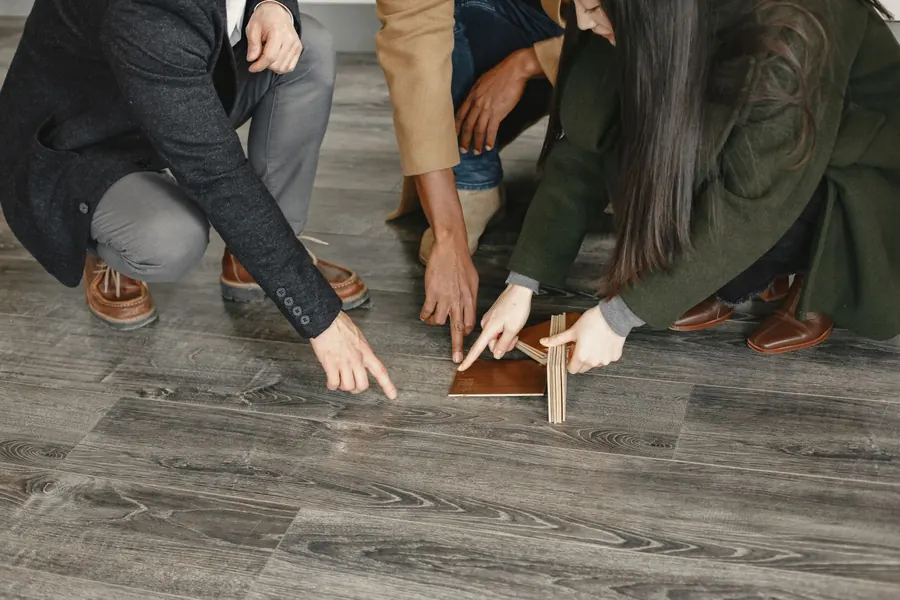
On the jobs we see in Ripley and Alfreton, the floor is the first thing that moves a price. Levelling an old suspended floor before tiling adds a day, sometimes two. Ex-council houses with sound floors rarely need it, and old terraces often do.
Where the room sits comes next. A bathroom in a single-skin lean-to needs insulating and boarding before anything decorative goes on, and on a small room that can be a surprisingly big share of the bill.
Then the drain. Leave the toilet where it is and it costs nothing extra. Move it into a shared run or under a new extension and you’re paying for a camera survey, maybe a Severn Trent application too.
Oddly, the suite is usually the smallest variable of the lot. If a quote is vague on the floor, the room and the drain, ask before you sign.
Ripley And Alfreton Bathroom Questions
Do you charge more for a bathroom in Ripley or Alfreton than in Derby?
No. Both towns are on the A38 and inside the area we cover as standard, so there is no travel surcharge. A like-for-like replacement usually costs £3,500 to £5,000 and a full redesign £5,000 to £9,000. Where a Ripley or Alfreton job does cost more, it is because of the house - a floor that needs levelling, a cold extension or a drain that needs moving - not the distance.
Who signs off bathroom building work in Ripley and Alfreton?
Amber Valley Borough Council’s building control is run by the Derbyshire Building Control Partnership, the same shared service that handles Derby city. Most bathroom work never reaches them directly, because a registered electrician self-certifies new circuits under Part P. If nobody on the job is registered for a notifiable item, or a new drain connection is involved, the application goes to the partnership before work starts.
Is my house in Ripley or Alfreton in a conservation area?
Ripley town centre is not in a conservation area. Alfreton is, around the old centre on the hill, and so are Riddings and Codnor Park nearby. Amber Valley’s website has a property lookup that tells you for certain. Inside work is almost never affected, but a new soil pipe, flue or fan grille on a front wall can need a closer look.
Should I worry about old coal mines under my bathroom in Ripley or Alfreton?
Not for a straight refit. Old workings are the reason some floors and door frames in the area are out of true, and we allow for that when we level and tile. If the job involves building a new extension, it is worth running the free gov.uk coal mining search on your postcode first, because a mining report covers recorded mine entries within 20 metres of the boundary.
Planning a new bathroom in Ripley, Alfreton, Somercotes, Swanwick, Riddings or Ironville? Get a free quote for your Amber Valley bathroom and we’ll check the floor and the drain before we give you a figure.