4 October 2026
Bathroom Fitters In Ilkeston And Heanor: Old Pit Ground, Kirk Hallam's Postwar Houses And Two Different Councils
Ilkeston is a town of around 38,000 people on the Derbyshire side of the Erewash valley, with Nottinghamshire a short walk east across the river. For a few hundred years it lived off coal, then lace and hosiery on top, and later the Stanton ironworks to the south. Each of those industries built its own houses, and that is the thing to understand before anyone quotes for a bathroom here. Terraces put up near the pits and the lace factories, council estates thrown up in a hurry after the war, and newer cul-de-sacs on the edges all need different work and come in at different prices. Then there is Heanor, about four miles up the road, which answers to a different council and a different building control body altogether. Below is what we have learned working across both.
Why Bathroom Fitters In Ilkeston Need To Know The Town
We fit bathrooms all over Erewash from our base in Derby, and our bathroom fitting in Ilkeston page lists what we do in the town. What that page does not go into is why an Ilkeston job is rarely quite the same as one in the city.
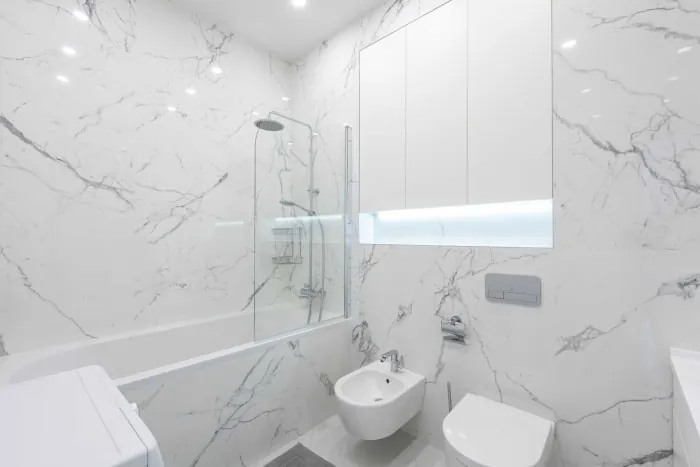
Most of it comes down to three things. The ground under a lot of the town was mined, so houses can sit a little out of true. Much of the housing is either Victorian industrial terraces or postwar council stock, and both have quirks that change the plan. And the borough boundary runs between Ilkeston and Heanor, so two neighbours a few miles apart deal with different offices. None of this is a problem if your fitter expects it. When they don’t, you find out halfway through, usually as an extra on the invoice.
Pit Ground And Why Floors Here Are Not Always Level
Coal was dug in Ilkeston from at least the sixteenth century. The local history society counts 21 pits in the area at nationalisation in 1947, and most of them were gone by the end of the 1960s. That leaves a town where many streets sit over old workings, some deep and some much nearer the surface.
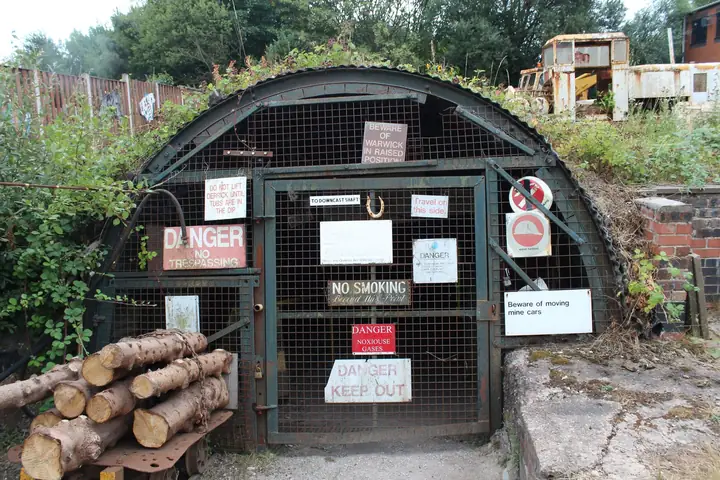
For a bathroom this rarely means anything alarming. The settlement that followed deep mining finished a long time ago. What it often left behind is a house that has moved and then stopped, and in the bathroom that shows up as a floor that falls a centimetre or two across the room, a door that has been planed to fit, or a corner that is visibly off square. Tile straight onto that and every grout line points out the slope.
So at survey we put a long level on the floor and a laser on the walls before we price anything. A floor that dips gets a levelling compound or new ply over the joists. Where a wall is badly out we may batten and board it rather than chase it with adhesive. We also use flexible adhesive and grout and leave movement joints at the edges, which is good practice anywhere but matters more on ground with a history. If you are buying in the town, or just curious, the Mining Remediation Authority’s coal mining information service has an interactive map showing recorded workings and mine entries near your address.
Lace-Era Terraces From Cotmanhay To Bath Street
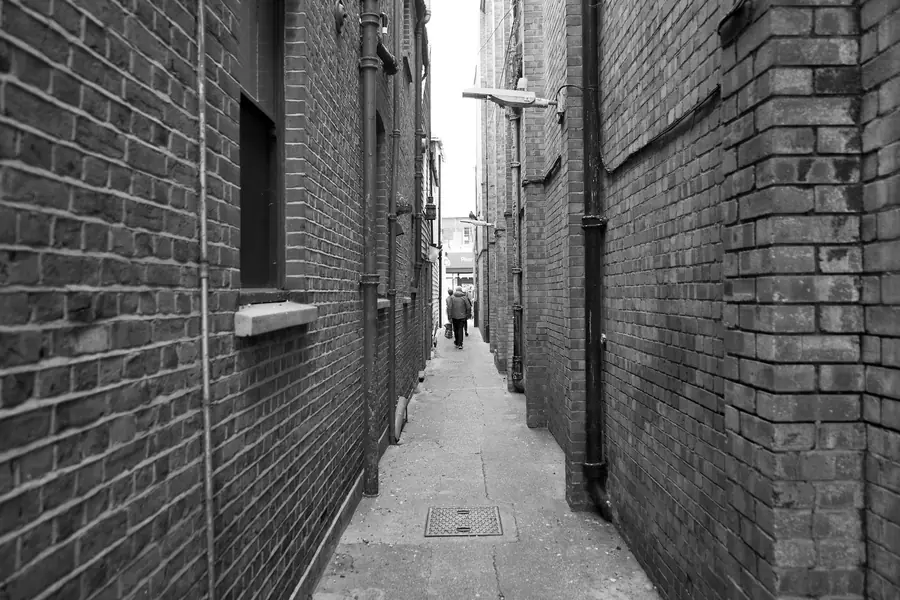
Ilkeston had five hosiery and six lace factories by 1850, and plenty more were added before 1914. The red-brick terraces around Bath Street, and up through Cotmanhay were built for the people who worked in them and in the pits. Most of them started with no bathroom at all.
That history decides where the bathroom is now. In some houses it was carved out of the smallest bedroom at the front, in others it went into a single-storey lean-to off the back kitchen, and a few still have it downstairs behind the kitchen with the toilet beside it. Each of those has a different waste route. A front-bedroom bathroom often has its waste running under the floorboards to a stack at the back, and the joists have usually been notched by every plumber who ever worked on it. We regularly find a section that has to be strengthened before a bath full of water and a person goes back on top.
Access is the other thing. Many of these streets have tight back entries and no off-road parking, so materials come through the front door and the old suite goes out the same way. It adds a little labour, nothing dramatic, but it is worth asking any fitter how they plan to deal with it.
Kirk Hallam And The Postwar Council Houses
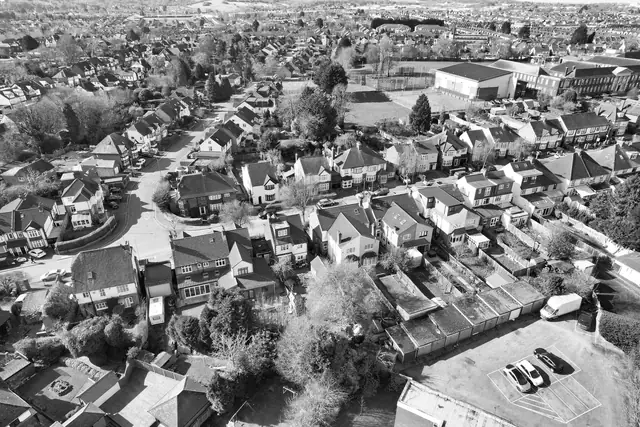
Kirk Hallam was a small farming village until after the Second World War. The south side, around St Norbert Drive, was built up in the 1950s and 60s with council housing put up by Ilkeston Borough Council and by Stanton and Staveley, the ironworks company. The north side followed in the 60s and 70s with a mix of council and private houses. Cotmanhay has a big postwar estate of its own, built along much the same lines.
A lot of houses from that era were built with the bathroom and toilet in separate small rooms side by side. Knocking them together is one of the most common jobs we get asked to quote in the area, and it usually works well. The dividing wall is normally a light partition, the soil stack is already there, and you gain enough floor to fit a full-length bath with a shower over it, or a decent walk-in enclosure. We still check the wall before it comes out, and we check whether anything above it is resting on it.
Two other things come up in these houses. Textured ceilings and some older floor tiles from the period can contain asbestos, so we test before we disturb them, as we explain in our post on asbestos in Derby bathrooms. And many ex-council homes have had their heating replaced at least once, often with a combi boiler in a bedroom cupboard. That is useful, because it means mains-pressure hot water, but it also brings in the scale question further down this page.
Heanor Is Four Miles Away And Under A Different Council
Ilkeston, Cotmanhay, Hallam Fields and Kirk Hallam are all in Erewash. Head north-west past Shipley Country Park and you are into Heanor, Langley Mill and Loscoe, which belong to Amber Valley. Heanor shares a lot of the same history, pits and hosiery and rows of brick terraces, but the paperwork goes somewhere else.

In Ilkeston, Erewash Borough Council’s building control service handles notifications and inspections directly. In Heanor, Amber Valley no longer runs its own team. Building control there is carried out by the Derbyshire Building Control Partnership, a shared service that also covers Derby city and several other Derbyshire councils. The rules are identical, since the Building Regulations apply nationally. What changes is the office, the fee and the forms.
For most bathrooms it never matters, because like-for-like suite swaps are not notifiable. It starts to matter when there is new electrical work in the bathroom zones, a new or altered soil connection, or a fan where there was none. A scheme-registered electrician or plumber sends the notification to the right body for you. If they are not registered, someone has to apply before the work starts, and sending it to the wrong council is a surprisingly common way to lose a week. We dealt with the Erewash side for a different set of towns in our guide to bathroom fitters in Long Eaton, Sandiacre and Borrowash, if you want the detail on what counts as notifiable.
What A New Bathroom Costs In Ilkeston
The prices we charge are the same in Ilkeston as in Derby. Keeping the suite where it is, with tiling around the bath and basin, generally comes to £3,500 to £5,000. A refit with a new layout, most of the walls tiled, a good shower and new flooring usually falls between £5,000 and £9,000.
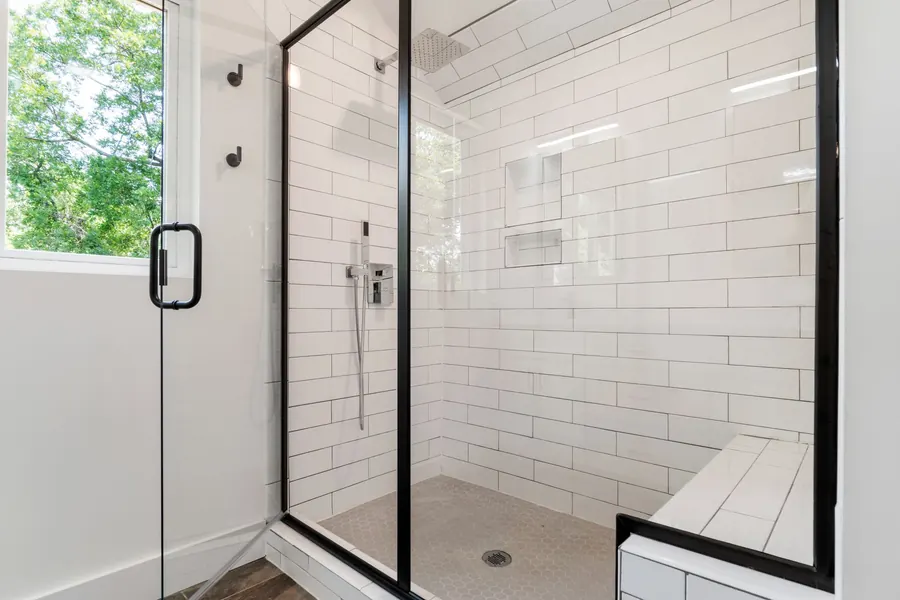
Where a particular Ilkeston house ends up within that range depends on which of the types above it is. A newer house on the edge of town with a standard layout tends to come in towards the bottom. A Kirk Hallam semi where the toilet wall is coming out sits in the middle to upper part, because there is demolition, making good, a new floor across both rooms and often a relocated radiator. A Victorian terrace with a sloping floor and tired joists is the one most likely to reach the top, purely because of the work under the floorboards that nobody sees once it is finished.
If you are comparing quotes, line them up on what is actually included. Ask whether floor levelling is priced in or listed as an extra if needed, whether the old suite and rubble are being taken away, and who is doing the electrics. Two quotes £800 apart are often the same job with one of those items left out.
Hard Water And The Combi Boiler Question
Ilkeston and Heanor are both on Severn Trent supply, and the water is hard enough that most households give up on keeping the kettle clean. In a bathroom it’s a nuisance on glass and chrome. Inside a combi boiler it can do real damage, because the plate heat exchanger that heats your shower water clogs up with scale.

This is where a bathroom refit and a boiler swap overlap. Government guidance that sits behind the Building Regulations says that where the mains water is harder than 200 parts per million, the cold feed into a combi boiler should be treated to slow down limescale. In practice that usually means an inline scale reducer fitted on the pipe before the boiler, and some manufacturers make it a condition of the warranty. If your bathroom job includes a new boiler, or the boiler is being moved, ask the heating engineer what they are fitting on the feed.
You can look up the exact hardness at your address on Severn Trent’s water quality checker. For the bathroom itself, the sensible defaults are a thermostatic shower with replaceable cartridges, coated glass on the screen, and a shower head with rubber nozzles you can rub clean.
Frequently Asked Questions
Is Ilkeston in Erewash or Amber Valley?
Ilkeston, Cotmanhay, Hallam Fields and Kirk Hallam are all in Erewash Borough Council’s area, and Erewash runs its own building control team. Heanor, Langley Mill and Loscoe are over the line in Amber Valley, where building control is handled by the Derbyshire Building Control Partnership instead. The address decides it, not the postcode or where your fitter is based.
Does living on old mining ground affect a new bathroom in Ilkeston?
Usually not in any dramatic way, because the deep pits closed decades ago and most of the settlement that followed has long since finished. What it can leave behind is a house that is slightly out of level, with sloping floors and walls that are not quite plumb. A good fitter checks this at survey stage and allows for levelling the floor and setting out the tiles so the lines still look straight.
How much does a bathroom refit cost in Ilkeston or Heanor?
A like-for-like swap of the suite with some tiling generally costs between £3,500 and £5,000. Moving things around, tiling most of the room and fitting a proper shower brings it to somewhere between £5,000 and £9,000. Knocking a separate toilet into the bathroom in a postwar semi, or replacing a sagging floor in a terrace, are the usual reasons a job lands near the top.
Can the separate toilet in my Kirk Hallam house be knocked into the bathroom?
Normally yes. The wall between them is usually a non-loadbearing partition, though we check before anything comes down. The soil pipe is already right there, so the toilet can often stay close to where it is. The work does not need planning permission, but any new electrics in the bathroom zones must be certified under Part P and notified to Erewash.
Do I need a water softener with a new combi boiler in Ilkeston?
Not necessarily a full softener, but the building regulations guidance says that where mains water hardness is over 200 parts per million, the cold feed to a combi boiler should be treated to slow down scale build-up. Most installers fit an inline scale reducer for this. Check your hardness on Severn Trent’s postcode checker, and if a boiler swap is part of the bathroom job, ask what treatment is being fitted.
Living in Ilkeston, Kirk Hallam, Cotmanhay or Heanor and thinking about a new bathroom? Book a free survey and quote and we will check the floor, the walls and the pipework before we give you a price.