8 September 2026
Asbestos In Derby Bathrooms: Textured Ceilings, Old Floor Tiles And What Happens Before The Rip-Out
Most bathroom projects in Derby start with a conversation about tiles and end up, at some point on the first morning, being a conversation about a ceiling. The city’s housing has a lot of pre-2000 stock - the interwar semis out towards Chaddesden and Littleover, the postwar estates at Mackworth, Sinfin and Alvaston, the terraces closer to the centre - and pre-2000 is the line that matters here. Asbestos was banned in Great Britain in stages, blue and brown in 1985 and white in 1999, and the Health and Safety Executive still attributes more than 5,000 deaths a year to past exposure. None of that means your bathroom is dangerous. It means one small check, costing less than a set of taps, is worth doing before anybody puts a bolster chisel through anything.
Why It Still Turns Up In Ordinary Houses
Asbestos in a domestic bathroom is rarely dramatic. It is not lagging on pipes or sprayed coating in a plant room. It is mundane building products that happened to contain a few per cent of chrysotile because it made them harder, more fire resistant and cheaper - and those products went into thousands of ordinary homes.

It also stays put through several refits. A bathroom fitted in 1978, updated in 1996 and updated again in 2011 may still have its original ceiling coating, its original floor tiles under two layers of vinyl, and an original panel boxing in the pipework - all covered over rather than removed, because covering over was quicker and nobody asked. That is why the age of the suite tells you almost nothing, and the age of the house tells you quite a lot. Our installation process builds a pre-start check into the survey for this reason rather than discovering it on day one with a skip already booked.
Textured Ceilings And The Dates That Matter
The textured ceiling coating people usually call Artex, after the best-known brand, is the most common find. Manufacturers removed asbestos from these coatings during the mid-1980s, so a ceiling swirled in 1990 is very unlikely to contain any, while one from 1972 might contain a small percentage of white asbestos.
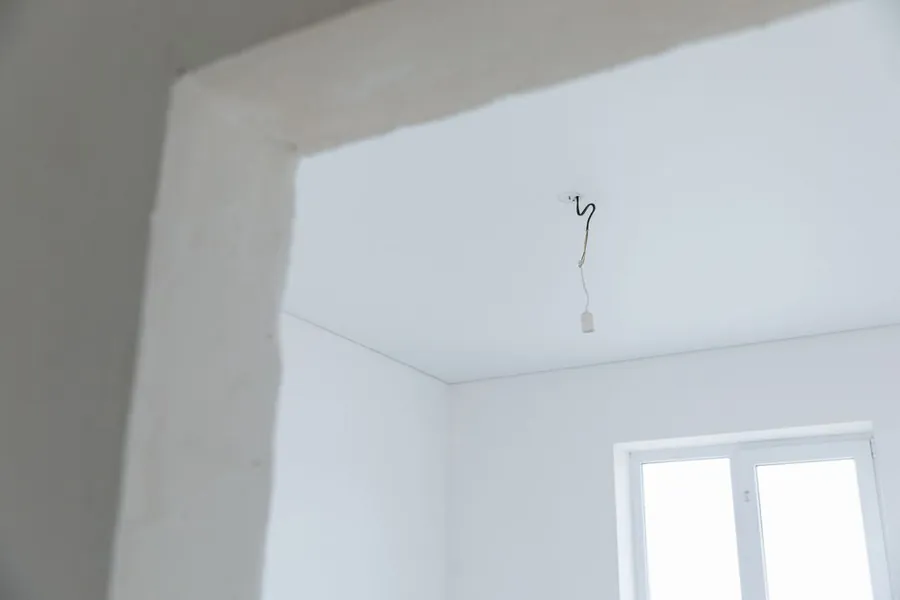
Two things matter more than the percentage. First, in that material the fibres are locked into a hard matrix, and while it is left alone on a ceiling it is not doing anything. Second, everything that makes it dangerous is a thing people do during a bathroom refit - scraping, sanding, drilling for a new extractor, cutting a hole for downlights, or dragging a board off it. The Health and Safety Executive’s own guidance on work with asbestos-containing materials is blunt about power tools in particular, because a sander turns a stable material into airborne dust in seconds.
In practice there are three sensible options: leave the coating in place and overboard it, have it removed properly by someone trained for the work, or have it skimmed over so it is sealed and flat. Overboarding is often the cheapest and least disruptive, though it costs you around 12mm of ceiling height and needs the new board fixed into joists rather than into the coating.
The Other Places It Hides In A Bathroom
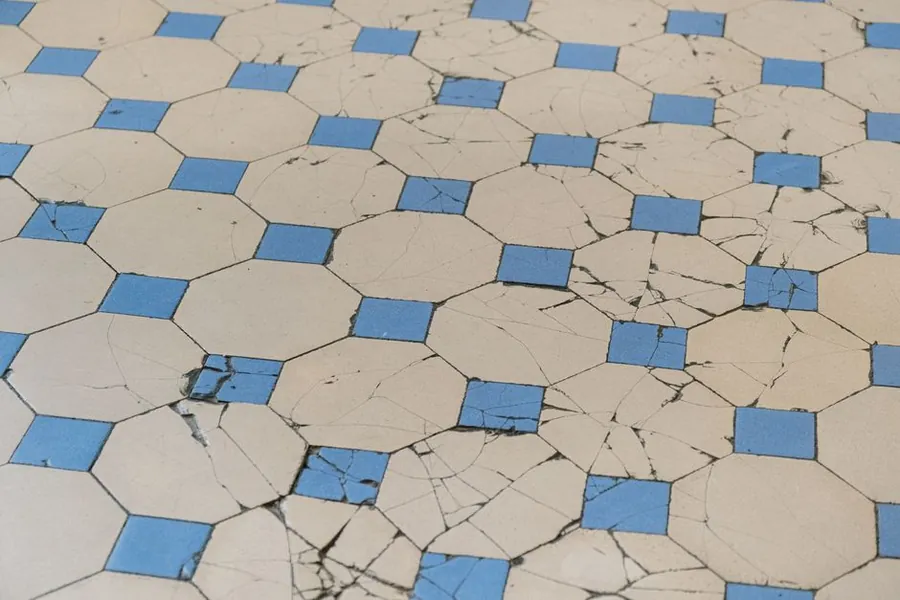
The ceiling gets the attention, but it is not the only candidate. Old thermoplastic floor tiles - usually 9 inch squares, often brown, green or grey - can contain asbestos, and so can the black bitumen adhesive underneath them, which is frequently overlooked when the tiles themselves test clear.
Then there is asbestos insulating board, which is a different and more serious material than a textured coating because it is soft and releases fibres far more readily. In a bathroom it shows up as a bath panel, as boxing around a soil pipe, as a panel behind a wall-mounted heater, or as the lining of an airing cupboard next door. Asbestos cement, harder and greyer, appears in old flue pipes and the odd cistern. None of it announces itself. That is the whole difficulty with it.
The useful habit is to think in terms of layers rather than rooms. Anything that was boxed in, boarded over or covered up in an older house deserves a look before it is broken, and a bathroom is a room where almost everything has been boxed in at some stage.
Testing: What A Sample Actually Involves
This is far less of an ordeal than people expect. A trained sampler takes a small piece of the material, usually dampened first, seals it in a bag, and sends it to a UKAS-accredited laboratory for analysis. You get a result within a few working days telling you whether asbestos is present and which type.
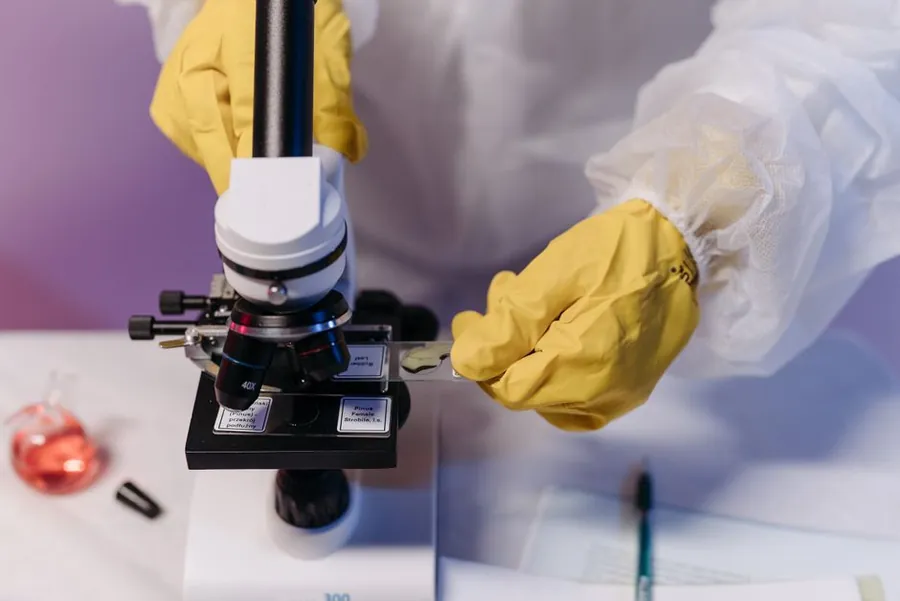
Budget somewhere around £30 to £60 for a single sample, more if several materials need testing. Against a bathroom refit running into thousands, that is rounding error. Safety is the obvious reason to do it. The other one is pricing: a quote written against a known result cannot move on you halfway through. This is the same logic behind the provisional sums we described in our guide to what is actually in a Derby bathroom quote: the honest way to handle an unknown is to name it and price it, not to hope.
One thing worth saying plainly - do not take the sample yourself with a kitchen knife and a sandwich bag. Sampling is the moment the material is disturbed, which is the moment it can release fibres, and it is the one step where the process itself carries the risk.
What Safe Removal Looks Like
If a result comes back positive and the material has to go, the work follows a method rather than a mood. Some asbestos work is licensed and only licensed contractors can do it. Textured coatings usually fall into the non-licensed category, which does not mean unregulated - it means the person doing it still needs training, the right equipment and the right method.
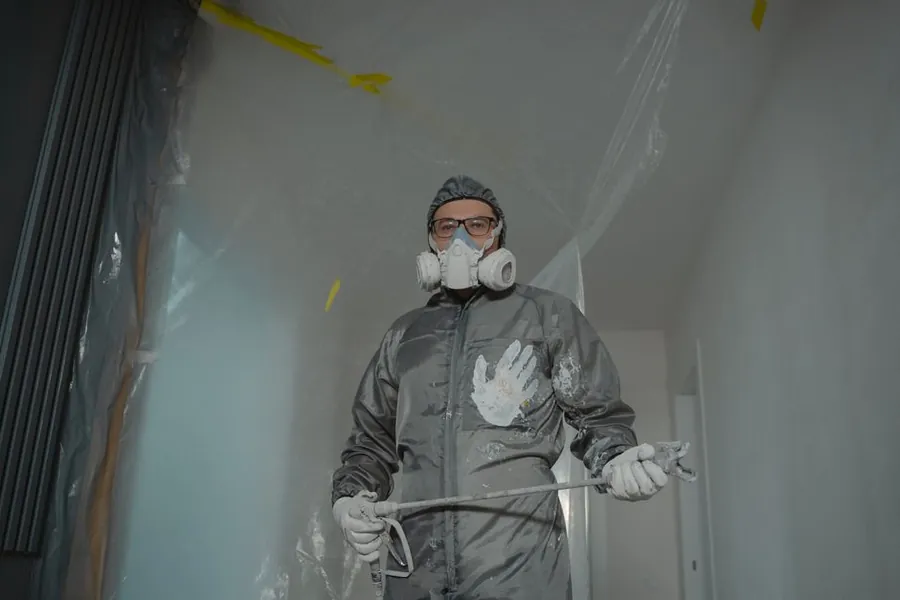
What you should see is a room emptied and sheeted, doorways sealed, the material kept wet throughout, hand tools only, disposable coveralls, and a proper fitted respirator rather than a paper dust mask. What you should not see is a household vacuum, a radio playing while someone scrapes a dry ceiling, or dust drifting onto the landing carpet. Cleaning up afterwards is part of the job, and a specialist vacuum designed for asbestos is not the same machine that does the rest of the site.
Expect the bathroom to be out of use for a day or two longer than a normal strip-out, and expect the rest of the house to be off limits to the works while it happens. That is normal and it is not a sign anything has gone wrong.
Waste, Paperwork And Where It Goes
Asbestos waste is hazardous waste, and the rules that follow it are stricter than anything else leaving a bathroom job. It cannot go in the skip with the old bath, it cannot go in a wheelie bin, and it cannot ride to the tip with the rubble.
Correctly handled, it is double-bagged in the specified red and clear bags, labelled, kept separate, and taken by a registered carrier to a site licensed to accept it, with documentation recording the movement. The government’s guidance on disposing of hazardous waste sets out the framework, and household waste sites that do accept small quantities from residents set their own conditions, so check what applies before you put anything in a car boot.
Ask for a copy of the disposal paperwork. It costs your contractor nothing, it is evidence the material went where it should, and it is a fair thing to want in a file with the rest of your bathroom documents.
How It Changes The Quote And The Timeline
The practical effect on a project is smaller than most people fear, provided it is found early. A positive result on a ceiling coating typically adds a specialist visit, some sheeting and controlled disposal, and a day or two to the programme.
Found late, the same discovery is far more expensive, because work stops with the room half demolished, the fitter’s following jobs shift, and the clean-up is larger. That asymmetry is the whole argument for testing during the survey rather than on the first morning.
Two related points are worth checking at the same time. Any new electrical work that comes with the bathroom - an extractor, downlights, a shaver socket - is notifiable under Part P, and Derby City Council building control is the local authority for that. And if the ceiling is being overboarded rather than stripped, say so in writing, so that whoever works in that room in fifteen years knows what is above their head. Leaving a note in the meter cupboard is not overkill; it is the sort of thing that stops the next person making a mess of it.
Frequently Asked Questions
Does a textured ceiling in a Derby house definitely contain asbestos?
No, and most do not. Manufacturers stopped putting asbestos into textured coatings in the mid-1980s, so a ceiling done in 1992 is very unlikely to contain any. The problem is that nobody can tell by looking, and coatings were reapplied over old ones for decades. The safe working assumption for anything applied before 2000 is that it might, until a sample says otherwise.
How much does an asbestos test cost, and how long does it take?
A single sample analysed by a UKAS-accredited laboratory typically costs somewhere in the region of £30 to £60, and results usually come back within a few working days. Compared with the cost of a bathroom refit that is close to nothing, and it converts an unknown into a line on the quote. A full survey of a whole house costs considerably more and is rarely necessary for one bathroom.
Can my bathroom fitter remove an asbestos textured ceiling?
Only if they hold current asbestos awareness and non-licensed removal training and work to the right method - controlled wetting, no sanding, no power tools, sheeted-off room, proper respiratory protection and correctly bagged waste. Many bathroom fitters, including plenty of good ones, do not do this work and will bring in a specialist instead. Anyone who offers to scrape it off dry the same afternoon should not be on your job.
What happens to asbestos waste from a Derby bathroom?
It is hazardous waste and cannot go in a skip, a wheelie bin or the back of a van with the rest of the rubble. It has to be double-bagged, labelled and taken to a site licensed to accept it by a registered carrier, with paperwork recording the movement. Some household waste sites accept small quantities from residents under strict conditions, so check the current rules before loading anything into a car.
Planning a bathroom in an older Derby house and want the checks done before the chisels come out? Get a free quote in Derby.