18 October 2026
Bathroom Fitters In Chellaston, Sinfin And Alvaston: South Derby House Types, Prices And Which Council
Ask people in Alvaston, Sinfin and Chellaston when their house was built and you get three very different answers. Alvaston was folded into Derby in stages, in 1928 and 1934, and the ring road that followed set off the first big wave of house building there. Sinfin came in partly in 1934 and partly in 1968, and the 1968 change kicked off its fastest growth. Chellaston joined the city in 1968 as well, but it really filled up later: around 820 people lived there in 1921 and the 2011 census counted 15,198. So if you’re looking for bathroom fitters in Chellaston, Sinfin and Alvaston, the useful question isn’t really “which suburb?” It’s “which decade?” That tells us what the walls are made of, what’s feeding the taps and where the waste can go. And on the southern edge it raises a question most people never think about, which is whether the house is even in Derby City at all.
Bathroom Fitters In Chellaston, Sinfin And Alvaston: First, Which Side Of The Boundary?
We put this first because it surprises people more than anything else in this post. The city boundary doesn’t follow the edge of the housing. Chellaston Fields, the strip along Chellaston’s southern edge that includes the Regents Place estate and a retail park, is run by South Derbyshire District Council. Stenson Fields, which merges with the newer side of Sinfin so smoothly you’d never spot the join, is a South Derbyshire parish too. Your postal address can say Derby and the council can still be in Swadlincote.
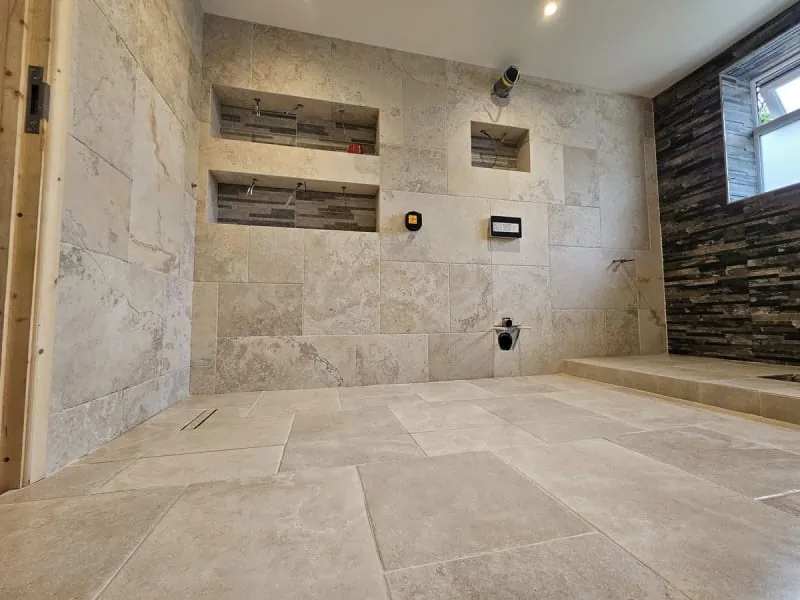
For a simple suite swap this changes nothing. For anything that needs building control, such as a new en-suite or a shower room in a former box room, the application goes to whichever council your house is in. If you aren’t sure, check your council tax bill or the GOV.UK find your local council tool. We check this at the survey anyway. Everything else we do across the area is covered on our bathroom fitting services page.
Alvaston: The Older Houses Either Side Of The Ring Road
Alvaston is the oldest of the three in housing terms. Most of what you see off London Road and around Alvaston Park dates from the decades after the 1928 extension, when the outer ring road cut the old parish in two and the estates went up on both sides. There are older survivors too, like the cottages on Church Street, and at the other end of the scale there’s City Point, the newer development on the site of the old Wilmorton College.
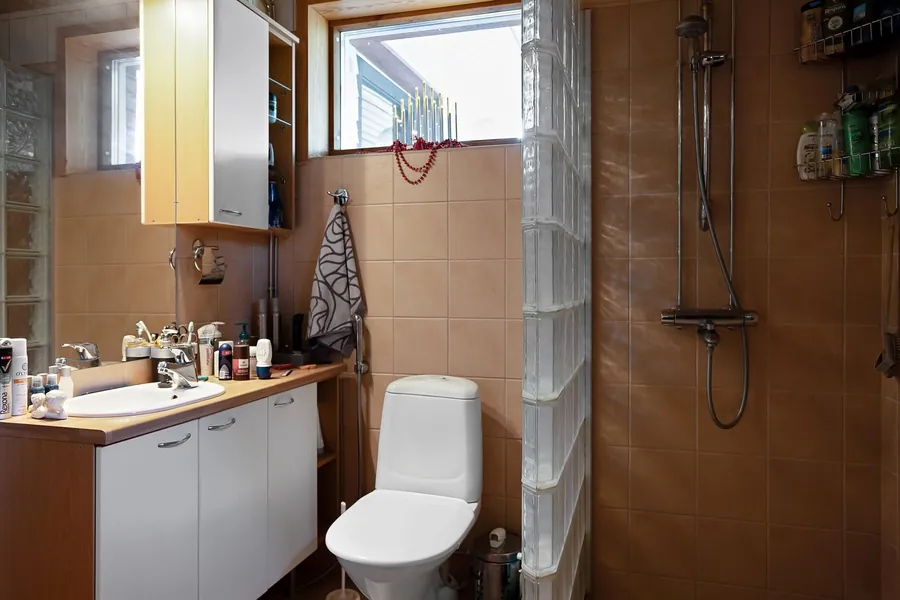
What we tend to find in the interwar and early postwar houses is a small bathroom at the back, often over the kitchen, that has been redone two or three times already. Each refit leaves something behind. You get tiles laid over older tiles, a boxed-in pipe that no longer goes anywhere, or a shower bolted on years after the house was plumbed for a bath. Under the floor it’s usually timber boards on joists, which is easy to work with. The thing to watch is any older pipework still in the run, and in houses this age we also look at the ceilings and any old floor tiles before anyone drills into them. Done right, an Alvaston bathroom rarely needs anything exotic. It mostly needs taking back to bare walls properly before anything new goes up.
Sinfin: Postwar Estates North Of The Railway, Newer Housing South
Sinfin has a handy natural divider. The older part sits north of the Derby to Crewe railway line. The newer part runs south towards Stenson Fields and is mostly modern housing, including the Sinfin Avenue estate, which was built in the 1970s with a mix of council and private homes. Rolls-Royce moving its main site down to Sinfin in 2007 brought plenty of buyers into these streets, and a good number of the bathrooms we see there are the first refit since the house was built.
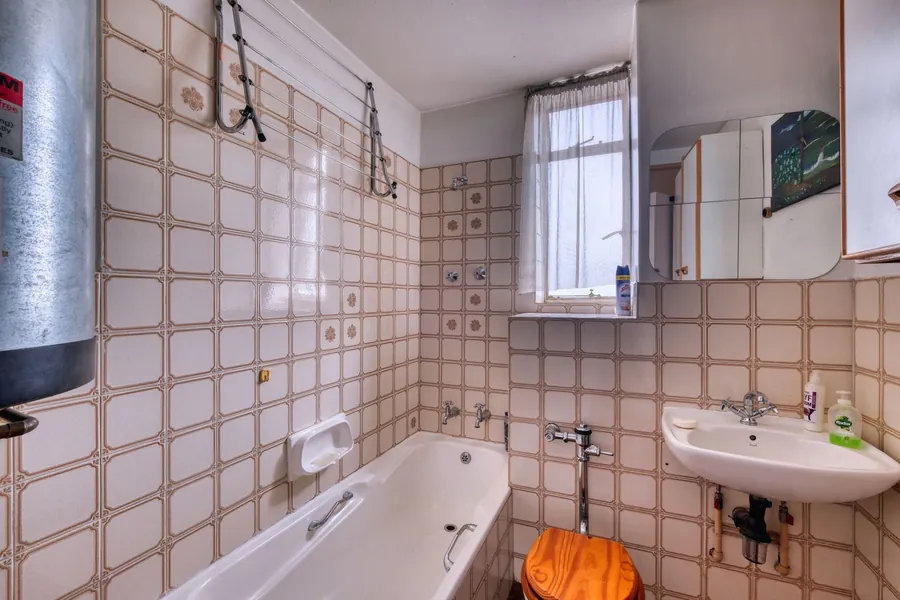
The 1970s houses here have their own habits. The bathroom is often a narrow room with the bath along the long wall and a hot water cylinder in an airing cupboard on the landing next to it. That cylinder matters, because it decides what kind of shower you can run. A gravity system with a cold tank in the loft will give you a weak shower unless you add a pump or change the system, and swapping to a combi boiler frees up the cupboard space but changes the whole job. Walls are generally block with plaster, or plasterboard on studs for the partitions, so they’re fairly forgiving. Honestly, the hot water shapes the price more than the tiles do.
Chellaston: An Old Village Wrapped In Newer Estates
Chellaston started as a village built on mining. It was once one of the country’s biggest sources of alabaster, and the cheaper grades went out by canal as gypsum, some of it to Josiah Wedgwood for pottery moulds. You can still find traces of the old pits off Pit Close Lane and Woodgate Drive. Most of the housing came much later. After 1950 it spread along Springfield Road and St Peter’s Road, and by the 1990s there were big estates around Sutton Avenue, Maple Drive and Parkway, plus around a thousand homes west of the old village near the line of the filled-in Derby Canal.
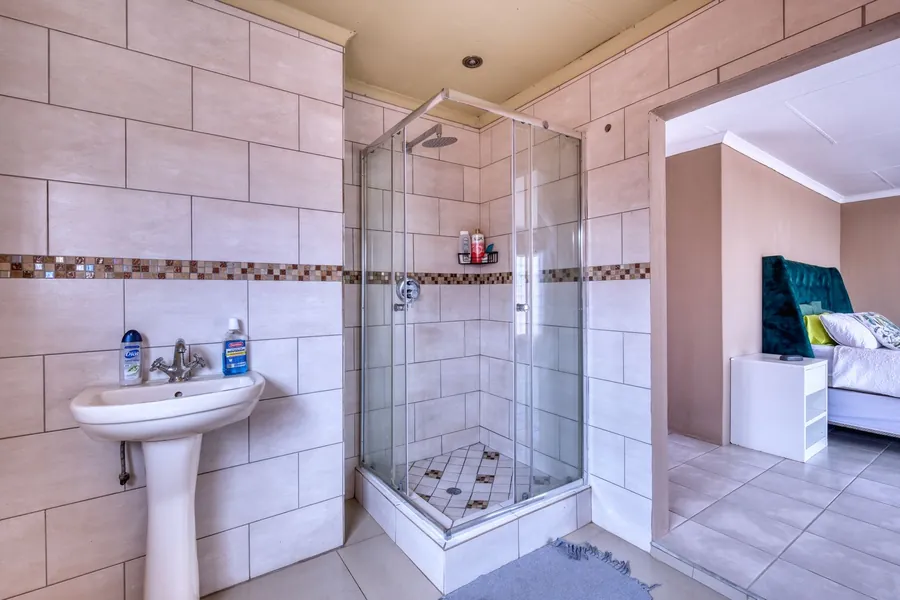
A lot of Chellaston enquiries come from those 1990s houses, and the job is often the en-suite rather than the main bathroom. The original builder fitted a tiny shower cubicle in the corner of the main bedroom, the seals have gone and the tray has started to creak. The fix sounds simple, but these houses often have engineered joists, either I-beams or metal-web types, which can’t be notched or drilled the way traditional joists can. Plasterboard is usually stuck to the blockwork on adhesive dabs, which won’t take heavy tiles or a wall-hung toilet frame without extra fixings. Neither is a big deal if we know before we start.
Rough Prices Across The Three Suburbs
These are planning figures for labour and mid-range fittings together, based on the work we take on across south Derby. They aren’t a quote. We fix the number after the survey.
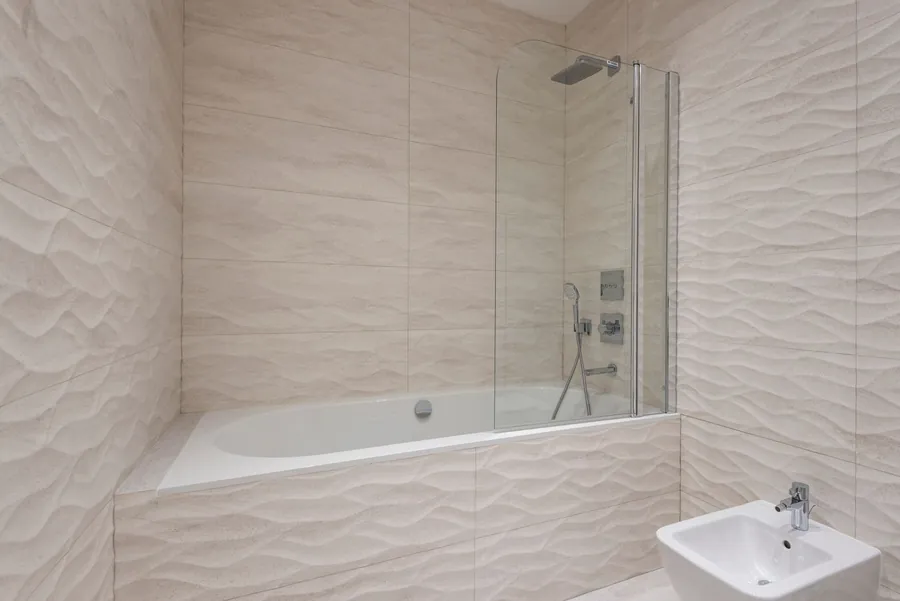
A like-for-like suite swap in any of the three suburbs is roughly £3,300 to £5,000, more if old tiles have to come off in layers or the floor needs patching. A full refit with tiling and a proper shower is usually £5,200 to £8,500, and in Sinfin the hot water tends to decide where in that band you land, since a pump or a cylinder change can add a few hundred pounds or more.
Chellaston en-suites split two ways. Replacing a tired 1990s one with the shower kept in the same corner typically costs £4,000 to £6,000. Adding an en-suite where there wasn’t one is more often £5,800 to £8,500, and the distance to the soil stack decides most of that gap.
Across the south Derby jobs we’ve priced, Sinfin bathrooms are the ones most likely to turn into a heating conversation as well. If your boiler is near the end of its life, it’s worth getting that quote in parallel so the two trades can plan around each other.
Who Signs Off Your South Derby Bathroom
If you’re inside the city boundary, that’s Derby City Council. If you’re in Chellaston Fields or Stenson Fields, it’s South Derbyshire. Either way, most bathroom refits never need an application. The ones that do are jobs that add new drainage or put new electrical circuits into the room. A registered electrician can self-certify the electrics and sends you the certificate afterwards.
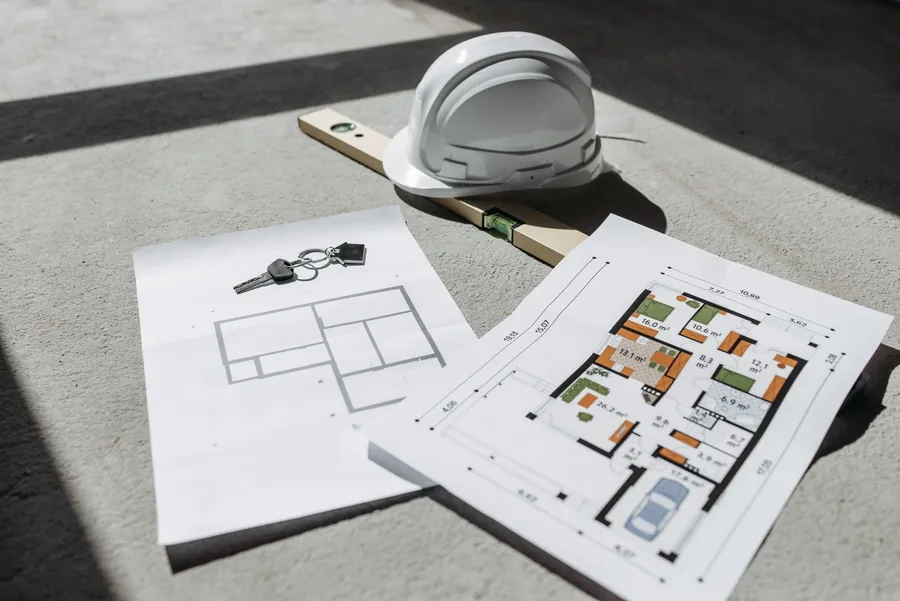
For new drainage, the application goes to Derby City Council’s building control service for most addresses here, or to South Derbyshire District Council building control if you’re south of the line. Planning permission hardly ever comes into it. Derby has sixteen conservation areas, and none of them covers Chellaston, Sinfin or Alvaston. Spondon is different, as our guide to bathroom work in Spondon, Chaddesden and Oakwood explains, because its old village core is a conservation area.
Getting A Survey Booked
The survey is free, and it’s where most of the questions above get answered. We look at the floor, find out where the soil stack runs, check what’s heating your water, and confirm which council you’re under. It usually takes under an hour.
It helps if you know roughly when the house was built and whether the bathroom has been done before. If you have a photo of the boiler and of whatever is in the airing cupboard, that’s even better. That way the first quote you get from us is the one you’ll actually pay, rather than one with surprises folded in later.
Frequently Asked Questions
Is my Chellaston or Sinfin house in Derby City or South Derbyshire?
Most of Chellaston and Sinfin is in Derby City, but not all of it. Chellaston Fields on the southern edge, including the Regents Place estate, sits in South Derbyshire District, and so does Stenson Fields next to Sinfin. Your council tax bill names the council, or you can put your postcode into the GOV.UK find your local council tool. That council handles building control for your bathroom.
Does a new bathroom in Alvaston need building regulations approval?
A straight swap of the suite in the same positions usually does not. It becomes notifiable when you add new drainage, such as a toilet or shower in a room that never had one, or when new electrical circuits go into the bathroom. A registered electrician can self-certify the electrics. New drainage normally means an application to Derby City Council’s building control team or an approved private inspector.
Are there conservation areas in Chellaston, Sinfin or Alvaston?
Not on Derby City Council’s list. The city has sixteen conservation areas and none of them covers these three suburbs. That does not mean anything goes on the outside of the house, but a new extractor vent or a soil pipe on a south Derby semi is rarely a planning question.
What does a bathroom refit cost in south Derby?
Keeping the layout and replacing the suite with mid-range products usually runs £3,300 to £5,000 fitted. A full refit with new tiling and a better shower is more often £5,200 to £8,500. Adding an en-suite to a bedroom in one of the 1990s Chellaston houses tends to cost £5,800 to £8,500, mainly depending on how far the waste has to run.
Live in Chellaston, Sinfin or Alvaston? Book a free bathroom survey in south Derby and we’ll check the boundary, the hot water and the waste route before we give you a price.