10 October 2026
Bathroom Fitters In Burton Upon Trent: Brewery Water, Brick Terraces, Prices And East Staffordshire Sign-Off
Ask anyone outside Staffordshire about Burton’s water and they’ll tell you it made the beer. That’s true, as far as it goes. In the nineteenth century Bass, Worthington, Allsopp and the rest sank wells into ground loaded with gypsum, and the water came up so rich in calcium sulphate that brewers elsewhere later copied it by tipping gypsum into their own tanks. They called it Burtonisation. What most people in the town don’t realise is that the water coming out of their shower today has nothing to do with those wells. It is still hard, mind you, and that matters for anyone hiring bathroom fitters in Burton upon Trent. With 76,270 people at the 2021 census, most of them living in brick terraces or inter-war semis, it’s also a big town to get wrong. This is our guide to the water, the houses, the council and the money.
Bathroom Fitters In Burton Upon Trent, Twenty-Five Minutes Down The A38
We’re based in Derby, and Burton is one of our regular runs, straight down the A38 and over the county line. The bathroom fitting in Burton-on-Trent page covers the services; this post goes into the local detail that page doesn’t have room for.
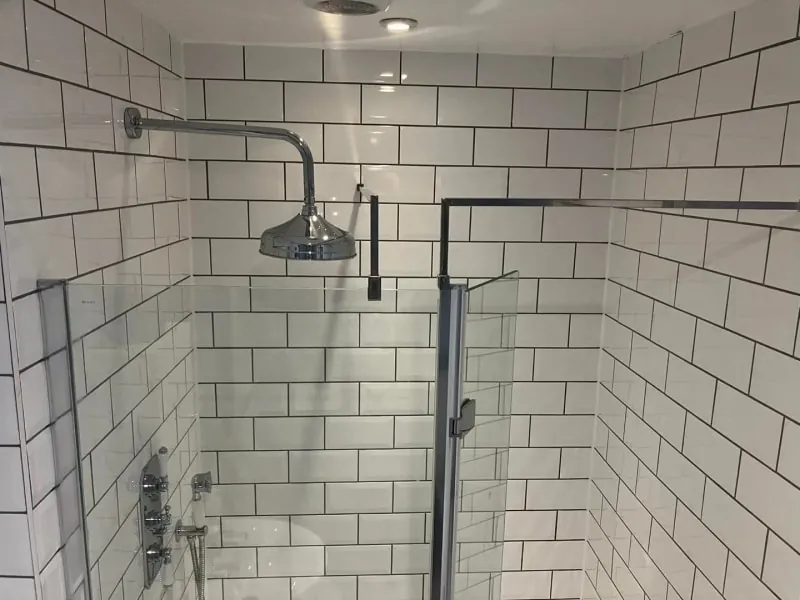
The rates don’t change once we cross into Staffordshire. What does change is the water company and the council, and the houses aren’t quite like Derby’s either. All three end up on a quote.
The Brewery Water Isn’t What Comes Out Of Your Tap
Burton sits on sand and gravel in the Trent valley, with Mercia Mudstone underneath that holds bands of gypsum. Groundwater rising through that rock picked up sulphate in quantities that brewers loved and that gave Burton pale ale its dry, bitter edge. Those were private brewery wells, though, and they still are where any survive.
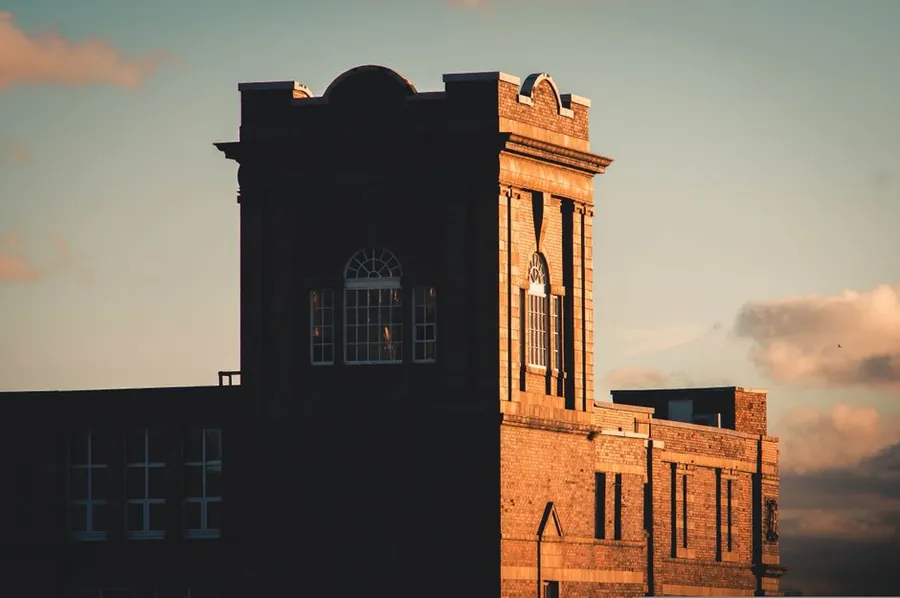
Your house is supplied by South Staffs Water, not Severn Trent as it would be in Derby. It blends water from the River Severn with dozens of borehole and groundwater sites, and on its own South Staffs Water hardness page it says plainly that all the water it supplies is hard. Severn Trent still turns up on your bill, because it takes the waste away. That split matters later on. Any change to a drain connection goes to Severn Trent, while a supply question goes to South Staffs.
So no, you aren’t showering in beer water. You are showering in hard water, and the scale it leaves is ordinary calcium carbonate, the white crust you already know from the kettle.
What That Scale Does To A Shower, A Tap And A Screen
Hard water does its damage when it’s heated or when it dries. A shower does both, many times a day, which makes it the part of a Burton bathroom we worry about most.
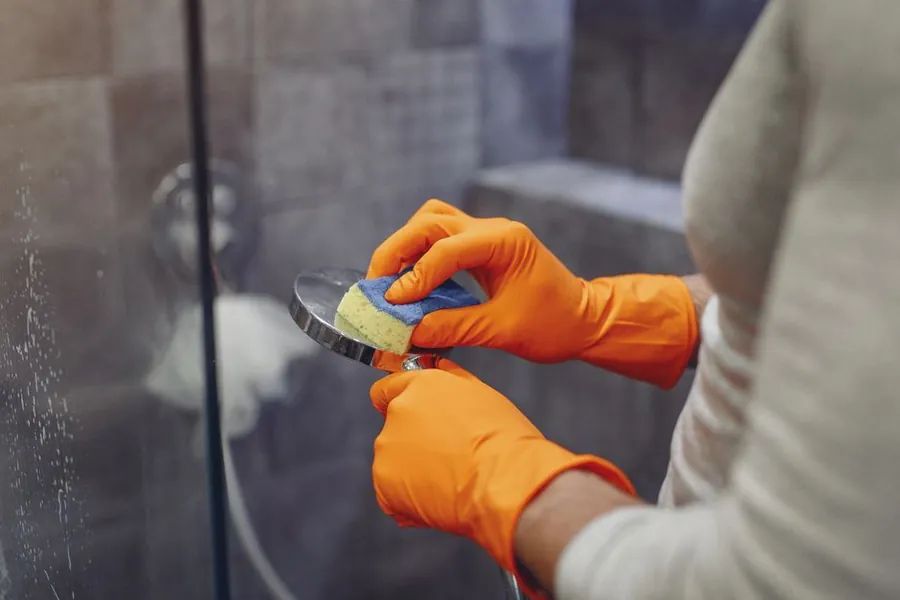
Inside a thermostatic valve there’s a small cartridge that reads the temperature and adjusts the mix. Scale on it makes it sluggish, and one day the shower runs hot then cold while you stand there. We fit valves from makers who sell the replacement cartridge on its own, so a tired valve becomes a twenty-minute swap rather than a new tiled wall. Electric showers have it worse. The water is heated right there in the box, and the element furs up faster than you’d expect. We find them in a lot of Burton terraces, and in this water we’d plan on renewing one sooner than the leaflet suggests.
Heads with soft rubber nozzles are worth having, since a thumb pushes the scale out. On glass, a factory-applied easy-clean coating gives you a few years’ grace before spotting sets in. The cleaning routine is a separate subject, and our post on beating limescale in Derby’s hard water covers it.
Brick Terraces Built For Brewery Workers
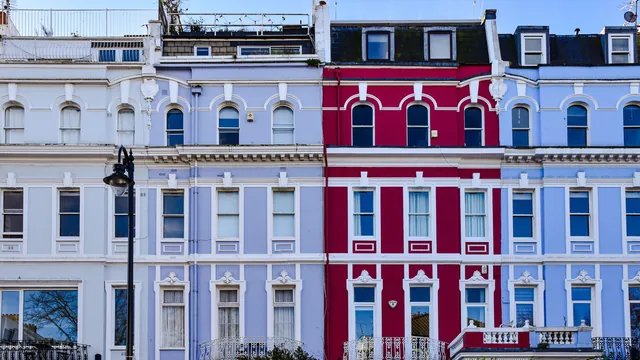
Burton grew on beer. Through the Victorian decades the breweries and maltings spread across the middle of town, and long streets of red brick terraces went up around them in Shobnall, Horninglow and the streets off Anglesey Road. Plenty are two-up, two-down houses where the bathroom was added decades after the house was built.
In these houses the bathroom is usually either the small back bedroom or a single-storey extension behind the kitchen. The upstairs version tends to have a cramped door and a window in an awkward spot. The downstairs version has a roof nobody insulated and a floor laid straight onto a slab. Both can be made into decent rooms. The extension just needs more spent on it before the nice part starts, because tiling over a cold, damp wall wastes the tiles.
A few of these streets are protected. East Staffordshire has conservation areas at Clarence Street and Anglesey Road, at Station Street and Borough Road, at Horninglow Street and Guild Street, at George Street and King Edward Place, and in the town centre. The rules rarely touch anything indoors. They come into play when a new fan outlet or soil pipe has to go through a wall that faces the street.
Winshill And Stapenhill: Derbyshire Until The 1890s
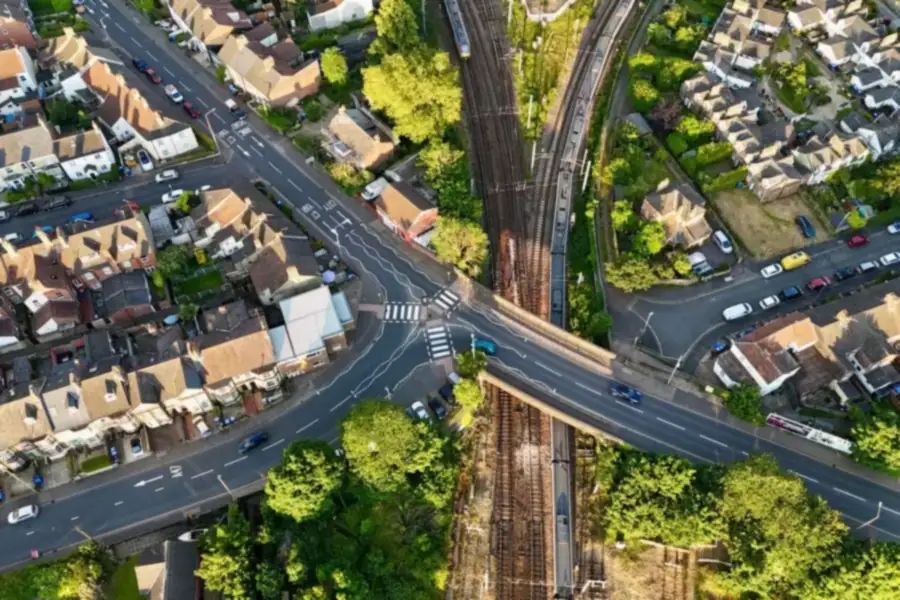
Cross the Trent and the houses change. Winshill and Stapenhill sat in Derbyshire until they were moved into Staffordshire between 1878 and 1894, and most of their housing is newer than the town-centre terraces. Expect inter-war and postwar semis, wide plots, and the bathroom at the top of the stairs above the kitchen.
These are the most predictable bathrooms in Burton to work on. Joists run the sensible way, the soil stack sits on the back wall, and there’s usually an airing cupboard nearby. If anything catches people out, it’s the boiler. Plenty of these semis switched to a combi years ago. The heating compliance guidance that sits behind Part L asks for scale treatment on a new combi where the hardness is over 200 parts per million, and South Staffs Water’s postcode report tells you which side of that line your street is on. If the refit means moving or replacing the boiler, that belongs on the quote.
Further out, Branston, Stretton and the newer estates towards the A38 give us builder-spec bathrooms that are only fifteen or twenty years old. The pipework is fine. What lets them down is the cheap shower tray, plus extractor fans that move hardly any air.
East Staffordshire Signs It Off, Not Derby
People who’ve used Derby trades before often assume otherwise. Building control in Burton belongs to East Staffordshire Borough Council, which runs its own team from offices in the town. Derby City Council has no say, however close the two places feel.
For most refits you’ll never deal with them directly. Replacing a suite in the same positions needs no application. A new shower circuit, a move to the consumer unit or extra lights in the wet zones is notifiable electrical work under Part P. An electrician registered with one of the government-authorised competent person schemes certifies the work, the scheme tells East Staffordshire, and the certificate reaches you by post. Hold on to it, because a buyer’s solicitor will ask.
You do need an application before work starts if you’re building a new extension for the bathroom, cutting into structure, or getting notifiable work done by someone who isn’t registered. And if you’re adding a new connection to the sewer, Severn Trent wants to hear about it as well.
What A Bathroom Costs In Burton, And Where The Water Adds To It
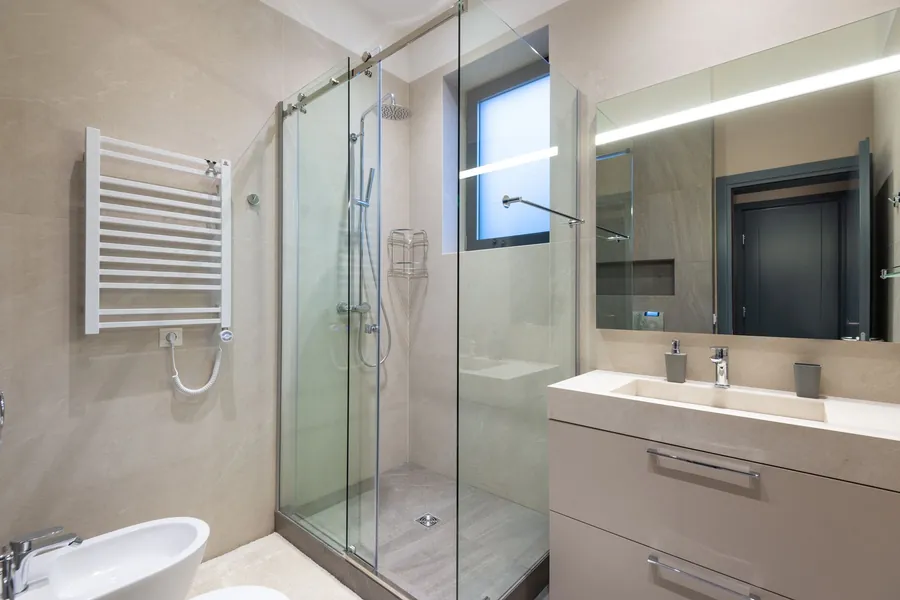
Our Burton prices are the same as our Derby prices. A refit that leaves the bath, basin and toilet where they are, with tiling round the wet areas, usually costs £3,500 to £5,000. A full redesign with a new layout, a walk-in or thermostatic shower, most walls tiled and a new floor typically comes to £5,000 to £9,000.
The water adds a few optional lines. A softener means its own plumbing, a drain point and space under the sink or in the garage, and the Drinking Water Inspectorate’s advice on hard water recommends keeping one unsoftened tap for drinking, so that goes on the plan too. A scale reducer on a combi is a small job. A better valve costs a bit more upfront and much less over the years.
Beyond that, the house decides the price. A cold rear extension in Horninglow needs insulating first. A semi in Winshill rarely needs anything structural. A quote that doesn’t mention either is a quote written without looking properly.
Burton Upon Trent Bathroom Questions
Is Burton upon Trent tap water the same as the famous brewing water?
No. The brewers drew their water from their own wells, where it had picked up calcium sulphate from gypsum in the rock. Your tap is fed by South Staffs Water from a mix of river and borehole sources. South Staffs Water says all of the water it supplies is hard, so you still get limescale, but it is ordinary carbonate scale and not brewery well water.
Which council signs off bathroom work in Burton upon Trent?
East Staffordshire Borough Council, which has its own building control team in Burton. Derby City Council has nothing to do with it, even though we drive over from Derby. Most bathroom jobs never need an application, because a registered electrician self-certifies a new shower circuit under Part P and the scheme notifies the council on your behalf.
Do you charge extra to fit a bathroom in Burton?
No. Burton is on the A38 about twenty-five minutes from us, and our rates are the same as in Derby. Keeping the suite where it is usually costs £3,500 to £5,000, and a full redesign £5,000 to £9,000. Hard water can add to that if you want a softener or a scale reducer fitted, and we price those as separate lines.
What shower is best for hard water in Burton?
A thermostatic mixer with a cartridge you can buy and change, plus a head with soft rubber nozzles you can rub clean. Electric showers work well enough, but their heating element scales up quickest in hard water, so expect to replace one sooner than you would in a soft water area.
Got a bathroom in Shobnall, Horninglow, Winshill, Stapenhill or Branston that needs redoing? Get a free quote for your Burton bathroom and we’ll look at the water heating and the walls before we give you a number.