20 October 2026
Bathroom Fitters In Loughborough And Shepshed: Terraces, Student Lets, Estates And Charnwood's Rules
Loughborough and Shepshed are about four miles apart, both run by Charnwood Borough Council, and yet the bathrooms we get asked to replace in each can look like they come from different decades. If you are searching for bathroom fitters in Loughborough or Shepshed, it helps to know which kind of house you’re dealing with before any prices get talked about. The 2021 census counted 64,884 people in Loughborough’s built-up area and 14,875 in Shepshed, which was 1,370 more than Shepshed had in 2011. Across the two you’ll find Victorian terraces let to students, 1920s and 1960s council-built estates, an old knitting village and a lot of very new houses. This guide goes through each type: what usually needs doing, which Charnwood rules apply (HMO landlords have the most of them), what the water does to your taps, and what the job will roughly cost.
Bathroom Fitters In Loughborough And Shepshed Start With The House
We are a Derby firm, and Loughborough is about 17 miles down the A6 from us. Our page on bathroom fitting in Loughborough covers what we offer there. This post goes further into what we look at when we survey a house in either town.
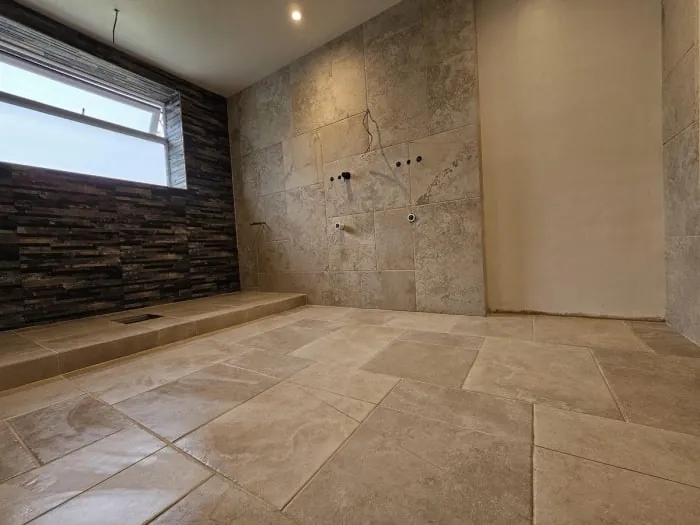
Most of what makes one bathroom quote higher than another sits under the tiles. That means how the walls are built, how level the floor is, where the soil pipe runs and what the hot water system can manage. The town matters less than the house. A two-up two-down off Storer Road and a 2020s semi out at Garendon Park are a short drive apart, and the jobs have almost nothing in common.
The Victorian Terraces Off Storer Road And Ashby Road
Between the university and the town centre, the streets around Storer Road and Ashby Road are mostly late Victorian and Edwardian brick terraces. Many houses of that age were built without a bathroom at all. The one they have now was usually added later, either in the back bedroom or in a single-storey rear extension behind the kitchen. That history explains most of what we find when we open them up.
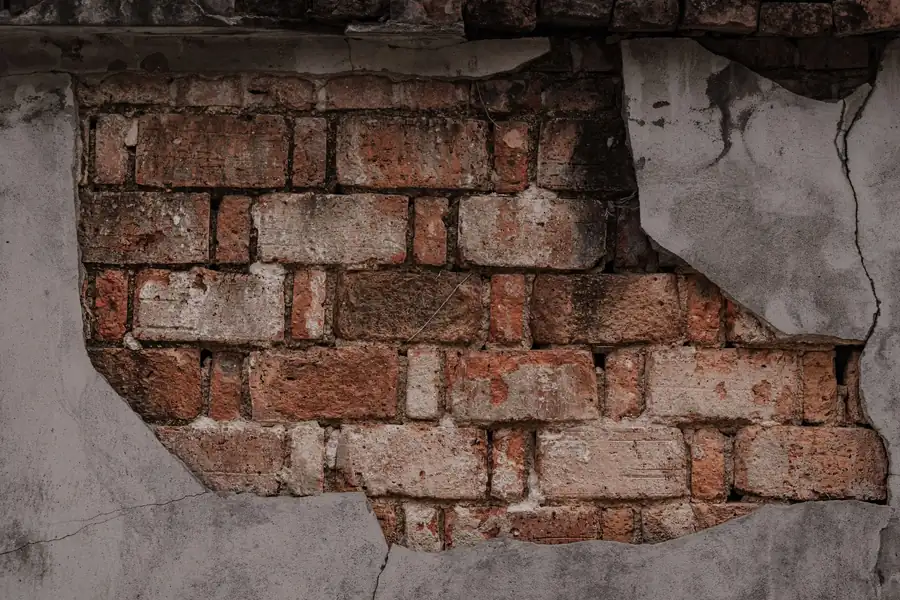
The walls are solid brick with lime or old gypsum plaster. Once the old tiles come off, the plaster often comes with them, so we price for boarding the shower walls instead of hoping the surface underneath is sound. Floors upstairs tend to slope towards the back of the house, and a shower tray needs a level base, so packing and levelling is part of the job. Downstairs extensions bring their own problems. They are often single-skin brick with a flat roof, which makes them cold, and a cold bathroom grows mould. Insulated wall boards, a heated towel rail on its own thermostat and an extractor sized for the room make more difference here than the choice of suite.
Look out for cast-iron soil pipes as well. They often run outside the back wall in these streets, and a joint that has been weeping for years shows up as a damp patch near the toilet. Replacing a short run in plastic while the bathroom is stripped costs far less than coming back for it later.
Student Lets In Loughborough: Charnwood’s Rules On Shared Bathrooms
A lot of those terraces are now HMOs, and Charnwood runs two separate sets of rules that affect them. The first is planning. The council’s Article 4 direction on houses in multiple occupation means that since 12 February 2012, turning a family home in Loughborough into a shared house for three or more unrelated people needs planning permission. Outside Loughborough, Shepshed included, permission is only needed above six people.
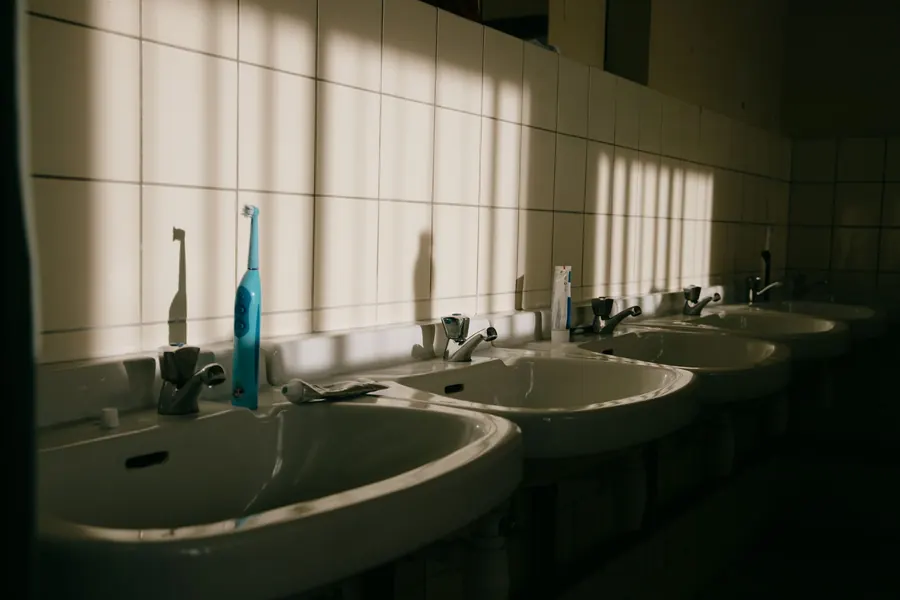
The second is licensing. Every HMO with five or more people already needs a mandatory licence, and Charnwood’s additional licensing scheme has covered shared houses of three or four unrelated people across the whole borough since 1 April 2023. It runs until 31 March 2028. Once a licence is in play, the council’s amenity standards for licensable HMOs set out how many bathrooms, toilets and basins the house needs. Up to four occupiers can share one bathroom with a bath or shower, a WC and a basin. Five occupiers need a second basin, and if they share a single WC and a single shower, the WC has to sit in its own compartment with a basin. Six to eight occupiers need two of everything.
Every bathroom also has to be heated and mechanically ventilated, and none can be more than one floor away from the rooms it serves. Five is the number that catches landlords out. Moving from four tenants to five can mean finding space for a separate toilet and basin, often under the stairs or in a corner of the back extension. We’d much rather plan that in at the start than squeeze it in after the licence application comes back.
Shelthorpe, Thorpe Acre And Loughborough’s Council-Built Estates
The council started building Shelthorpe in 1926, and the estate came to nearly 300 homes. Thorpe Acre followed in stages. Part of it went up in the 1950s, largely for workers at the Brush engineering works, and a much bigger estate was added in the 1960s and early 1970s. Some 1950s houses around Browning Road were built by Wimpey using its no-fines concrete method.
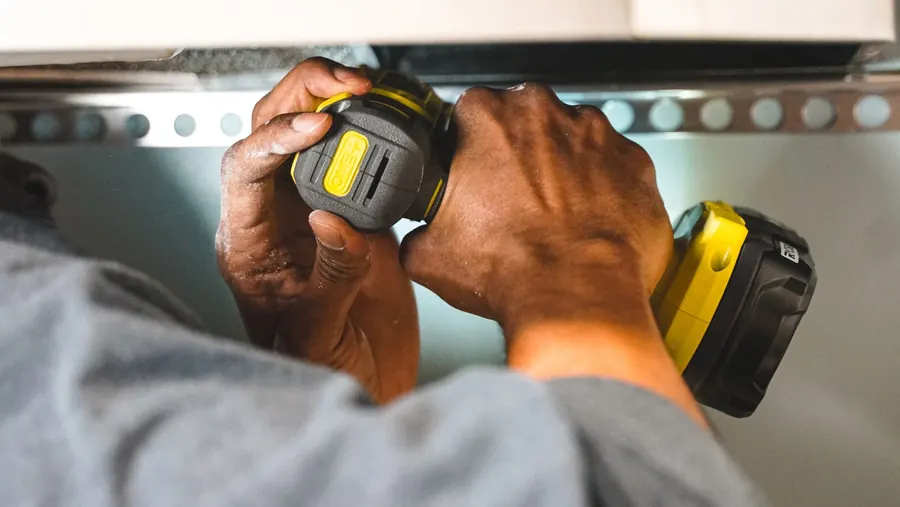
No-fines walls are poured concrete with no sand in the mix, so they are full of small air pockets. That changes the job in three ways. Ordinary plugs can spin in the voids, so heavy items like wall-hung toilets, basins and glass screens need resin anchors or a stud frame. The walls are cold unless the house has been insulated outside, so condensation forms on them quickly, and good ventilation matters even more than in a terrace. And chasing pipes into the wall is slow, noisy work, which is why we often run new pipework in a boxed duct instead. It all takes longer, and we price it that way from the start.
The Shelthorpe houses are brick-built and far easier to drill. Space is the usual problem there. In a small bathroom, a shower bath with a fixed screen often works better than trying to squeeze in a separate cubicle.
Shepshed: Knitting Workshops, A 1983 Conservation Area And New Estates
Shepshed grew on framework knitting. A count of stocking frames in 1812 found 900 of them in use in the village, and there were still six knitting firms in Shepshed in 1890. The old centre around Market Place, Church Street, Brook Street and Churchside has been a conservation area since March 1983, with St Botolph’s Church listed at Grade I and several listed cottages on Market Place. Charnwood’s Shepshed conservation area page lists them along with the area’s character appraisal.

A new suite inside a house in the conservation area doesn’t need planning permission. If the house is listed, though, work that affects its character needs listed building consent, inside as well as out, and that can include moving a soil pipe or cutting a new vent through a wall. Check the listing before you book anyone. Some old cottages also have a later bathroom squeezed under the roof slope, where the ceiling height limits where a shower can go.
The other half of Shepshed is new. There are fresh estates off Iveshead Road, and Garendon Park, between Shepshed and Loughborough, has outline permission for about 3,200 homes, with Persimmon and Vistry among the builders. Those bathrooms are mostly fine. Just plain. If yours is under two years old, report any leak or cracked tray to the builder first, because it’s still their problem. After that, the most common upgrades we see are swapping a narrow cubicle for a walk-in tray, fitting a stronger extractor and adding storage the builder left out.
Hard Water In Loughborough And Shepshed: Check Your Postcode First
Severn Trent supplies both towns, and hardness varies between its supply zones. We would rather not guess a figure for your street. Put your postcode into Severn Trent’s water quality checker and it will tell you what comes out of your tap. It takes about a minute, and it’s worth doing before you spend money on a softener you may not need.
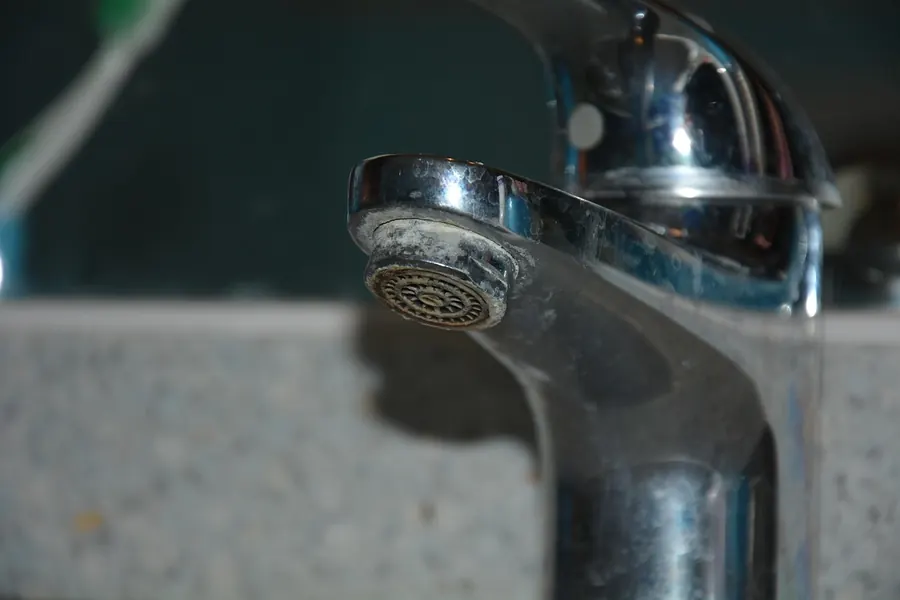
Whatever the number, a few choices make a bathroom easier to keep clean. Shower heads with soft rubber nozzles can be rubbed clear with a thumb. A thermostatic valve whose cartridge is still sold separately can be serviced instead of thrown away. Glass with a factory coating shows fewer water marks. And if you are on a combi boiler in a student house, the shower’s flow rate matters as much as hardness, because five people showering one after another all draw on the same boiler.
Bathroom Prices In Loughborough And Shepshed, And Who Signs It Off
We price jobs in both towns using the same bands as the rest of our work. A like-for-like replacement, with the bath, basin and toilet kept where they are and tiling around the wet areas, usually costs £3,500 to £5,000. A full refit with a new layout, a proper shower and more of the walls tiled usually lands between £5,000 and £9,000. Wet rooms and high-end finishes start at about £10,000.

The house type decides where you land in those bands. Garendon Park and Iveshead Road houses tend to come in at the lower end, because the walls are stud, the pipes are plastic and nothing is hidden. Storer terraces sit higher, mostly because of floor levelling and replastering. No-fines houses in Thorpe Acre need extra time for fixings. HMOs often need a second WC or basin to meet the amenity standards, which adds a day or two and the cost of an extra waste connection.
Building control in both towns goes through Charnwood Borough Council, which also runs the service for North West Leicestershire. We covered that shared arrangement in our guide to bathroom fitters in Castle Donington and Kegworth. A straight suite swap is not notifiable. New electrical circuits are, and a registered electrician will self-certify them and send you the certificate, so in most cases you never need to deal with the council yourself.
Frequently Asked Questions
Do I need planning permission to turn a Loughborough house into a student let with a new bathroom?
If three or more unrelated people will live there, yes. Charnwood Borough Council’s Article 4 direction has applied across Loughborough since 12 February 2012, so changing a family house into an HMO of that size needs planning permission. In Shepshed and the rest of the borough the trigger is more than six people. The bathroom work itself does not need planning permission.
How many bathrooms does a five-person HMO need in Charnwood?
Charnwood’s amenity standards ask for one bath or shower, one WC and two wash hand basins for five occupiers. If those five share a single WC and a single bath or shower, the WC has to sit in its own compartment with a basin. Six to eight occupiers need two full sets, and every bathroom must be heated and mechanically ventilated.
What does a new bathroom cost in Loughborough or Shepshed?
Keeping the layout and swapping the suite, with tiling around the bath or shower, usually costs £3,500 to £5,000. A full refit with a new layout, a better shower and more tiling usually runs £5,000 to £9,000. Wet rooms and high-end finishes start at around £10,000. Old terraces with uneven floors and solid concrete estate houses tend to cost more than a newer house of the same size.
Is the water in Loughborough and Shepshed hard?
Both towns are supplied by Severn Trent, and hardness depends on which supply zone your street sits in. Enter your postcode on Severn Trent’s water quality checker to get the figure for your home before you pay for a softener. Either way, choose shower heads with rubber nozzles and a valve with a cartridge you can buy again later.
Planning a new bathroom in Loughborough, Shepshed, Hathern or Thorpe Acre? Book a free bathroom survey in Loughborough or Shepshed and we’ll look at the walls, floor and paperwork before we give you a fixed price.